
Reviewed · WALKING TOURS
The Dark Side of Medieval Dubrovnik Private Walking Tour
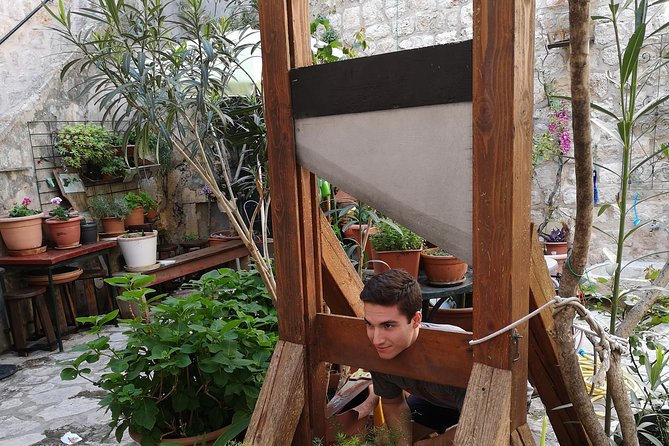
Medieval Dubrovnik has a darker side. You’ll walk the Old City with Vesna, and the stories turn the clocks to Medieval times, with talk of justice, punishment, and how people coped with fear. I love that it is private and timed for a compact 2-hour experience that still hits multiple key corners.
I also like how the tour anchors big themes in real spots, like a convent tied to women’s lives, a Franciscan monastery linked with plague-era questions, and the quarantine station at Kavana Lazareti. You get practical context, not just dates, and Vesna answers questions as you go.
One drawback to consider: if you’re after gentle, feel-good history, this one can feel heavy at points, since it directly covers punishments, public embarrassment, and the Black Death.
In This Review
- Key things I’d flag before you go
- How a private Dark Side walk turns Dubrovnik into a storybook
- Convent of St. Claire: nuns, an orphanage, and how women were treated
- Franciscan Church and Monastery: Black Death, ailments, and a Medieval view of cures
- Stradun: figuring out how people lived from the main spine of the city
- Rector’s Palace: the male sanctuary and the center of political power
- City Harbor and Luza Square: where bad and good arrived, then punishments played out
- Kavana Lazareti: the last quarantine station and how fear shaped routine
- Price and logistics: is $196.90 per group good value?
- Should you book this Dark Side of Medieval Dubrovnik private walk?
- FAQ
- How long is the Dark Side of Medieval Dubrovnik private walking tour?
- Is this tour private?
- What is the group size limit?
- Where do we meet for the tour?
- Where does the tour end?
- What ticket do I need?
- Are there admission tickets included for the stops?
- What is the schedule for the tour times?
- When will I get confirmation after booking?
- Is free cancellation available?
- Can I bring a service animal?
Key things I’d flag before you go
- Private group size up to 8 means you can ask questions without feeling rushed
- Vesna’s guidance keeps the tone readable, mixing serious topics with humor
- Seven focused stops track from women’s roles to politics, disease, and quarantine
- Old City routing ends at the Ploče Gate, which makes it easy to keep exploring after
- Admission listed as free at the stops, so you mainly pay for the walk and storytelling
How a private Dark Side walk turns Dubrovnik into a storybook
This is the kind of tour where you stop thinking of Dubrovnik as just those famous walls and start seeing it as a lived-in place with rules, consequences, and big survival questions. Instead of a standard highlights loop, you follow a theme: what people feared, what they believed, and how society dealt with trouble.
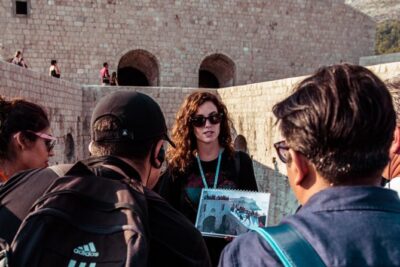
The format helps. You’re in a private group (up to 8), and the whole thing runs about 2 hours. That matters because you can actually absorb what you hear at each stop, rather than sprinting for the next photo. You also use a mobile ticket, so you can keep your phone out and move fast.
Practical note for your planning: the meeting point is Brsalje ul. 1, and the walk ends at the eastern city gate, called the Ploče Gate (Ulica Vrata od Ploča). That end point is useful if you plan to continue around the Old City afterward.
Convent of St. Claire: nuns, an orphanage, and how women were treated
Your first stop sets the tone. At the Convent of St. Claire, you’re not just looking at architecture. You’re hearing who the nuns served, including an orphanage that was opened in the convent. It’s a small detail on paper, but it gives you a serious lens on daily life and care systems in Medieval Dubrovnik.
This is also where the tour addresses how women were treated. That can hit harder than palace stories because it’s closer to real human relationships: who had protection, who had power, and who depended on institutions for survival.
What to expect here:
- A guided explanation tied to the convent’s role in community life
- A focus on women’s roles, plus the orphanage connection
A consideration: since this theme is about vulnerability and care, it may feel emotionally intense if your vacation style is more light and scenic. It helps to mentally switch gears for a while.
More of the old city crossed on foot:
- Dubrovnik: Old Town Walking Tour
★ 4.8 · 5,174 reviews - Dubrovnik Discovery Old Town Walking Tour
★ 5.0 · 4,458 reviews - Dubrovnik: Game of Thrones Walking Tour
★ 5.0 · 1,732 reviews - Dubrovnik Old Town History Walking Tour
★ 5.0 · 1,684 reviews
Franciscan Church and Monastery: Black Death, ailments, and a Medieval view of cures
From one institution to another, you move into the Franciscan Church and Monastery. The tour aims directly at what scared people in the Medieval world: sickness and uncertainty.
At this stop, you’ll hear what ailments bothered people back then, and specifically what the Black Death meant, plus what was described as a cure. The wording here is important. You are not asked to memorize medical facts. You’re given the Medieval logic people used when the stakes were terrifying and knowledge was limited.
Why this stop is valuable for you:
- It turns the Black Death into something you can picture as a lived experience, not just a textbook event
- It shows how people thought about cures, even when results were unpredictable
A practical tip: if you’re sensitive to illness-focused stories, you may want to take a breath after this stop. The tour’s theme is dark for a reason, and this is one of the moments it goes straight at fear.
Stradun: figuring out how people lived from the main spine of the city

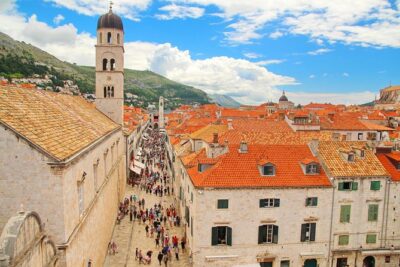
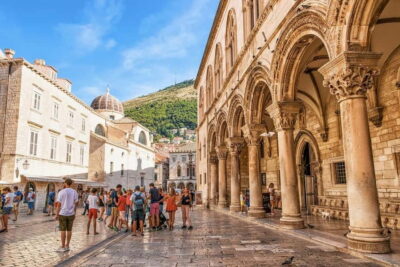
Then you step onto Stradun, the Old City’s main thoroughfare. Here, the tour shifts from institutions to everyday life. The goal is not a lecture on bureaucracy. It is a guided walk about how people lived, in ordinary terms.
If you’ve only seen Dubrovnik from viewpoints, Stradun is where you can feel the city as a working street. Your guide uses the setting to explain daily rhythms: what mattered on the ground level, and how public space shaped social life.
What I like about this transition:
- It breaks up the heavier stops with a street-level perspective
- It helps you mentally map the city so the later political and punishment stories land better
Drawback to keep in mind: since Stradun is a main pedestrian area, it can feel busy at certain times. Your private group still moves with purpose, but if you hate crowds, you might want to pick quieter hours for your tour.
Rector’s Palace: the male sanctuary and the center of political power
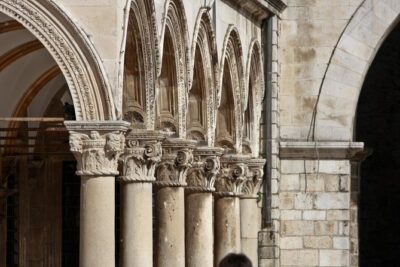
Next comes the Rector’s Palace, framed by the tour as a male sanctuary and center of political power. That framing changes how you read the building. Instead of treating it as just a landmark, you hear how power was structured and where decisions would have been made.
This is the stop that ties together the tour’s bigger question about justice and governance. When you understand where political authority sits, the later talk about punishments in public spaces feels less random.
What you’ll likely take away:
- How political power shaped what people could expect
- How gender roles were baked into leadership spaces
Consideration: if your main interest is architecture only, this stop might feel story-heavy. But if you like history as cause-and-effect, this is the hinge point for the tour.
City Harbor and Luza Square: where bad and good arrived, then punishments played out
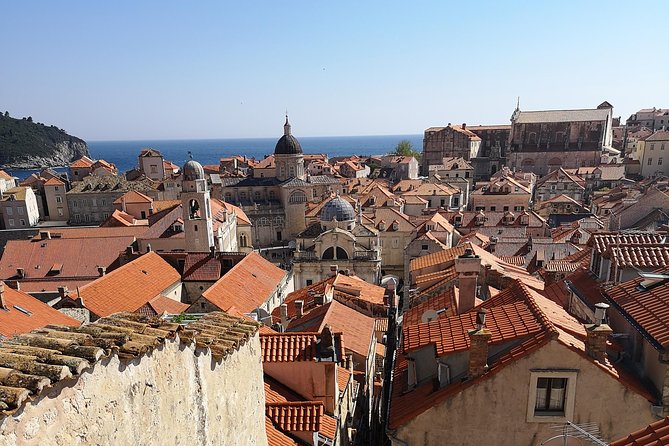
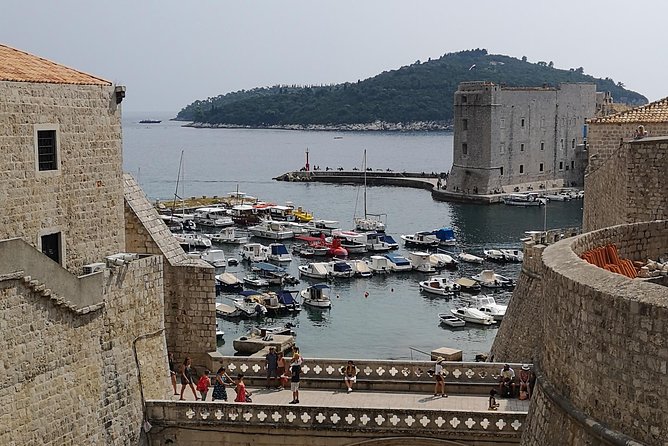
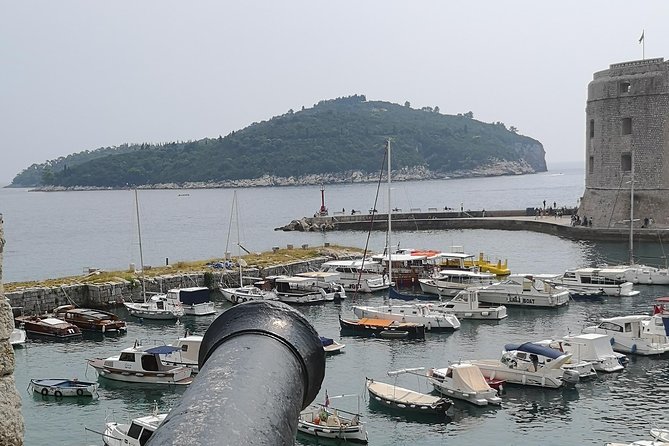
The City Harbor stop is all about connection. You’ll hear how Dubrovnik was linked to the world there, and that both the bad and the good arrived through this space. That’s a simple idea, but it’s also a powerful one for the way the tour builds tension.
Then you move to Luza Square, described as a place for punishments and embarrassment. This is justice as theater. It’s not quiet. It’s not private. The story lens here helps you understand why public humiliation and visible consequences mattered in a tightly controlled society.
Why this pair works so well:
- Harbor stories explain why danger could enter the city
- Luza Square stories explain what society did after the fact
Practical advice: this section can be the most intense emotionally, because it brings together fear, blame, and consequences in a way that feels real. If you like to balance your day, plan a calmer activity after the tour, like a long coffee break or a slow stroll.
Some other walled-city days to weigh
- Mostar and Kravice Waterfalls Tour from Dubrovnik (Semi-Private)★ 5.0 · 3,125 reviews
- Dubrovnik: Blue & Green Caves Private Boat Tour with Drinks★ 4.7 · 814 reviews
- Dubrovnik Private Speedboat Tour to Elaphite Islands with Drinks★ 5.0 · 660 reviews
- Private Tour: Montenegro Day Trip from Dubrovnik★ 4.5 · 495 reviews
- Tour The Game of Thrones – Private Walking Tour★ 5.0 · 464 reviews
Kavana Lazareti: the last quarantine station and how fear shaped routine

The final stop is Kavana Lazareti, described as the last quarantine station in Dubrovnik. By the time you arrive here, you’ve already heard about sickness and plague-era meaning. Now you see the city’s response in a physical place tied to quarantine.
This stop makes the tour’s theme click. It’s one thing to hear about the Black Death and cures. It’s another to end with a place created to manage risk.
What you can expect here:
- A focus on quarantine as a practical answer to fear
- An explanation tied to why this station mattered in the city
It’s a strong way to end, because it leaves you with a more complete picture: fear entered through the world, people reacted in the public square, and the city built routines to control the spread.
Price and logistics: is $196.90 per group good value?
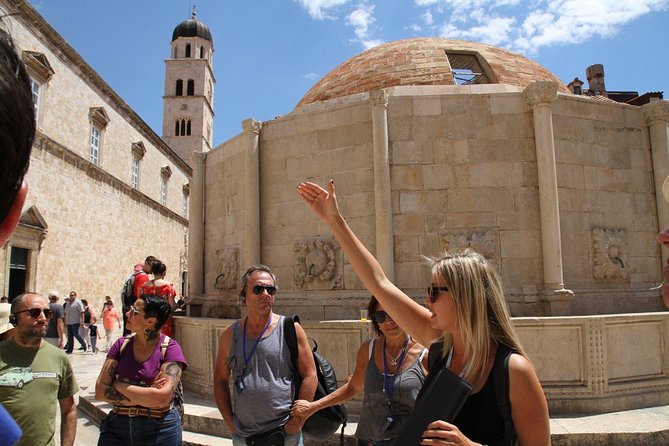
The price is $196.90 per group, for up to 8 people, and the tour runs about 2 hours. In practical terms, that pricing structure can be a win if you’re traveling with family or friends. For solo travelers, it can feel steep compared to group tours, but you do get privacy and a focused route with multiple themed stops.
Here’s how I’d frame value:
- If you want a small-group feel and a guide who can answer questions, the per-group model can justify the cost
- If you’re price-sensitive and fine with a busier format, you might compare against cheaper shared tours
Logistics you should know, without overcomplicating it:
- Meeting point: Brsalje ul. 1, Dubrovnik
- End point: Ploče Gate, Ulica Vrata od Ploča
- You’ll use a mobile ticket
- The tour is private, so only your group participates
If your schedule is tight in Dubrovnik, a 2-hour tour is a good fit. You still have time to explore on your own after, and the ending near a city gate helps you keep moving instead of turning back.
Should you book this Dark Side of Medieval Dubrovnik private walk?
Book it if you like history that has teeth. You want stories about everyday life, justice, and how cities dealt with fear, not just a list of monuments. It’s especially worth it if you enjoy questions and back-and-forth, because the guide style is built around answering what you ask.
You should think twice if your ideal Dubrovnik day is mostly sunny facts, light topics, and minimal emotional weight. This tour chooses darker angles on purpose, including public punishment and plague-era topics.
My bottom line: if you’re willing to trade postcard history for human history, you’ll get a memorable, tightly routed Old City walk with Vesna at the center of it.
FAQ
How long is the Dark Side of Medieval Dubrovnik private walking tour?
It’s listed as about 2 hours.
Is this tour private?
Yes. It is a private tour, and only your group participates.
What is the group size limit?
The price is per group for up to 8 people.
Where do we meet for the tour?
The meeting point is Brsalje ul. 1, 20000, Dubrovnik, Croatia.
Where does the tour end?
It ends at the eastern city gate called the Ploče Gate, at Ulica Vrata od Ploča.
What ticket do I need?
You receive a mobile ticket.
Are there admission tickets included for the stops?
The itinerary lists admission ticket as free at each of the stops.
What is the schedule for the tour times?
The listed opening hours are Monday through Sunday, 9:00 AM to 6:00 PM, for 11/10/2024 through 09/19/2026.
When will I get confirmation after booking?
Confirmation is received within 48 hours of booking, subject to availability.
Is free cancellation available?
Yes, free cancellation is available up to 24 hours in advance for a full refund.
Can I bring a service animal?
Service animals are allowed.
New around Dubrovnik

Walking Tours, compared.

City Walls Early Morning or Sunset Walking Tour
Read our review →
City Walls, Old Town Walking Tour & Adriatic View
Read our review →Browse the lists this tour appears in