
Reviewed · OLD TOWN WALKS
Dubrovnik Old Town History Walking Tour
Old Town Dubrovnik can feel like a blur. This 1.5-hour walk gives you a clear map of the city’s biggest landmarks, plus the stories that explain why Ragusa looked and worked the way it did.
What I like most is the tight structure: you hit major stops in a single loop, from Onofrio’s Fountain to the Cathedral and the harbor. I also love how the tour blends big-picture history with small details, including local perspectives shared by guides such as Ermina and Ivana.
The main drawback is simple, Dubrovnik Old Town involves uneven cobblestones and lots of stairs, and the area can be crowded. If you want a calmer experience, pick a less busy time of day and be ready for a brisk walk.
In This Review
- Key highlights to look forward to
- Meeting at Onofrio’s Large Fountain, next to Hard Rock Cafe
- Onofrio’s Fountain and the Ragusa origin story
- Holy Savior and why religion shaped daily Dubrovnik
- Franciscan Church and Monastery: library, pharmacy, and traditions
- Stradun (Placa), the main promenade and civic stage
- Duck into the side streets: Orthodox presence and religious overlap
- Gundulic Square area and the “real city” food vibe
- Rector’s Palace area: power, councils, and punishment
- Cathedral of the Assumption and the Richard the Lionheart legend
- City Harbor: maritime trade, quarantine, and fortresses
- Luza Square, the Orlando Column, and the city’s “story corners”
- What the guide adds, from Ermina to Ivana to Josef
- Timing and pacing: how 1.5 hours actually feels
- Practical value for the price, and what you get for $24.19
- Who should book this Dubrovnik Old Town history walk
- Should you book? My recommendation
- FAQ
- How long is the Dubrovnik Old Town History Walking Tour?
- Where does the tour meet, and where does it end?
- What’s included in the price?
- Is admission required for the stops?
- What language is the tour offered in?
- What if the weather is bad?
- Can I cancel and get a full refund?
Key highlights to look forward to
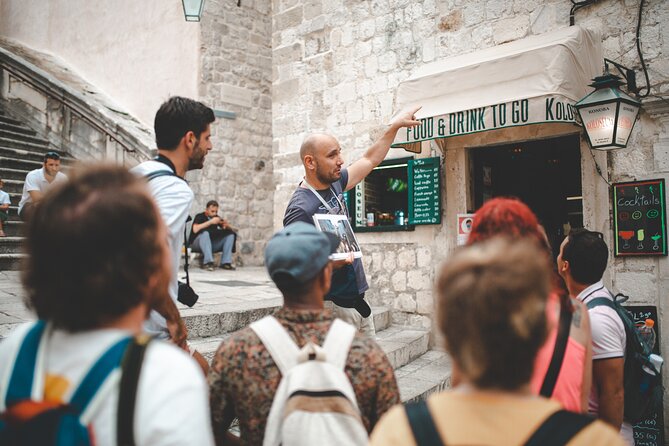
- Meet at Onofrio’s Large Fountain, next to Hard Rock Cafe, with a quick orientation before you start walking.
- Ragusa Republic context that connects aqueducts, city layout, and power from medieval times through later events.
- Franciscan Church complex stops, including the monastery library (over 20,000 books) and the pharmacy dating to 1317.
- Stradun (Placa) explained as both a promenade for crowds and a real working street with civic life.
- Harbor and quarantine stories, tying Dubrovnik’s maritime trade to its defenses and public health measures.
- Luza Square monuments, including the Orlando Column and the City Bell Tower area.
Meeting at Onofrio’s Large Fountain, next to Hard Rock Cafe
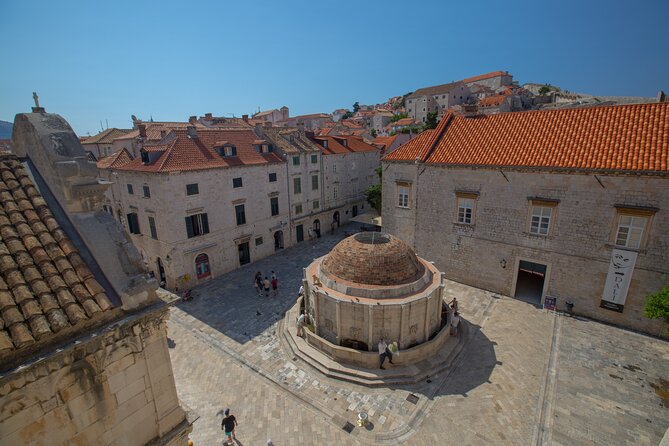
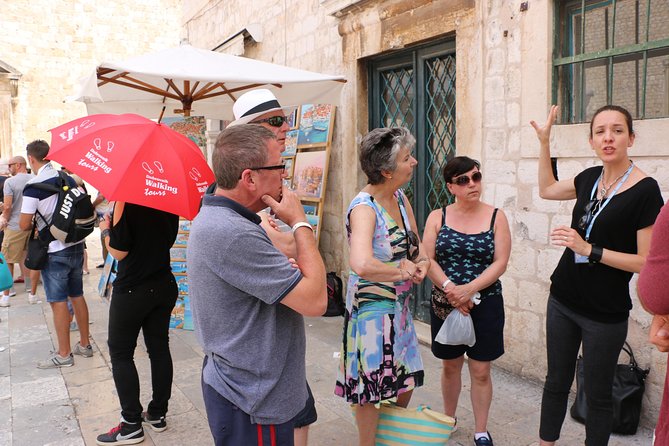
The tour starts at Onofrio’s Large Fountain, the meeting point by Hard Rock Cafe (look for the guide near the red umbrella). You’ll get a short intro from your guide and then you’re off right away on the main Old Town route.
This is a smart first move because it places you at a natural “hub” for understanding Dubrovnik. From here, the rest of your walking day makes more sense, especially if it’s your first time in town.
Onofrio’s Fountain and the Ragusa origin story
The first stretch uses the fountain as a history shortcut. The guide sets the stage with how Ragusa grew from a small maritime trading city-state, and how infrastructure supported that rise, including the aqueduct system tied to the fountain.
Even if you’ve seen the fountain in photos, standing here helps you connect Dubrovnik’s survival and wealth to the practical things: water supply, building know-how, and trade routes. It’s also a calm start, just minutes in, before you plunge into the busiest parts of the Old Town.
More routes through the Stradun side streets:
- Dubrovnik: Old Town Walking Tour
★ 4.8 · 5,174 reviews - Dubrovnik Discovery Old Town Walking Tour
★ 5.0 · 4,458 reviews - Dubrovnik Combo: Old Town & Ancient City Walls
★ 5.0 · 1,019 reviews - Dubrovnik: City Walls, Old Town Walking Tour & Adriatic View
★ 4.9 · 982 reviews
Holy Savior and why religion shaped daily Dubrovnik
Right from the fountain area, you move along the main street, passing the small votive Church of the Holy Savior. The guide uses this stop to talk about how religion influenced civic life and helped shape the city you walk through today.
This part works best if you like cause-and-effect history. You’re not just memorizing names, you’re learning why certain buildings and traditions ended up where they did.
Franciscan Church and Monastery: library, pharmacy, and traditions
Next comes the Franciscan Church and Monastery, a big complex tied to the Order of Friars Minor. You’ll learn it began with an early monastery built in the 13th century outside the walls, then later grew with major additions like the library in the 17th century.
The library holds over 20,000 books and includes around 1,200 valuable old manuscripts. The pharmacy dates from 1317, and it’s described as the third oldest still functioning pharmacy in the world.
This is one of the stops where you feel the difference between a quick sightseeing walk and an actually guided tour. The guide gives you context for why the monastery mattered, not just the fact that it exists. If you like historical continuity, you’ll appreciate how the tour threads medieval institutions into present-day Dubrovnik.
Stradun (Placa), the main promenade and civic stage
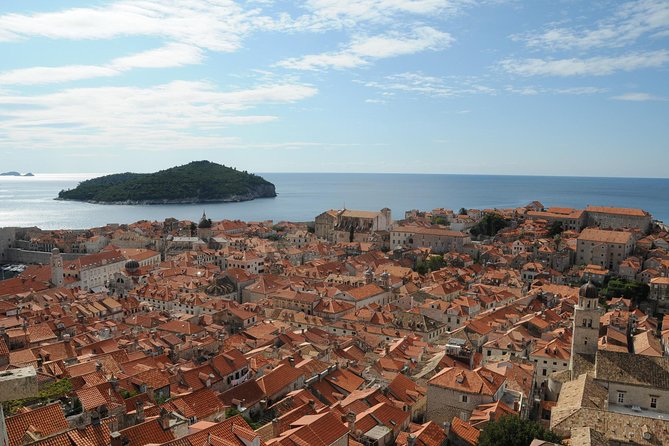
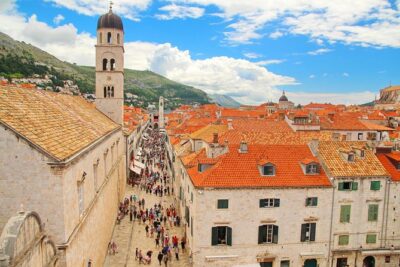
Then you reach Stradun, Dubrovnik’s most famous promenade and gathering place. The guide explains how it functioned as a venue for public feasts and processions, but also as the main business street.
Stradun’s street layout matters for what you’ll see next. The widest part of the street divides the city into northern and southern halves, so your sense of orientation improves quickly.
You’ll also hear how the story of Dubrovnik changes over time, including the decline of the venerable Ragusa Republic and later troubles involving Yugoslavia and the 1990s Homeland War. This isn’t just tragedy recap, the goal is to help you understand how modern Dubrovnik got rebuilt into what you see now.
Duck into the side streets: Orthodox presence and religious overlap
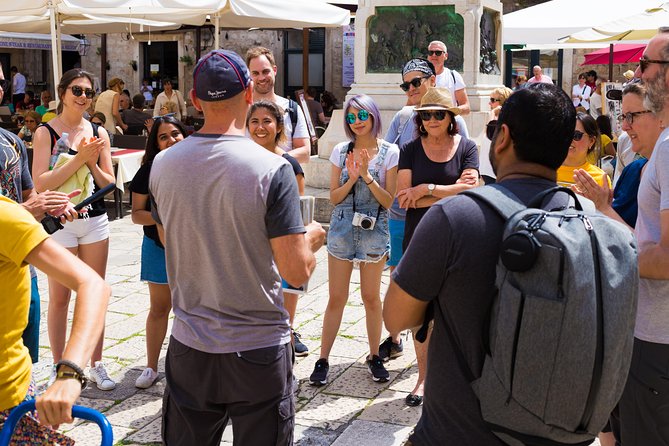
After Stradun, the tour slips into narrower inner streets toward the port. One of the stops highlights the Orthodox Christian Church and explains how other religious communities, including Orthodox, Jewish, and Muslim communities, influenced the city’s history.
If you only know Dubrovnik from the postcard version, this stop adds depth. It helps you see the Old Town as a lived-in crossroads, not just a single-style museum.
More of the old city crossed on foot:
- Dubrovnik: Game of Thrones Walking Tour★ 5.0 · 1,732 reviews
- Dubrovnik: City Walls Early Morning or Sunset Walking Tour★ 4.8 · 1,523 reviews
- Dubrovnik: Ancient City Walls & Wars Walking Tour★ 5.0 · 1,270 reviews
- Dubrovnik: Game of Thrones Walking Tour★ 4.9 · 981 reviews
- ‘Game of Thrones’ Walking Tour in Dubrovnik★ 4.5 · 945 reviews
Gundulic Square area and the “real city” food vibe
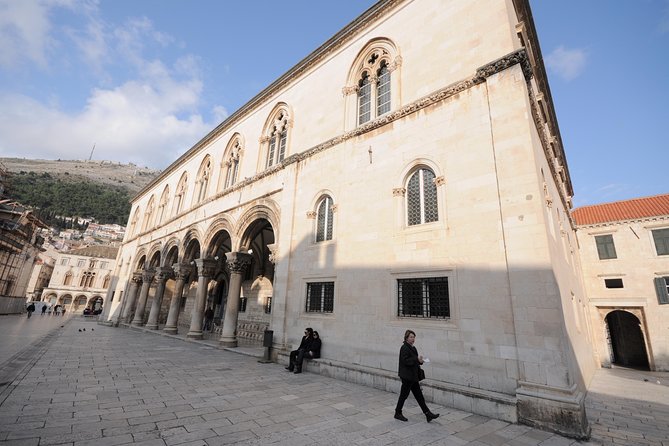
Next, you reach the Monument of poet Ivan Gundulic area and the Green Market around Gundulic Square. The guide points out local produce and shares stories and traditions tied to the area.
This is a good reset in the walking rhythm. Even if you do not stop for food, the market zone reminds you Dubrovnik is not only a heritage site, it’s also a working place where people buy ingredients and keep routines.
Rector’s Palace area: power, councils, and punishment
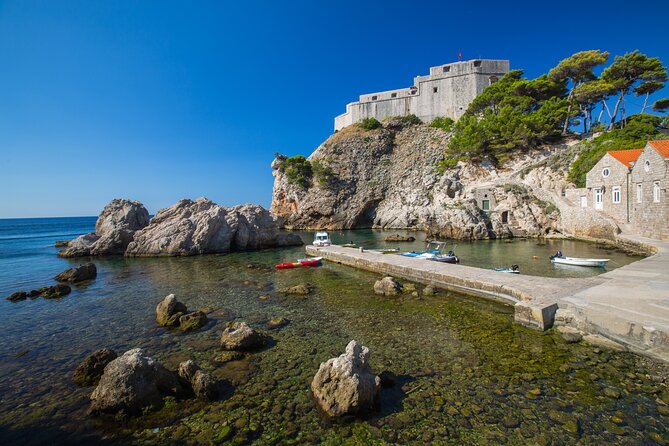
From the market zone, you move on to one of Dubrovnik’s most important buildings in terms of governance, the Rector’s Palace. The guide explains its role as the seat of the Rector of the Republic of Ragusa from the 14th century until 1808.
It was also the seat of the Minor Council and state administration, and the building complex included areas such as an armoury, powder magazine, watch house, and prison. That mix of politics and security is a key Dubrovnik idea: a trade republic had to protect its wealth.
This stop is one I’d recommend especially if you plan to later walk the city walls. When you understand who ruled and why defenses mattered, the walls stop being just a view deck and become part of a survival system.
Cathedral of the Assumption and the Richard the Lionheart legend
The next major landmark is the Cathedral of the Assumption of the Virgin Mary. The tour shares the legend that Richard the Lionheart was returning from the Crusades in 1192, shipwrecked in a storm, and cast aground on Lokrum Island in front of Dubrovnik.
Legends aren’t proof, but they can be very useful. They show what Dubrovnik wanted to connect itself to in the storytelling of power, travel, and survival along the Adriatic.
City Harbor: maritime trade, quarantine, and fortresses
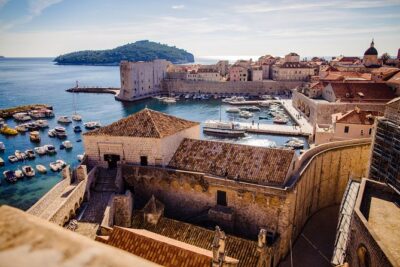
You then reach the Old Port area and the harbor viewpoint. Ships from Dubrovnik were known throughout the Mediterranean, and the Republic’s galleons showed up in navies across Europe and beyond.
The guide ties this to the Arsenal and how ships were built and loaded. Then you’ll hear stories connected to quarantine and nearby fortresses of St. Luke and St. John, which brings in the practical side of maritime life.
I like this segment because it turns Dubrovnik’s beauty into a working port reality. You start imagining schedules, disease control, supplies, and defense, which makes the city feel more grounded.
Luza Square, the Orlando Column, and the city’s “story corners”
From the harbor, the tour heads to the eastern end of Placa (Stradun), under the City Bell Tower near Luza Square. Here the guide covers several monuments and stories, including the church dedicated to patron St. Blaise, the legend of the knight Orlando and his column, and the Sponza Palace area.
You also pass the Small Onofrio’s Fountain and the high bell tower area, which reinforces the Onofrio theme you started with. It’s a neat way to give the walk a closing loop, so you feel like you completed an arc rather than just checking boxes.
What the guide adds, from Ermina to Ivana to Josef
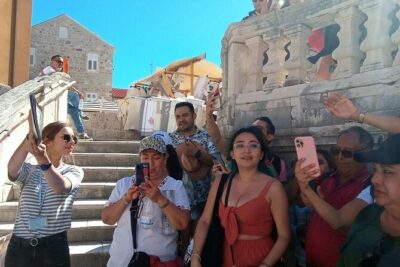
A big reason this tour gets consistently strong feedback is the guide style. In particular, the tour benefits from local storytelling, with names that show up again and again such as Ermina, Ivana, Helena, Jelena, Josef, Sara, Pero, and Nico.
You’ll hear guides connect history to everyday life. One example shared in feedback is Ermina’s personal family connection to the Old Town, including the fact that her grandmother still lives in the area and walks up and down the steps. That kind of detail changes your perspective fast, because it turns Old Town history into something lived.
You may also get practical suggestions layered in. A few guide notes in feedback include recommendations like a gelato stop, which is exactly the kind of low-stakes local tip that makes the walking tour feel like time with a friend who knows the city’s rhythm.
Timing and pacing: how 1.5 hours actually feels
The tour runs about 1 hour 30 minutes, and it’s designed for a fast but not frantic circuit. There are multiple stops, and each one is short enough that you keep moving, but long enough to learn what you’re looking at.
This length is also ideal because it leaves you time to do the next thing you want in Dubrovnik. Many people like pairing it with independent exploration of the walled city right after, especially when the lighting is good and the cruise crowds thin out.
Practical value for the price, and what you get for $24.19
At $24.19 per person, you’re paying primarily for the guide and the ability to cover a lot of ground with context. You do not need hotel pickup or drop-off, and the tour is built around a central meeting point you can easily reach in Old Town.
The stops are marked as free admission on the tour listing side, so you’re not getting nickel-and-dimed for entry just to understand the places. For first-time visitors, this is where the money makes sense, because Dubrovnik gets expensive fast, and paying for one solid orientation beats piecing together multiple guided options.
Also, the tour runs with a maximum group size of 30 travelers. That matters because it keeps the experience from turning into a loud shuffle, and it gives the guide a better chance to answer your questions.
Who should book this Dubrovnik Old Town history walk
This is a great fit if you:
- Want a first-day orientation so you can explore smarter afterward
- Prefer walking plus story, not just standing in front of plaques
- Like the connection between architecture, religion, and governance
- Want a compact way to understand why Dubrovnik survived, traded, and rebuilt
It’s also a solid choice for couples and families because the route is straightforward and the time is manageable. If you are sensitive to steps or tight crowds, plan for it, since Old Town walking can be step-heavy and busy depending on the season.
Should you book? My recommendation
Book this tour if you want Dubrovnik to make sense quickly. The combination of major sights, clear context from your guide, and a route that brings together Ragusa’s maritime identity with later history is exactly what a short walking tour should do.
Skip it only if you already know Dubrovnik deeply and plan to focus on offbeat corners without the main landmarks. Otherwise, this is a high-value way to get your bearings fast and leave the Old Town better understood than when you arrived.
FAQ
How long is the Dubrovnik Old Town History Walking Tour?
It lasts about 1 hour 30 minutes.
Where does the tour meet, and where does it end?
The meeting point is at Onofrio’s Large Fountain, Poljana Paska Miličevića 2000, Dubrovnik, near Hard Rock Cafe. The tour ends back at the meeting point.
What’s included in the price?
The price includes a local guide and all taxes, fees, and handling charges.
Is admission required for the stops?
The stops on the tour are marked as having free admission.
What language is the tour offered in?
The tour is offered in English.
What if the weather is bad?
This experience requires good weather. If it’s canceled due to poor weather, you’ll be offered a different date or a full refund.
Can I cancel and get a full refund?
Yes. You can cancel up to 24 hours in advance for a full refund. If you cancel less than 24 hours before the start time, the amount you paid is not refunded.
The Republic That Ran This Coast
- Game of Thrones & History of Dubrovnik Tour
★ 5.0 · 628 reviews - Dubrovnik: Old Town History Walking Tour
★ 4.9 · 474 reviews - Early Bird Dubrovnik History Tour – 7:30 Start
★ 5.0 · 198 reviews - Dubrovnik: Red History Museum Regular Ticket
★ 4.6 · 134 reviews
New around Dubrovnik

Old Town Walks, compared.
Dubrovnik Combo: Old Town & Ancient City Walls
Read our review →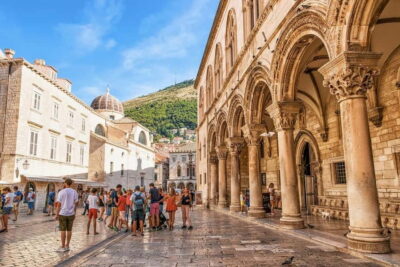
City Walls, Old Town Walking Tour & Adriatic View
Read our review →

Dubrovnik Cable Car Ride, Old Town Walking Tour plus City Walls
Read our review →Browse the lists this tour appears in