
Reviewed · OLD TOWN WALKS
Explore Dubrovnik Old Town Walking Tour
Dubrovnik’s Old Town is easy to enjoy, hard to understand, unless someone gives you the map in your head. This walled Old Town walking tour is a sharp, one-hour orientation through the places that matter most, plus the stories behind why the city looks like it does today. You’ll move through the medieval maritime republic of Ragusa, then connect it to modern Dubrovnik life in a way that actually sticks.
Two things I really like: first, the route hits the top landmarks you’d otherwise rush past, like Pile Gate and Luza Square, without making the walk feel like a checklist. Second, the guides are the star, with plainspoken explanations and plenty of on-the-spot answering, plus the kind of anecdotes and even pop-culture pointers that make the streets feel personal.
One possible drawback: it’s only about 1 hour, so you’ll get a great overview, not enough time for slow museum-style wandering. If you want extra time inside churches or to linger, plan to follow up on your own right after the tour.
In This Review
- Key takeaways
- Why this Old Town walk works in just one hour
- Meeting point, walking pace, and group size you can handle
- Stop-by-stop: Pile Gate, Stradun, Prijeko, Luza Square, and the Cathedral area
- Stop 1: Pile Gate, the drawbridge entrance
- Stop 2: Stradun, monastery views, and Onofrio’s fountain
- Stop 3: Prijeko Street, narrow lanes with real texture
- Stop 4: Luza Square, Sponza Palace, and St Blaise Church
- Stop 5: Back to Stradun, including the Cathedral area
- UNESCO status and the Ragusa comeback story you’ll actually remember
- How guides like Sonya, Ivanka, Jelena, and Marco shape the day
- What to bring, and what could slow the tour down
- Price and value: is $26.38 worth it?
- Who should book this walking tour?
- Should you book Explore Dubrovnik Old Town Walking Tour?
- FAQ
- How long is the Dubrovnik Old Town walking tour?
- Where does the tour start and end?
- What time does the tour begin?
- What are the main stops on the route?
- Is the ticket for monuments included?
- What is included in the price?
- What is not included?
- How big is the group?
- What level of fitness do I need?
- What is the cancellation policy?
Key takeaways

- Top sights in a tight loop: Pile Gate, Stradun, Prijeko, Luza Square, and the Cathedral area
- Licensed local guidance: expect a professional guide who can explain the big history clearly
- Less-stress first visit: you get your bearings fast inside the walls, then you can explore better later
- Stories beyond the postcards: Dubrovnik’s comeback through earthquakes, wars, and the fall of Yugoslavia
- Small groups: capped at 20 travelers, so questions are practical, not awkward
- Built for comfort: confirmation is quick and you use a mobile ticket on site
Why this Old Town walk works in just one hour

Dubrovnik’s Old Town looks dramatic from the outside, but the real magic is in the way it all connects: sea power, money, faith, defense, and rebuilding after disaster. This tour is designed for that “I get it now” moment. You spend around 60 minutes moving through the key spaces inside the medieval walls, so you don’t waste your first hours trying to figure out what you’re looking at.
If you’re coming for the walls and the famous streets, you’ll be glad the guide focuses on the why behind the what. The route is short enough to keep energy up, but structured enough that you leave with a mental sketch of the town. That matters because Dubrovnik can feel like one long photo stop if you don’t know where you are.
Also, the tour isn’t only history talk. It’s framed to connect Dubrovnik’s ancient Ragusa identity to modern culture. That makes the stories feel less like a lecture and more like context for what you’ll see when you step out of the group.
Meeting point, walking pace, and group size you can handle
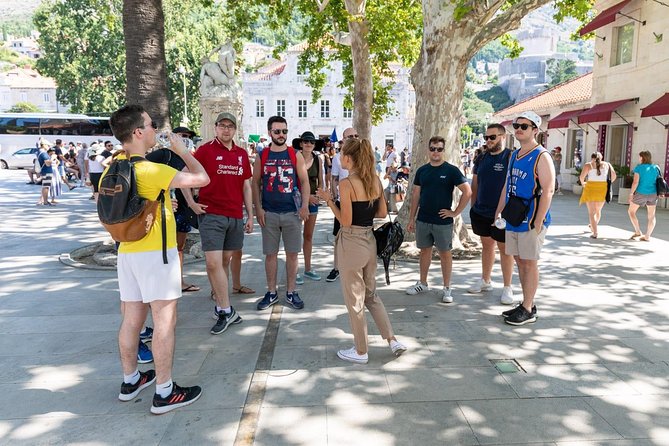
You’ll meet at Brsalje ul. 2, 20000, Dubrovnik, and the tour ends at Ul. Pred Dvorom 4, 20000, Dubrovnik. Start time is 10:00 am, and you’re looking at about 1 hour total.
The pace is meant for most visitors with moderate physical fitness. You are walking through an old, stone-heavy town, so comfortable shoes matter. This isn’t a sit-down experience, but it also isn’t an all-day endurance march.
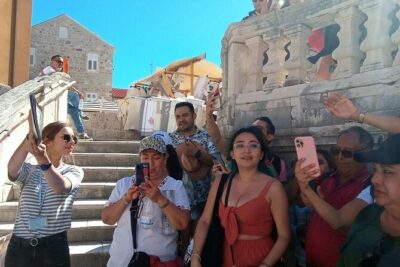
A big practical plus: the group size is capped at 20 travelers. In a place like Dubrovnik Old Town, that’s what keeps the experience conversational. I like tours where you can ask questions without shouting, and this one is built to stay that way.
Finally, you use a mobile ticket. That’s one less thing to print, lose, or misplace on a day when you’ll probably be juggling sun protection, water, and phone battery.
More routes through the Stradun side streets:
- Dubrovnik: Old Town Walking Tour
★ 4.8 · 5,174 reviews - Dubrovnik Discovery Old Town Walking Tour
★ 5.0 · 4,458 reviews - Dubrovnik Old Town History Walking Tour
★ 5.0 · 1,684 reviews - Dubrovnik Combo: Old Town & Ancient City Walls
★ 5.0 · 1,019 reviews
Stop-by-stop: Pile Gate, Stradun, Prijeko, Luza Square, and the Cathedral area
This tour moves in a logical line through the most recognizable parts of the walled core, with short stops that give you time to understand what you’re seeing.
Stop 1: Pile Gate, the drawbridge entrance
You start at Pile Gate, the main entrance to the old town and the draw bridge area. Even if you’ve seen Dubrovnik in photos, this is where the city’s defensive design becomes real. The guide’s job here is to help you read the entrance as a system, not just a pretty gateway.
If you’re the type who likes to know why something exists, you’ll appreciate this first stop. It sets up the theme of the tour: how Ragusa protected its wealth and power, then rebuilt when things went wrong.
Stop 2: Stradun, monastery views, and Onofrio’s fountain
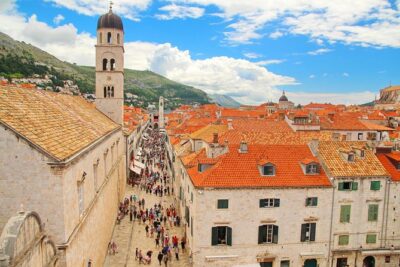
Next is Stradun, the famous main street. This stop includes time at the Franciscan monastery area and the Onofrio fountain. Stradun is where Dubrovnik looks most postcard-perfect, but the guide keeps you from seeing it like a theme park.
The fountain and the religious architecture are both good anchors for understanding how daily life worked in a maritime city. A fountain is practical infrastructure. A monastery tells you about faith, education, and community rhythms. When your guide connects those dots, the street becomes more than scenery.
Stop 3: Prijeko Street, narrow lanes with real texture
Then you shift off the main artery onto Prijeko street, known for its narrow lanes. This is where the walk starts to feel more like exploring, less like walking a film set.
Narrow streets also change how you experience sound and space. It’s an easy way to feel the density of the old town, and it helps you understand why the walls mattered so much. If you like photos, this is also the section where the geometry looks especially striking.
More of the old city crossed on foot:
- Dubrovnik: Game of Thrones Walking Tour★ 5.0 · 1,732 reviews
- Dubrovnik: City Walls Early Morning or Sunset Walking Tour★ 4.8 · 1,523 reviews
- Dubrovnik: Ancient City Walls & Wars Walking Tour★ 5.0 · 1,270 reviews
- Dubrovnik: City Walls, Old Town Walking Tour & Adriatic View★ 4.9 · 982 reviews
- Dubrovnik: Game of Thrones Walking Tour★ 4.9 · 981 reviews
Stop 4: Luza Square, Sponza Palace, and St Blaise Church
At Luza Square, you’ll see Sponza Palace and St Blaise church. This is a high-value stop because it’s a mix of civic and religious identity in one area.
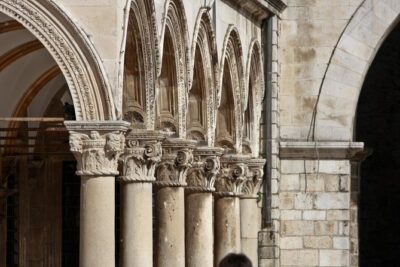
Sponza is the kind of building that rewards a guide’s explanation, because it can be hard to know what role a structure played just by looking. The guide helps you see it in context of Ragusa as a trade-and-governance power.
St Blaise adds the faith connection. You start to understand how religion and civic life reinforced each other in a city that also had to be ready for conflict.
Stop 5: Back to Stradun, including the Cathedral area
The route returns to Stradun for time near the Cathedral of Dubrovnik. This last stop helps you close the loop. You began with the gateway, then moved through the main street, and now you land at a major religious landmark.
You won’t spend all day inside every structure, but the guide’s pacing is intentional. You get the orientation and the historical placement, so later, when you come back on your own, you’ll know what’s worth lingering at.
UNESCO status and the Ragusa comeback story you’ll actually remember
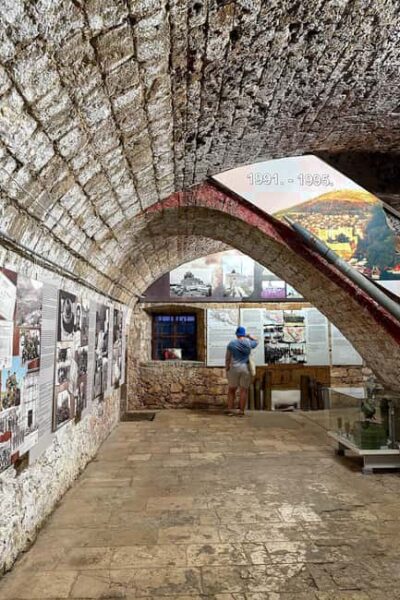
Dubrovnik’s UNESCO listing makes it sound like a monument that simply survived. The tour gives you the missing part: Dubrovnik was repeatedly knocked down and had to rebuild, including through earthquakes, wars, and the fall of Yugoslavia.
That matters because the city’s look is the result of choices after catastrophe, not just untouched medieval glory. When your guide explains that timeline, the buildings feel less like a fixed museum backdrop and more like a living record of survival.
The tour also promises you’ll hear stories and secrets, plus how the guide takes you into corners away from the heaviest tourist flow. Even without getting far from the center, those small diversions can make a big difference. In a crowded place, you need moments where you can hear yourself think.
If you’re the kind of visitor who likes meaning, this is the part that makes the walk worthwhile beyond photos.
How guides like Sonya, Ivanka, Jelena, and Marco shape the day

The most praised part of this experience is the guide. Several named guides show up in the real-world experience of this tour, and they’re described as local, story-driven, and able to answer questions without shutting down the conversation.
Here are some examples of the guide styles you might experience:
- Sonya is credited with being full of stories and delivering a very memorable orientation for first-day visitors.
- Ivanka gets credit for both history and even Game of Thrones pointers, with a real local feel.
- Jelena is described as knowledgeable and funny, with explanations that made the history feel physical.
- Ana Litre is noted for strong English and for tying in both Croatian and Dubrovnik history.
- Stela is praised for showing up with passion and enthusiasm early in the day when the heat can be an issue.
- Marco is described as brilliant and highly inspiring, with a strong grasp of history and local knowledge.
- Desa is associated with a war-focused perspective shaped by family experience.
- Andrea and Ivana are also named in connection with informative, comfortable guiding around Old Town.
What I like about this pattern is that the best part of Dubrovnik can be invisible if you don’t know where to look. A good guide does not just point at walls and call it done. They teach you how to read the town while you’re walking.
A practical bonus: one of the guides mentioned letting people go into churches when they wished. That tells me the tour is flexible enough for you to trade a few minutes of street time for a bit of interior time, as long as you keep the group moving.
What to bring, and what could slow the tour down

This is an outdoor walking tour in a historic core, so plan like you’re walking all morning.
Bring:
- Comfortable walking shoes for uneven stone streets
- Sun protection, especially in summer since Dubrovnik can get intense
- Water, since the tour is short but you’ll still be out in the open
The tour also requires good weather. If the weather is poor, you’ll be offered a different date or a full refund.
Moderate physical fitness is the official note. That’s your signal to wear shoes you trust and to take it steady on stairs and sloped segments.
Finally, because the tour is about 1 hour, you may want to schedule a flexible plan right afterward. If you want to go inside a church you saw from the outside, or if you want to follow a guide’s tip for a specific nearby stop, having time next on your schedule makes the tour feel bigger.
Price and value: is $26.38 worth it?

At $26.38 per person, the price is easy to sanity-check: you’re paying for a licensed professional guide plus local taxes, and the schedule includes an admission ticket included element at each listed stop.
For Dubrovnik, guide-led value is less about learning one famous fact and more about saving time. If you try to self-tour Old Town on your first day, you can spend a lot of energy figuring out where things fit together. Here, you get that structure quickly.
Also, the group cap at 20 travelers helps keep the experience personal enough to make questions worth asking. You’re not paying for a crowded audio headset style tour where you stand and listen to strangers.
Is it perfect value for everyone? If you already know Dubrovnik deeply and you’re staying longer in the old town with lots of museum time, you may not need an hour of orientation. But for most first-time visitors, this price is a straightforward way to turn “I saw it” into “I understood it.”
Who should book this walking tour?
I think this tour is ideal if you:
- Are visiting Dubrovnik for the first time and want a fast orientation
- Prefer walking with a guide who can answer questions in plain language
- Want the story behind Ragusa, and also how Dubrovnik’s modern identity fits that story
- Like a route that includes famous sights, plus side moments that feel less crowded
- Appreciate local guidance, especially if you enjoy hearing cultural connections and even Game of Thrones style pointers
It’s also a strong choice for day-one planning. One of the best uses of an intro tour is that it gives you a shopping list of what to return to, and it helps you navigate without stress.
If you’re someone who dislikes walking, or you want a slow, photo-heavy half day, this one-hour format might feel too tight. But if you want clarity fast, it’s a smart start.
Should you book Explore Dubrovnik Old Town Walking Tour?
Book it if you want your first Old Town day to feel guided and readable. The combination of key landmarks, a short route, and a strong emphasis on Dubrovnik’s rebuilding story makes the tour feel like an investment in how you’ll enjoy everything after it.
Skip it or consider a longer alternative if you already know Dubrovnik well, or if you plan to spend most of your time inside buildings. This tour gives you placement and context, not hours of museum time.
My bottom line: for $26.38, in a place as dense as Dubrovnik Old Town, a one-hour licensed-guided loop is a practical way to avoid wandering in circles and to understand what you are seeing.
FAQ
How long is the Dubrovnik Old Town walking tour?
It lasts about 1 hour.
Where does the tour start and end?
It starts at Brsalje ul. 2, 20000, Dubrovnik, Croatia and ends at Ul. Pred Dvorom 4, 20000, Dubrovnik, Croatia.
What time does the tour begin?
The scheduled start time is 10:00 am.
What are the main stops on the route?
You’ll visit Pile Gate, Stradun, Prijeko street, Luza Square (including Sponza Palace and St Blaise church), and the Cathedral of Dubrovnik area.
Is the ticket for monuments included?
The tour includes admission ticket at the listed stops.
What is included in the price?
Included are local taxes and a professional licensed guide.
What is not included?
Food and drinks are not included, and there is no hotel pickup and drop-off.
How big is the group?
The tour has a maximum of 20 travelers.
What level of fitness do I need?
The tour requires moderate physical fitness.
What is the cancellation policy?
You can cancel for a full refund up to 24 hours before the start time. If you cancel less than 24 hours before, the amount paid is not refunded. The tour also depends on good weather, and if it’s canceled due to poor weather you’ll be offered a different date or a full refund.
New around Dubrovnik

Old Town Walks, compared.
Dubrovnik Combo: Old Town & Ancient City Walls
Read our review →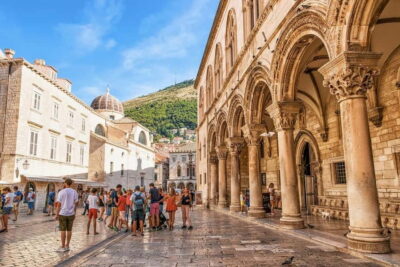
City Walls, Old Town Walking Tour & Adriatic View
Read our review →

Browse the lists this tour appears in