
Reviewed · WALKING TOURS
Dubrovnik: Walls and Wars Walking Tour
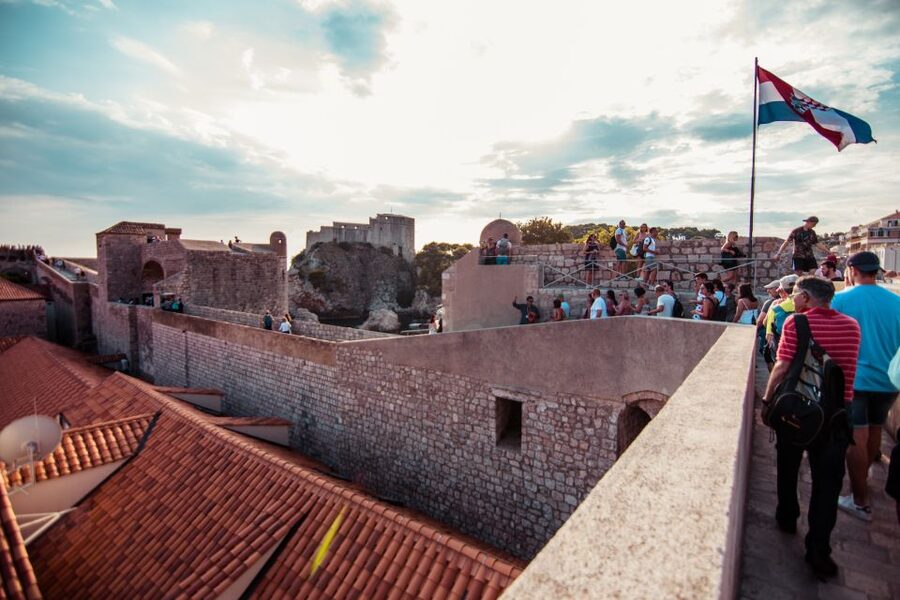
Walls here explain everything. This 2-hour walk gives you the big picture of Dubrovnik’s survival story, from diplomatic leadership to the stone walls that held firm. You’ll climb key fortifications with a licensed, English-speaking guide, then walk the walls for dramatic views over the port and Old Town.
I especially like the headset devices, which keep the history clear even when you’re moving fast along the ramparts. And the panoramas from the walls are the kind of views that make you stop asking what you are looking at, and start understanding why it was built.
The main catch is the stair-heavy climb plus the fact that the city walls entry ticket is not included in the tour price. If you have mobility limits, vertigo, or just know you struggle with heights, this will feel like a tough day.
In This Review
- Key highlights you will feel right away
- Finding Dubrovnik Walks by Pile and getting ready for stairs
- What the licensed guide does better than self-guided walls
- The wall route: Revelin Fortress, Minceta Tower, and Lovrijenac Fortress
- Panoramas over the port and Old Town, plus the stories that make them stick
- Walls and wars: how the guide connects medieval defense to later history
- Price and tickets: what you pay for the tour, and what you still must buy
- When to go and what to bring for wind, heat, and no-shelter moments
- Who this walls and wars tour is best for, and who should skip it
- Should you book the Dubrovnik Walls and Wars walking tour?
- FAQ
- Is the city walls entrance ticket included in the tour price?
- How long is the Dubrovnik Walls and Wars walking tour?
- Where do I meet the guide?
- What should I bring for the tour?
- Is this tour suitable for everyone?
- Are there rules about what I can bring or do during the tour?
- Can I get a refund if plans change?
Key highlights you will feel right away
- Headsets for a clearer guide, so you can keep up without constantly craning your neck
- Fortress stops tied to real defense logic, including Revelin Fortress, Minceta Tower, and Lovrijenac Fortress
- Big-picture stories of diplomacy and survival, not just postcard facts
- Views over the port and Old Town that change with every turn
- Local context on later wars, shared by guides with personal ties to the region’s more recent history
Finding Dubrovnik Walks by Pile and getting ready for stairs
Meet your guide at Dubrovnik Walks, Brsalje 8, with reps holding orange umbrellas. The meeting is by the Pile local bus stop, the final stop before you reach Old Town, so once you are there, you are close.
This tour is only 2 hours, but it is not a flat stroll. Bring comfortable shoes and water, and wear a hat, because the walls involve climbing and lots of sun exposure. Also, pack a credit card, because the city walls entry ticket is separate.
One more practical note: baby strollers are not allowed, and video recording is not allowed. So if you are traveling with a camera setup, plan to use still photos and keep your hands free.
What the licensed guide does better than self-guided walls
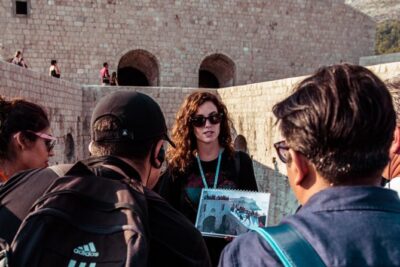
This is a guided walk on Dubrovnik’s fortifications, with a guide licensed and approved through Croatia’s Ministry of Tourism. That matters because the walls can look like one long scenic promenade if you are walking alone. With a guide, each section clicks into place as part of a defense system.
The other upgrade is the included audio headset devices. Many people find it easier to follow the guide when you stay in the group line, especially because the wall walk is long and narrow. If you drift too far behind, you may notice the headset reception getting weaker and then you start losing the story you came for.
The guide is also what makes this tour go beyond medieval walls. You are told how Dubrovnik functioned as a small independent republic, protected by both political skill and physical fortifications. Guides you might hear, based on prior tour groups, include names like Davor, Goran, Gorun, Andreja, Dogan, Maria, and Edy, and the common thread in their praise is strong communication, humor, and a willingness to answer questions.
More of the old city crossed on foot:
- Dubrovnik: Old Town Walking Tour
★ 4.8 · 5,174 reviews - Dubrovnik Discovery Old Town Walking Tour
★ 5.0 · 4,458 reviews - Dubrovnik: Game of Thrones Walking Tour
★ 5.0 · 1,732 reviews - Dubrovnik Old Town History Walking Tour
★ 5.0 · 1,684 reviews
The wall route: Revelin Fortress, Minceta Tower, and Lovrijenac Fortress
Once you start moving, the tour becomes a guided circuit of strategic points. You will do photo stops, sightseeing, and guided segments while ascending and walking along the fortifications.
Here is what those big named stops typically mean for the experience:
Revelin Fortress
This is one of the defensive structures that helps you understand how Dubrovnik organized protection around access points. Instead of treating it like scenery, the guide explains why fortresses like this existed and how they supported control and defense.
Minceta Tower
Minceta is a landmark that helps you picture height as a weapon. From the tower area, you can connect the idea of surveillance and control with what you see out over the harbor and Old Town.
Lovrijenac Fortress
Lovrijenac is the one that often makes people stop and look harder. It is a major defensive site, and the guide’s job is to connect what you are seeing with how Dubrovnik planned for threats, not just how it built for beauty.
Along the way, you also get guidance on where to look, when to pause, and how to pace yourself. Several past groups noted that guides keep a workable rhythm, sometimes even finding shaded spots for short breaks when weather allows.
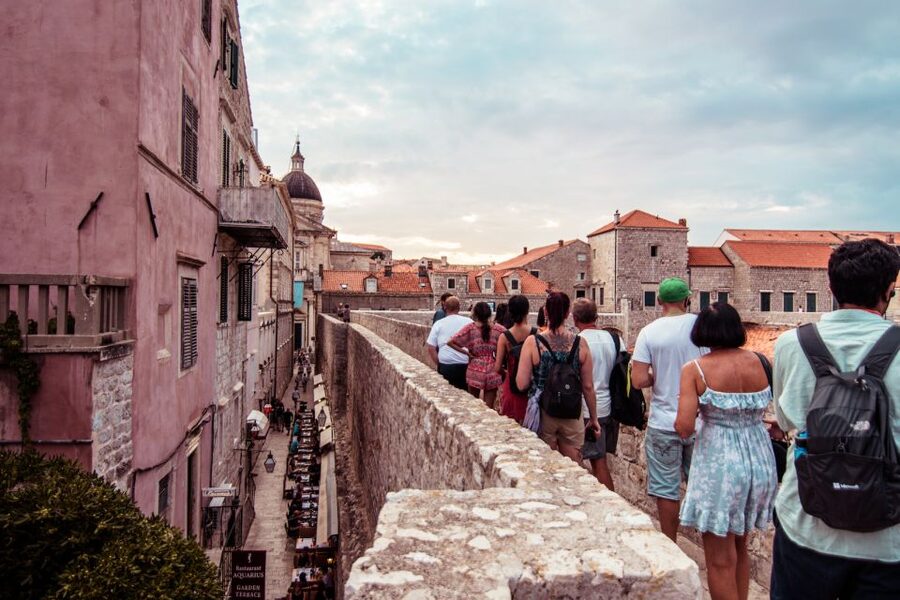
The wall walk is also a workout in real life. Plan on a lot of stairs. One popular note from prior visitors is that it can feel like around 1,150 steps, and there is often very little shade. If the forecast is hot, this is not the day to wear worn-out shoes.
Panoramas over the port and Old Town, plus the stories that make them stick

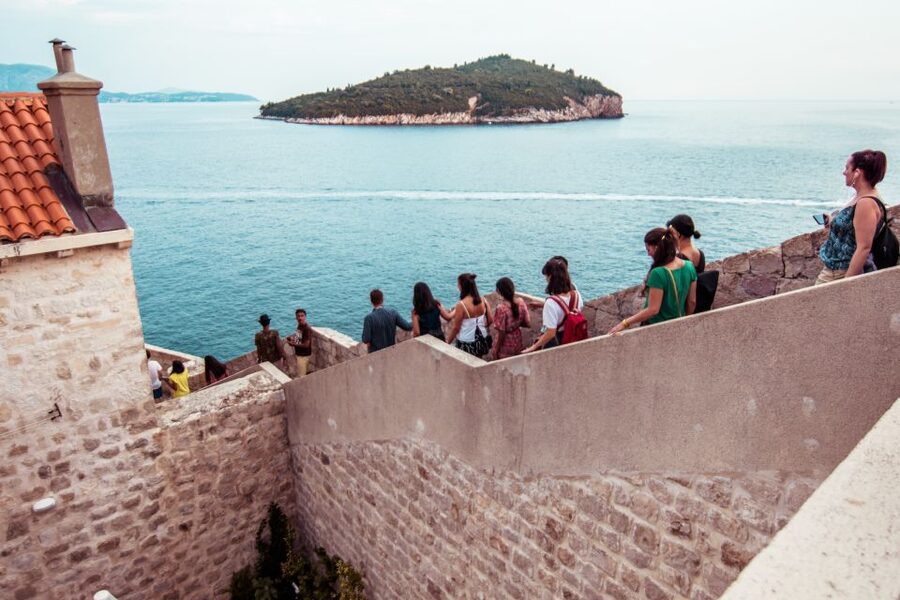
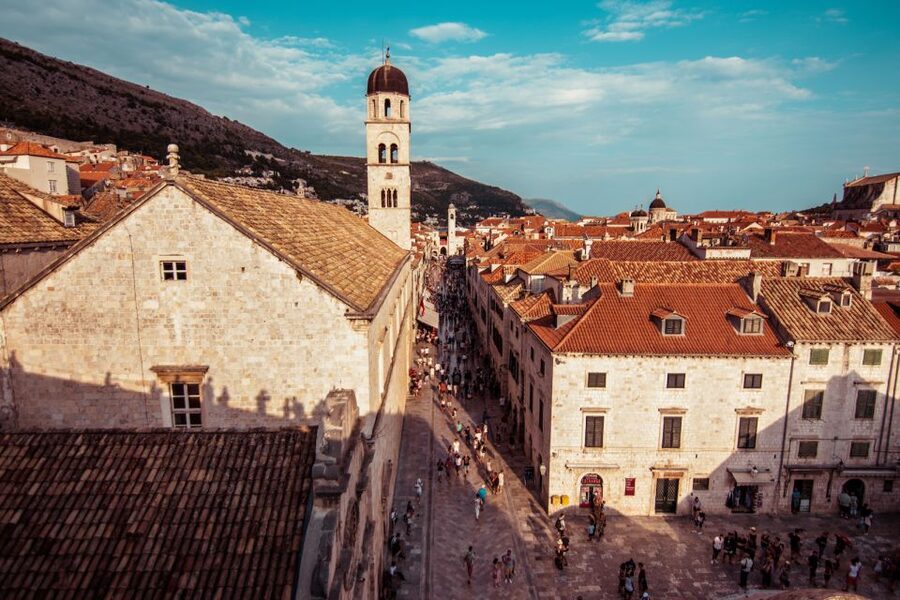
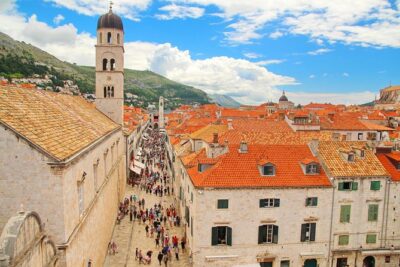
The walls deliver wide views over Dubrovnik’s harbor area and Old Town. This is the part where you get that classic “how did this city survive?” feeling, because you are seeing the city from the outside of its defenses.
But the tour does something important: it teaches you to look. You are not just admiring a skyline. You are learning what parts of the coast and Old Town were valuable, what needed protecting, and why the fortifications held both political and military meaning.
This is also where the UNESCO context lands. The tour aims to help you understand why Dubrovnik earned a spot on the UNESCO World Heritage List in 1979. In practical terms, that means you come away seeing the walls not just as old stones, but as a preserved system tied to survival, governance, and rebuilding.
You will also hear about the challenges Dubrovnik faced against powerful enemies, and how leaders managed diplomacy alongside defense. Later on, the conversation can shift toward the Homeland War and the more recent conflict history of Croatia, depending on the guide’s approach and local connection.
Walls and wars: how the guide connects medieval defense to later history
Dubrovnik’s fortifications have layers. The medieval story is about independence, trade, and controlling threats around a prosperous port. The later story is about how people remembered, rebuilt, and defended identity when Croatia faced new dangers in modern times.
A big reason this tour gets high praise is that guides often share personal perspectives, not just book facts. Some guides have lived experience related to the 1991 war, and that can turn the walls from an architectural lesson into a human story about endurance and resilience.
You may hear a bridge between eras: leaders who had to think strategically, defensive structures built to work in real conditions, and a city that kept changing under pressure. Even if you are not a history fanatic, this format helps you connect cause and effect: threats lead to decisions, decisions lead to stone and placement, and placement shapes how the city survives.
And you are not just marched from stop to stop. The guide’s style can include humor, question time, and careful pacing, with some groups appreciating how their guide checked in for rest breaks and answered questions on demand.
Price and tickets: what you pay for the tour, and what you still must buy
The walking tour price is listed at $29 per person for the 2-hour guided experience. But it is crucial to understand that city walls entrance tickets are not included.
The mandatory city walls entry tickets are:
- €40 per adult
- €15 per child, ages 7 to 18
So the real cost for an adult is essentially the tour price plus the wall entry fee. If you are budgeting tightly, add this up before you commit so there are no surprises.
You can purchase the walls ticket at the entrance when you visit, in advance, or by using a Dubrovnik Pass. Since the walls entry is required, I suggest you plan ahead so you are not dealing with long lines on the day you want the walk.
Is it worth paying separately? In my view, yes, because the walls are the attraction. But what makes this tour a value is that you are also paying for the guide and the headsets, so you get context while you are walking the expensive part of the experience. Without that framing, it is easy to end up just taking photos without really understanding what you are looking at.
Other ways the same afternoon could go from Dubrovnik:
- Blue Cave Small-Group Boat Tour from Dubrovnik★ 5.0 · 9,360 reviews
- Full-Day Dubrovnik Elaphite Islands Cruise with Lunch and Drinks★ 5.0 · 8,823 reviews
- Dubrovnik: Epic Game of Thrones Tour + Lokrum & Saver Option★ 4.9 · 5,995 reviews
- Dubrovnik: Elaphiti Islands Full-Day Cruise with Lunch★ 5.0 · 5,938 reviews
- Dubrovnik: The Original Game of Thrones Tour & Lokrum Option★ 4.8 · 5,064 reviews
When to go and what to bring for wind, heat, and no-shelter moments

Dubrovnik weather can be unpredictable, and this tour still runs through windy or rainy conditions. Prior groups described windy weather as manageable and still worthwhile, which is reassuring if your trip timing is less than perfect.
Now the practical part: the walls can feel brutally exposed. Many visitors highlight that there is virtually no shade on the walls, and that it can get very hot in summer. If you run warm, treat this like a hike, not a sightseeing stroll.
Pack:
- Comfortable shoes (you will use them hard)
- A hat
- Water
- A credit card for ticketing needs
If you want the best chance of a calmer experience, think about choosing a later starting time. One commonly mentioned strategy is doing a 6 pm tour, because it can be cooler and less crowded than peak daytime.
Who this walls and wars tour is best for, and who should skip it
This tour is not for everyone. It involves stairs and can be intense, so the tour data lists it as not suitable for:
- Pregnant women
- People with mobility impairments
- Wheelchair users
- People with heart problems
- People afraid of heights
- People with vertigo
- People with respiratory issues
- People over 80
- People with low level of fitness
If any of those apply, skip it and look for a lower-impact Dubrovnik experience. Even with the guide helping with pacing, this route is still built around climbing fortifications.
If, on the other hand, you like walking and want more than surface-level sightseeing, this is a smart pick. It suits people who enjoy a clear storyline, people who want context on Dubrovnik as a small independent republic, and people who appreciate local voices, especially when the guide connects medieval defense to later conflicts.
Also, keep yourself with the group line. It helps the headset work better and keeps you from missing key explanations.
Should you book the Dubrovnik Walls and Wars walking tour?

Book it if you want the most efficient way to understand why Dubrovnik looks the way it does. Paying for a city walls entry ticket is already part of the cost, so adding a licensed guide and headsets turns that ticket from a view into a full explanation.
I would especially recommend it if you care about the story behind the stone, including the political survival angle and the later Homeland War perspective. The guide quality seems to be the backbone of this tour, with praise for humor, clarity, and personal context from guides like Davor and Goran, plus others such as Andreja and Dogan.
Skip it if stairs or heights make you uncomfortable, or if you need an accessible route. The walls are the point, and the point comes with a workout.
FAQ
Is the city walls entrance ticket included in the tour price?
No. The city walls entry ticket is mandatory and is not included in the $29 tour price. Adults pay €40 and children ages 7-18 pay €15. You can buy it at the entrance, in advance, or with a Dubrovnik Pass.
How long is the Dubrovnik Walls and Wars walking tour?
The tour lasts 2 hours.
Where do I meet the guide?
Meet at Dubrovnik Walks, Brsalje 8, Dubrovnik. The meeting point is by the Pile local bus stop, look for Dubrovnik Walks representatives holding orange umbrellas.
What should I bring for the tour?
Bring comfortable shoes, a hat, a credit card, and water.
Is this tour suitable for everyone?
No. It involves ascending stairs and may not be suitable for pregnant travelers, people with mobility impairments, wheelchair users, people with heart problems, people afraid of heights, people with vertigo, people with respiratory issues, people over 80, or people with low fitness.
Are there rules about what I can bring or do during the tour?
Baby strollers are not allowed, and video recording is not allowed.
Can I get a refund if plans change?
Yes. Free cancellation is available up to 24 hours in advance for a full refund. You can also reserve now and pay later.
New around Dubrovnik


Walking Tours, compared.



City Walls Early Morning or Sunset Walking Tour
Read our review →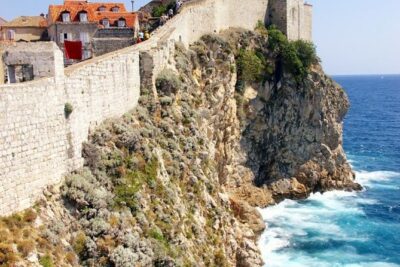
City Walls, Old Town Walking Tour & Adriatic View
Read our review →Browse the lists this tour appears in