
Reviewed · OLD TOWN WALKS
Dubrovnik Old Town: Small-Group Walking Tour With A Local
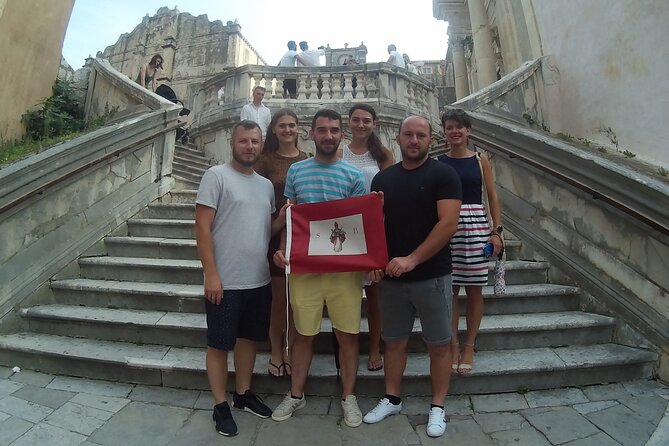
Dubrovnik makes sense when a local walks with you. This small-group Old Town tour gives you the best overview of Dubrovnik’s UNESCO core with a small-group cap of eight and local guide stories tied to real places and daily life. I love how personal it feels, and I love the fun, interactive style that makes history stick. One thing to consider: some major churches and museum interiors require separate entrance fees, so you may mostly view them from the outside.
You’ll spend about 1 hour 30 minutes to 2 hours moving through the Old Town, starting around Harbour Viewpoint and ending near Onofrio’s Large Fountain by Pile Gate. The tour runs in English, you get a mobile ticket, and it’s built for a steady walking pace without rushing you past everything.
In This Review
- Key Points Before You Go
- Why This Old Town Walk Feels Different From Big Group Tours
- Price and Value: What $34.59 Buys You in Dubrovnik
- The Route From Harbour Viewpoint to Pile Gate, and Why It Works
- Stop-by-Stop Breakdown: From Ploče Gate to Stradun and Out Pile Gate
- Ploče Gate, the Eastern Entrance
- Dominican Monastery, Old and Still Active
- City Harbor, Trade and Wooden Galleons
- Cathedral of the Assumption of the Virgin Mary, Baroque Stories and Legends
- Church of St. Ignatius of Loyola, the Jesuit Link to the Moon
- Monument of Poet Ivan Gundulic, Market Square Energy
- Rector’s Palace, Power and Political Life
- Statue of Marin Držić, the Golden-Nose Tradition
- Sponza Palace, Customs House and the Archives
- Bell Tower, a Small Stop With a Specific Point
- Church of Saint Blaise, Patron Saint Legend
- Orlando Column, From Knight to Symbol
- Dubrovnik Synagogue, the Jewish Community’s Story
- Stradun, the Shiny Main Street
- Church of St Roch, Graffiti From Kids Playing Football
- Onophrian Fountain, the Aqueduct Terminus
- Franciscan Church and Monastery, Pharmacy Continuity
- Ending Near Pile Gate
- The Guide Factor: Trivia Games, Humor, and Details You’ll Reuse
- What to Know About Timing, Weather, and Walking Comfort
- Who This Tour Is Best For
- Should You Book It?
Key Points Before You Go
- Max 8 people means less crowding and more back-and-forth with the guide
- Local, story-first guiding links sights like Sponza, Rector’s Palace, and Stradun to how the city worked
- Interactive trivia or mini-games help you notice details you’d otherwise miss
- A smart route covers the Old Town main landmarks from Ploče Gate to Pile Gate
- Entrance fees are not included for churches or museums, so plan for optional add-ons
Why This Old Town Walk Feels Different From Big Group Tours
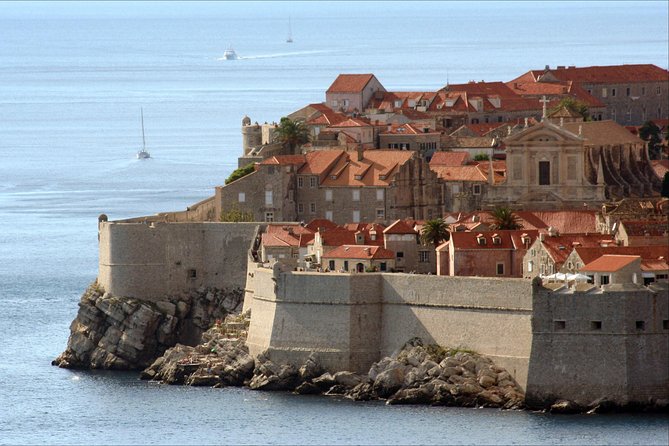
Dubrovnik’s Old Town is gorgeous, but it can also feel like a photo factory if you’re just following a crowd. This tour is set up to do the opposite: you get a guided route through the main stops, then you start seeing the city’s logic. Streets make more sense. Buildings start to feel connected. Even the famous viewpoints feel less random.
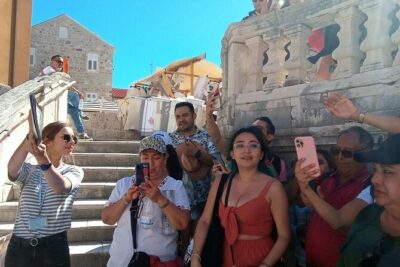
The biggest reason it works is the size. With a cap of eight, you’re not wedged shoulder-to-shoulder. That matters in Dubrovnik because the Old Town streets can get tight, and your view depends on where you stand. You also hear the guide better, and you’re not stuck waiting for the group to catch up.
The other strong draw is how local the presentation feels. Multiple guides on this tour, including Marko and Marco (and even a guide named Lucy in one account), are praised for being engaging and for using personal insight to make the city’s past feel close to the surface. One review specifically mentioned the guide living in the Old Town for a long time, and I can see how that changes the tone from textbook to lived-in.
Possible downside is simple: this is not a tour that pays your way into every church or museum. Stops that require an entrance ticket are listed as not included, so you’ll likely get stories and key views without covering the cost of paid interiors.
Price and Value: What $34.59 Buys You in Dubrovnik
At $34.59 per person, you’re paying for two things: a tight route through the Old Town’s highlights and a guide who can explain what you’re looking at while you walk. For many visitors, that’s the real value. Dubrovnik is a place where you can spend hours wandering and still feel like you barely scratched the surface.
This is also good value because it’s not one-note sightseeing. The stops include both the big headline places (like the cathedral area, Sponza, Rector’s Palace, and Stradun) and the smaller religious and civic corners that usually get skipped when people do a rush-around on their own. Several accounts mention the guide pointing out details in architecture and carvings, and that’s exactly where a paid guide earns their keep.
Another value factor is timing. The tour runs about 1.5 to 2 hours. That’s long enough to get oriented and learn the city’s story, but short enough that you still have energy to explore after, without feeling like you’ve surrendered the day.
More routes through the Stradun side streets:
- Dubrovnik: Old Town Walking Tour
★ 4.8 · 5,174 reviews - Dubrovnik Discovery Old Town Walking Tour
★ 5.0 · 4,458 reviews - Dubrovnik Old Town History Walking Tour
★ 5.0 · 1,684 reviews - Dubrovnik Combo: Old Town & Ancient City Walls
★ 5.0 · 1,019 reviews
The Route From Harbour Viewpoint to Pile Gate, and Why It Works
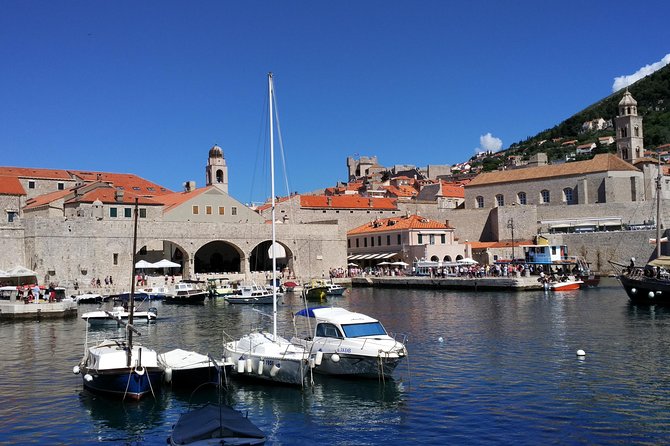
The tour starts at Harbour Viewpoint (Ul. Svetog Dominika bb) and ends near Onofrio’s Large Fountain at Pile Gate. That matters because it sets you up to see the Old Town in a logical sweep.
Instead of bouncing back and forth, you’re moving through key landmarks in a sequence that gradually brings you toward Stradun, then toward the western end of the historic zone. The route also keeps you mostly in the action of the Old Town rather than adding long detours.
It’s also listed as near public transportation, which is handy. Dubrovnik visitors often underestimate how long it can take to get from one area to the next, especially during busy periods.
Stop-by-Stop Breakdown: From Ploče Gate to Stradun and Out Pile Gate
Here’s what you can expect as you go, and what’s special about each stop. I’ll also note where an entrance ticket is not included, so you don’t get surprised.
Ploče Gate, the Eastern Entrance
You begin at Ploče Gate, the eastern entrance to the Old Town. This is a good opener because it anchors your visit with the city’s older defensive and civic layout. You’ll get a short introduction and a quick explanation of why Dubrovnik’s location and fortifications mattered.
Drawback to note: it’s brief here. The goal is orientation, not a deep lesson.
Dominican Monastery, Old and Still Active
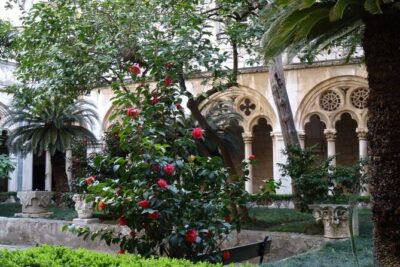
Next is the Dominican Monastery, described as the oldest still active monastery in Dubrovnik. Even if you don’t go inside, the stop gives you a feel for how religious life stayed in the city over centuries.
Entrance ticket is not included here, so think of this as a story-and-view stop, with paid entry only if you choose to add it later.
More of the old city crossed on foot:
- Dubrovnik: Game of Thrones Walking Tour★ 5.0 · 1,732 reviews
- Dubrovnik: City Walls Early Morning or Sunset Walking Tour★ 4.8 · 1,523 reviews
- Dubrovnik: Ancient City Walls & Wars Walking Tour★ 5.0 · 1,270 reviews
- Dubrovnik: City Walls, Old Town Walking Tour & Adriatic View★ 4.9 · 982 reviews
- Dubrovnik: Game of Thrones Walking Tour★ 4.9 · 981 reviews
City Harbor, Trade and Wooden Galleons
Then you head toward the City Harbor, once the center of trade where wooden galleons were built. This is where Dubrovnik starts to sound less like a movie set and more like a working port city.
If you’re the type who wants the “how did this city function” part of history, this stop is a big win.
Cathedral of the Assumption of the Virgin Mary, Baroque Stories and Legends
At the Cathedral of the Assumption of the Virgin Mary, you’ll hear a bit of a mystery-style setup: one cathedral, or maybe three, depending on how you interpret what you’re seeing. The guide shares stories about its past and includes legends.
Because the cathedral stop is marked as not included for admission, plan on spending time on the outside and on what the guide points out. If you want to go in, you’ll need to pay separately.
Church of St. Ignatius of Loyola, the Jesuit Link to the Moon
This stop is the Jesuit church, and it comes with a memorable hook: you’ll hear about when and why the Jesuits arrived in Dubrovnik. One standout detail from accounts of this tour is the guide’s mention that a famous Jesuit from Dubrovnik even has a crater on the Moon named after him.
Again, admission is not included, so expect a close look and storytelling more than a full inside visit.
Monument of Poet Ivan Gundulic, Market Square Energy
At the Monument of Poet Ivan Gundulic, you’ll meet one of the most famous poets of the old Dubrovnik Republic. The tour time here is short, but it puts you near a lively Old Town feel, including the market square area.
This is also a good checkpoint stop, because by now you’re warmed up and your eyes are starting to spot symbols and shapes rather than just taking pictures.
Rector’s Palace, Power and Political Life
The Rector’s Palace is one of the most important civic stops on the route. You’ll hear about it as the supreme political institution of the old Dubrovnik Republic and learn about the aristocracy and political wisdom tied to how the city was run.
Admission is listed as not included here, so you’ll get the story and the key takeaways even if you do not purchase an interior ticket.
Statue of Marin Držić, the Golden-Nose Tradition
Then comes the statue of Marin Držić, the Renaissance playwright. You’ll hear the story about why people touch his nose, a small ritual that says a lot about how locals and visitors interact with the city’s icons.
This stop is quick, but it’s also a crowd-pleaser because it’s memorable and easy to recognize later as a Dubrovnik detail you can share.
Sponza Palace, Customs House and the Archives
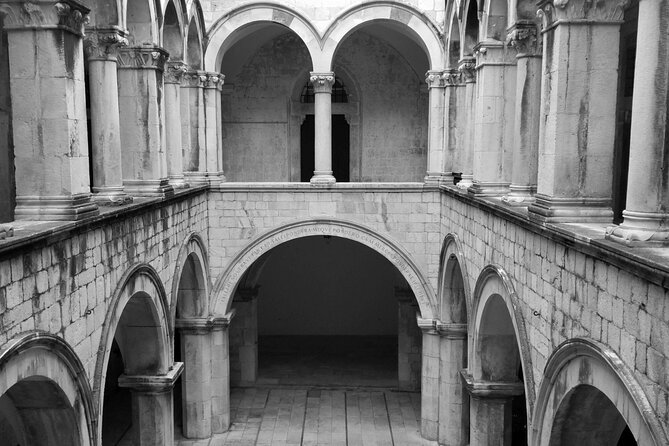
At Sponza Palace, you’ll learn that it once functioned as the customs house of the Dubrovnik Republic. Today, it’s tied to historical archives. The guide also includes Latin proverbs, which is a nice reminder that this place ran on trade, law, and educated culture.
Admission is not included, so again, it’s about the architecture, symbolism, and stories you can carry with you.
Bell Tower, a Small Stop With a Specific Point
You’ll pause at the Bell Tower and hear what makes it special, with your guide explaining the standout features. This is short, but it’s worth paying attention because tower details often get overlooked when you’re racing toward Stradun.
Church of Saint Blaise, Patron Saint Legend
The Church of Saint Blaise is about Dubrovnik’s patron saint. You can see statues connected to Blaise all over the city, and the guide shares the legend and the true story.
It’s another quick stop with free viewing time, so use it to scan for saint symbolism. If you love religious iconography, you’ll enjoy how much repeats across Dubrovnik’s walls and facades.
Orlando Column, From Knight to Symbol
At the Orlando Column, you’ll hear about Orlando, a brave knight figure, and how he became a symbol of the old Dubrovnik Republic. This stop is short, but it’s packed with meaning because it ties a public monument to civic identity.
Dubrovnik Synagogue, the Jewish Community’s Story
Next is the Dubrovnik Synagogue. The tour offers history of the Jewish community in Dubrovnik, from early days through hardship and into the present. It’s an important stop because it adds another layer to the city beyond the Catholic landmarks.
Admission is not included for this stop, so you’ll get context from the outside and from the guide’s narration.
Stradun, the Shiny Main Street
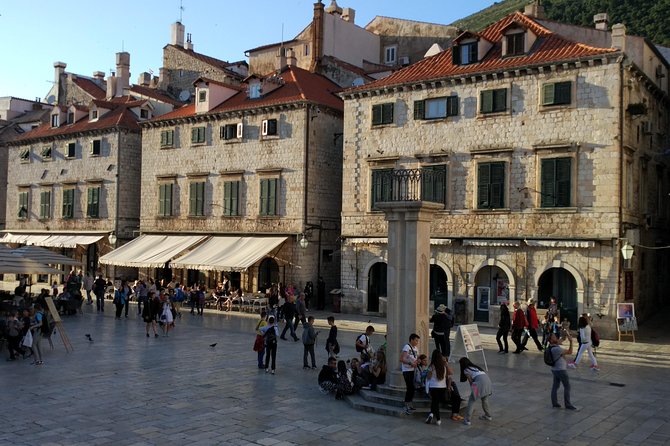
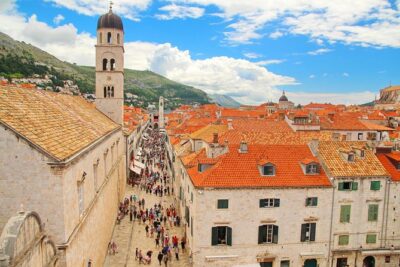
Then you reach Stradun, the famous main street of the Old Town. You’ll walk along it, and the smooth, bright feel of the street makes it easy to understand why it became the spine of visitor life.
This is a good stretch for regrouping, grabbing a water bottle if you need it, and watching how the city’s architecture funnels sight lines as you move.
Church of St Roch, Graffiti From Kids Playing Football
You’ll detour to the Church of St Roch, tucked away from Stradun. Here you’ll hear a surprisingly human story from the 16th century, about kids who played football in front of the church, along with the guide showing old graffiti on the side wall.
This stop is a great example of what a local guide can do. It turns a quiet corner into a specific moment in time.
Onophrian Fountain, the Aqueduct Terminus
At Onophrian Fountain, built in the 15th century, you’ll learn it was the terminus of the old aqueduct. This is one of those details that helps you understand Dubrovnik’s engineering alongside its architecture.
Short stop, strong payoff if you like practical “how did they do it” facts.
Franciscan Church and Monastery, Pharmacy Continuity
The Franciscan Church and Monastery stop focuses on the continuity of its work, including mention that it has one of the oldest pharmacy traditions continuing in Europe. The guide also explains how Franciscans contributed to Dubrovnik society.
Admission is not included for this stop, so you’ll likely get the meaning through stories and visible cues rather than a paid interior visit.
Ending Near Pile Gate
Finally, the tour ends near Pile Gate, by Onofrio’s Large Fountain. The guide shares how this leads into the end of the Dubrovnik Republic, so you leave with a stronger sense of what changed after centuries of self-rule.
This is the kind of closing that helps your own exploration afterward, because you start noticing why certain buildings survived and others did not.
The Guide Factor: Trivia Games, Humor, and Details You’ll Reuse
This tour earns its top rating through the guide experience. In multiple accounts, guides like Marko and Marco are praised for mixing humor, clear explanations, and interactive elements like trivia questions and friendly competition. That sounds small, but it changes your attention span.
When the guide asks you to look for something specific, like carvings or saint statues, you start doing it. And once you start doing it, Dubrovnik becomes easier to read on your own later.
One review highlighted the pacing as not rushed and the guide making things memorable. Another mentioned a game format that kept people engaged, even a teen. That’s a strong signal that the tour can work for mixed-age groups who don’t all share the same interest level in history.
There’s also a recurring theme: guides show personal insight, not just facts. A guide described as local and raised in the Old Town adds extra flavor, because you feel like you’re hearing how the city talks, not just what a book says.
What to Know About Timing, Weather, and Walking Comfort
The tour length is about 1 hour 30 minutes to 2 hours. That fits well on a first or second day, because it gives you bearings fast. It also fits well on a day when your energy is limited, because it’s not a full-day commitment.
Weather matters. The experience is described as requiring good weather, so if rain or harsh conditions hit, you may be offered a different date or a full refund.
As for comfort, you’re walking through compact Old Town streets. Wear shoes that handle uneven stone and keep your pace steady. This is also the kind of tour where you’ll want to take small breaks as needed, especially if you’re sensitive to heat in peak season.
Who This Tour Is Best For

I think this tour is ideal if you want:
- a quick, structured orientation to Dubrovnik’s Old Town
- a local guide who explains why the buildings matter
- less crowd pressure than the big group tours
- a fun format that helps you remember what you saw
It’s also a smart choice if you’re short on time. If you only have a couple hours in the Old Town before moving on, this gives you a map in your head, not just a memory full of photos.
Should You Book It?
If you want to feel like Dubrovnik clicks, not just dazzles, I’d book this. The price is reasonable for a guided walk that covers major landmarks and adds human stories, and the small-group size of up to 8 is a real quality upgrade.
Skip it or adjust expectations if you specifically want to go inside lots of paid churches or museums during the tour. Entrance fees are not included for stops marked with not included admission, so you may need separate tickets if interior access is a must.
If you like interactive guiding, clear pacing, and a route that takes you from Ploče Gate toward Stradun and out by Pile Gate, this is a strong fit for your Dubrovnik first views.
New around Dubrovnik

Old Town Walks, compared.
Dubrovnik Combo: Old Town & Ancient City Walls
Read our review →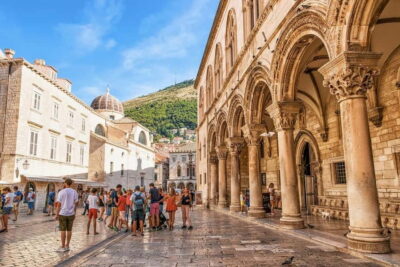
City Walls, Old Town Walking Tour & Adriatic View
Read our review →

Browse the lists this tour appears in