
Reviewed · WALKING TOURS
Dubrovnik Food and Drink Walking Tour with a Local Guide
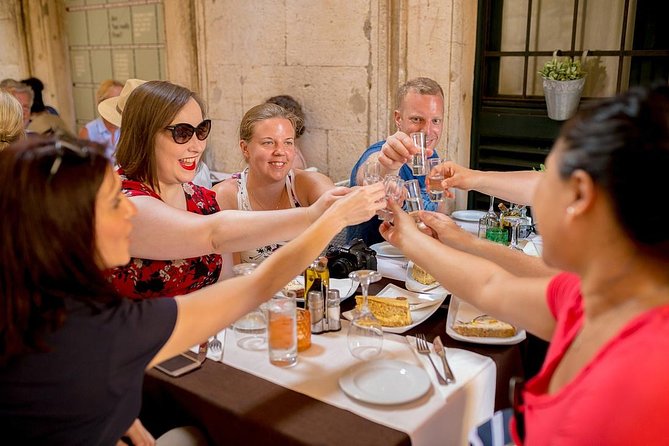
Dubrovnik tastes better on foot. This 3 hour walk mixes regional food and drinks with landmark stories, so you understand where you are and what you are eating, not just the order you’ll sample it in.
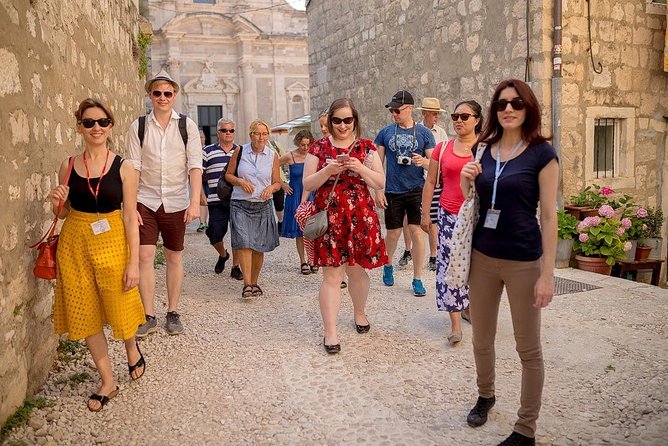
I love how small the group stays (up to 12). That makes it easier to chat with your guide and other guests while you keep moving through Old Town.
One possible drawback to plan for: you’ll be standing a decent amount while the guide explains what you’re seeing, and the tastings can be portion forward rather than tiny samples.
In This Review
- Key takeaways
- Why Dubrovnik Food Works Better Than a Sightseeing-Only Day
- Price and Value: What $175.35 Includes (And What That Saves You)
- Meeting at Poljana Paska Miličevića, Then Walking the Old Town Loop
- Stop 1: Onofrio’s Large Fountain and the City’s Water Story
- Stop 2: Ruđer Bošković Square, Perfect for a Food-First History Lesson
- Stop 3: Rector’s Palace and the Republic Behind the Republic
- Stop 4: Church of Saint Blaise, Patron Saint of Dubrovnik
- Stop 5: Stradun (Placa), the City’s Main Street
- Orlando’s Column, Gundulić Square Market, and Sponza Palace
- Porat Dubrovnik (Old Port), Where Trading Shaped the Plate
- Cathedral of the Assumption and the Orthodox Church’s Architectural Mix
- Finishing at the Bell Tower: Leaning, Rebuilt, Still Standing
- What You Eat and Drink: Regional Dishes, Pag Cheese, and Carob Cake
- How the Guide Shapes the Experience (And Why Reviews Mention Ana and Dražen)
- Who Should Book This Tour, and Who Might Skip It
- Should You Book This Dubrovnik Food and Drink Walking Tour?
- FAQ
- How long is the Dubrovnik Food and Drink Walking Tour?
- Is the tour offered in English?
- What is included in the price besides the guide?
- How many stops include tastings?
- Is there a vegetarian or vegan option?
- Can I request dietary requirements?
- Where do I meet for the tour?
- How large is the group?
- Does the tour run in bad weather?
- What is the cancellation policy for a full refund?
Key takeaways
- Food and drinks are included, so you are not guessing what costs extra
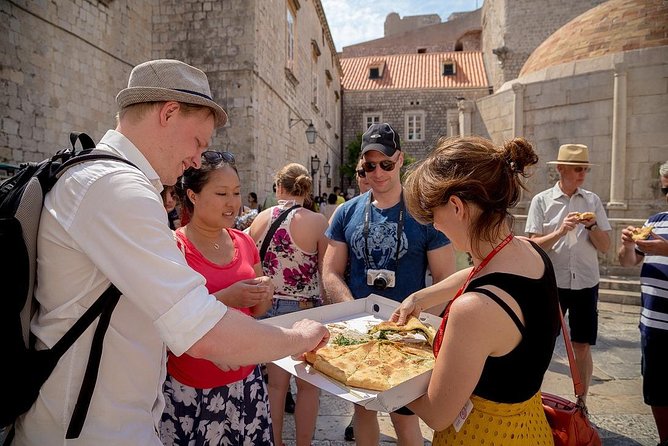
- Four tasting moments: charcuterie starter, two mains, and dessert with wine and a local liqueur
- Old Town landmarks on your route, from Onofrio’s Fountain to the Bell Tower
- Small group size (max 12) for better pacing and questions
- Guide talent is a big theme in reviews, with names like Ana, Dražen, and Ava appearing often
- Diet details matter: vegetarian option available, vegan option not available
Why Dubrovnik Food Works Better Than a Sightseeing-Only Day
Food tours can go two ways: eat first, learn later. This one is built to do both at once. You taste local classics, then connect them to the city’s layout and the big personalities that shaped Dubrovnik, from civic life to religion.
What I like most is that the walk makes the Old Town feel readable. You stop at places that look like scenery in photos, then you hear what they were for, like why Stradun is the city’s main spine and why Orlando’s Column mattered as a kind of public noticeboard.
Price and Value: What $175.35 Includes (And What That Saves You)
At $175.35 per person for about 3 hours, the value comes from what you do not have to pay for separately. You get a local guide, a small-group walking format, and a structured set of tastings with drinks.
In the included lineup, you get:
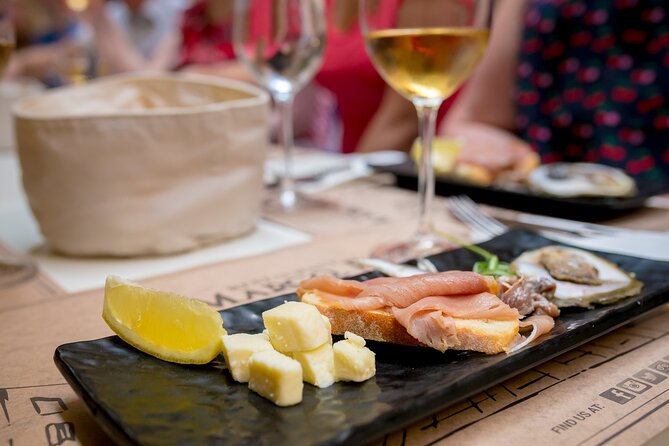
- A starter (charcuterie board) at the first stop
- Two main courses at the next two tasting stops
- Dessert plus a glass of wine at the last tasting stop, with a local liqueur alongside the dessert
- Coffee and/or tea
- Bottled water at three of the tasting stops
- Red or white wine glasses at three stops
If you have ever paid entry fees and then added on restaurant snacks one by one, you’ll appreciate this style. You get a full, guided plan that already accounts for the most expensive part of eating on a walking itinerary: drinks.
More of the old city crossed on foot:
- Dubrovnik: Old Town Walking Tour
★ 4.8 · 5,174 reviews - Dubrovnik Discovery Old Town Walking Tour
★ 5.0 · 4,458 reviews - Dubrovnik: Game of Thrones Walking Tour
★ 5.0 · 1,732 reviews - Dubrovnik Old Town History Walking Tour
★ 5.0 · 1,684 reviews
Meeting at Poljana Paska Miličevića, Then Walking the Old Town Loop
You meet at Poljana Paska Miličevića, 20000 Dubrovnik, and the tour ends back near the same starting point. That matters because Old Town is compact but steep in places, so a loop keeps the day from turning into constant backtracking.
The tour runs in all weather conditions, so bring a rain layer if the forecast looks moody. Good shoes are non-negotiable. Dubrovnik’s limestone paving and tight streets are not made for flimsy soles or slippery sandals.
Group size is capped at 12, and reviews highlight the friendly vibe that comes from that. The guide also encourages conversation, which is a big plus if you want more than a lecture.
Stop 1: Onofrio’s Large Fountain and the City’s Water Story
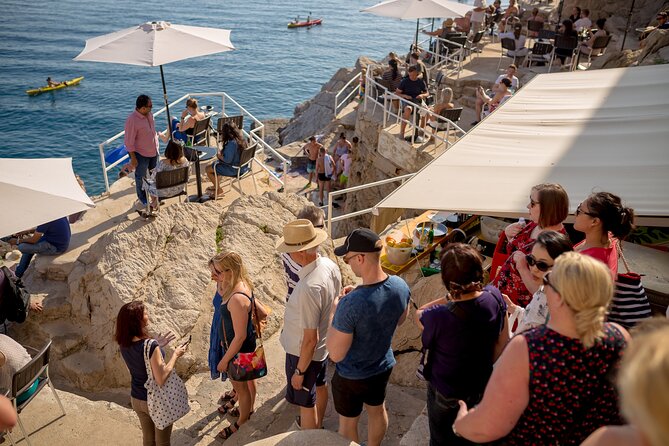
The walk begins at Onofrio’s Large Fountain, near Pile Gate. This isn’t just a pretty starting photo. The fountain is part of the city’s older water supply system, built in 1438 by engineer Onofrio della Cava, with water brought from a spring more than 7 miles away.
The guide usually ties this to why Dubrovnik functioned as a serious maritime power. A city can look like stone and marble, but it still needs plumbing, storage, and reliable flow. Even the fountain’s history is dramatic: it was damaged by the 1667 earthquake and again during the Croatian War of Independence, then restored.
There’s also a practical upside for you: you’re starting at a working public water source area. You get a cool moment right at the start, before the walking and tasting ramp up.
Stop 2: Ruđer Bošković Square, Perfect for a Food-First History Lesson
Next comes Ruđer Bošković Square, named for the famous Dubrovnik son Ruđer Bošković (physicist, astronomer, mathematician, philosopher, diplomat, poet, theologian, and Jesuit priest). This is a quick stop, but it gives you a sense of Dubrovnik’s pride in scholarship and public life.
You’ll likely notice how this square sits inside UNESCO-listed Old Town. The setting helps the story land. It’s not a museum room. It’s part of the walking network that residents used for centuries.
This is also where the first round of eating is timed in the tour flow. The format keeps you from drifting into the lunch crowd with no plan, especially useful in peak season.
Stop 3: Rector’s Palace and the Republic Behind the Republic
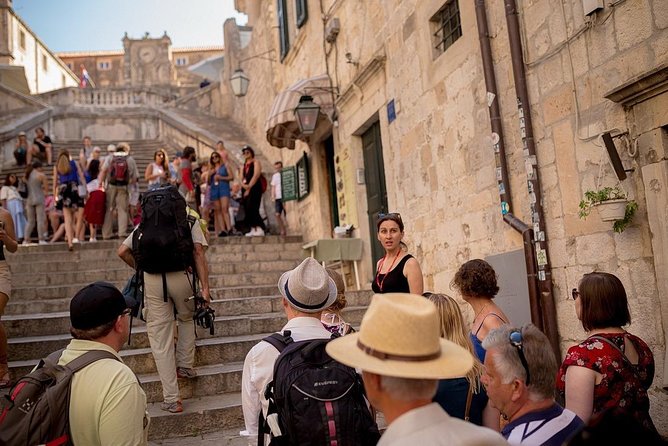
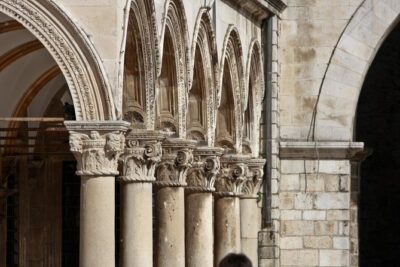
At Rector’s Palace, you’re looking at the former seat of the Rector of the Republic of Ragusa, Dubrovnik’s old medieval name. The building is described as Gothic-Renaissance, and you can feel that official, civic purpose in its presence.
This is where the tour does something helpful: it connects “government” to “food culture.” When a city functions as a trading republic, its kitchens and markets are not isolated from the world. Ingredients move, recipes travel, and hospitality becomes a civic style, not only personal taste.
It’s also a good point in the walk to slow down your pace slightly. You’re still moving, but the stories help you stop seeing Old Town as one big backdrop.
More Dubrovnik konobas, cellars and counters:
- Dubrovnik Old Town Food Tour: Small-Group Experience★ 5.0 · 419 reviews
- Dubrovnik Gastronomy: 3-Hour Food and Wine Tour★ 4.9 · 249 reviews
- Ston and Korcula Island Day Trip from Dubrovnik with Wine Tasting★ 4.0 · 130 reviews
- Dubrovnik: Old Town Food Tour★ 4.8 · 119 reviews
- Sunset and Wine / Dubrovnik Sunset Tour and Premium Wine Tasting★ 5.0 · 113 reviews
Stop 4: Church of Saint Blaise, Patron Saint of Dubrovnik
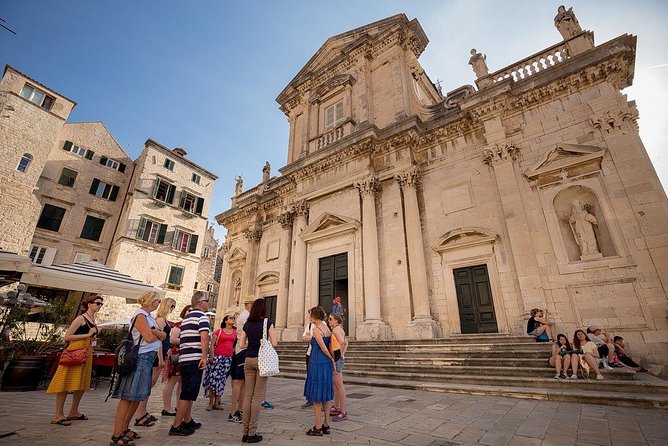
You head to the Church of Saint Blaise, a Baroque church dedicated to Dubrovnik’s patron saint, Saint Blaise (Sveti Vlaho). This stop is short, but it usually anchors the tour’s bigger cultural thread: Dubrovnik was not only a trading republic, it was also a deeply religious community.
What makes this stop practical is that it gives you a reference point for the rest of the walk. Once you know the patron saint and what the church represents, the city’s symbols stop feeling random.
The tasting flow continues here with more food and the drink pairing portion of the tour. By now you’ll be past the awkward stage of arriving hungry but not yet sure what the day is building toward.
Stop 5: Stradun (Placa), the City’s Main Street
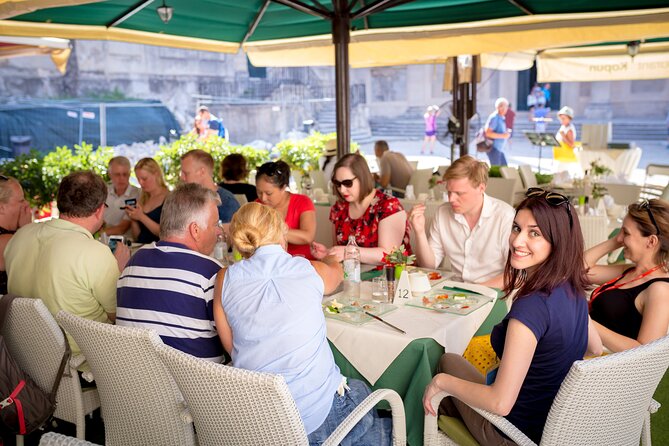
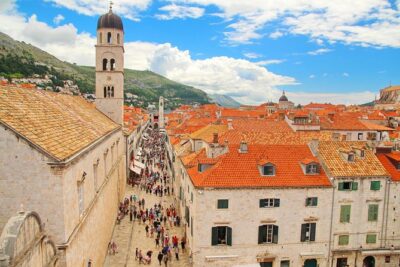
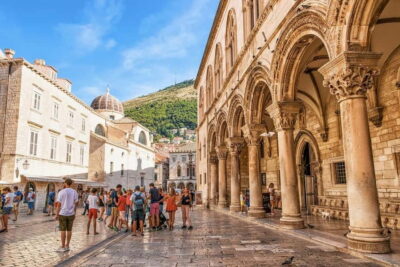
Now you’re on Stradun, also called Placa. This is Dubrovnik’s main pedestrian thoroughfare, about 300 meters long, running between Pile Gate on one side and Ploče Gate on the other.
Stradun is the city’s lifeline in a very literal sense. It’s the clearest line through Old Town, which makes it easier for you to map your own sightseeing after the tour. When you know Stradun and where it connects, you can navigate without constantly checking your phone.
Also notice the paving. It’s limestone, and it can get hot in sun or slick with rain. This is one more reason to wear shoes you trust.
Orlando’s Column, Gundulić Square Market, and Sponza Palace
After Stradun, you visit Orlando’s Column (also known as Orlando or Roland’s Column). Erected in 1418, it features a limestone statue of Orlando, a medieval knight linked to Dubrovnik folklore. The column is about 17 feet high and was traditionally used as a public announcement site, a symbol of justice, and even a unit of measurement for local cloth sellers. That last detail is the kind of story that makes history feel human.
Next is Gundulićeva Poljana Market (Gundulić Square Market), an open-air market space that turns into a lively market each morning. It’s named after poet Ivan Gundulić, and it’s a reminder that Old Town isn’t only for viewing. It’s also for daily commerce and local routine.
Then you reach Sponza Palace, known as Divona in Croatian, near the end of Stradun by the city bell tower. The palace is highlighted as one of Dubrovnik’s most beautiful and historically significant buildings, so it’s a natural photo stop.
Tip for your own timing: after these stops, you’ll have a much better sense of where the “center of gravity” is. That makes it easier to choose where to return later for dinner.
Porat Dubrovnik (Old Port), Where Trading Shaped the Plate
Moving to Porat Dubrovnik, the Old Port or City Harbor, gives you a break from stone-on-stone street canyon views. This location is tied directly to maritime history, and it’s described as a hub for trade linking Dubrovnik with ports across the Mediterranean and beyond.
Here’s why that matters for your eating: seafood traditions do not come from nowhere. A port city develops its own rhythm of fish, shellfish, preservation, and simple dishes that travel well. Even when your meal is not a direct copy of a centuries-old recipe, the ingredients and logic behind them usually trace back to trade routes and what was available.
If you want the tour to help you plan the rest of your trip, this port stop is a great moment to mentally list the kinds of dishes you want to chase later, especially if you like Adriatic flavors.
Cathedral of the Assumption and the Orthodox Church’s Architectural Mix
The tour then brings you to The Cathedral of the Assumption of the Virgin Mary, a Baroque structure and one of the city’s most iconic landmarks. From a practical travel perspective, cathedrals also work as orientation points. They are built to be seen, and they help you understand how the city used major religious space as a social anchor.
Next you visit the Orthodox Church of the Annunciation, the Serbian Orthodox Church in Dubrovnik. The highlight here is the architectural blend, a mix of Byzantine and Southern Adriatic influences.
That’s a smart pairing in one walking day: you see Catholic Baroque style at the cathedral and then contrasting Orthodox influence nearby. It helps you understand Dubrovnik as a crossroads, not a single-style postcard.
Finishing at the Bell Tower: Leaning, Rebuilt, Still Standing
The walk ends at the Bell Tower at the eastern end of Stradun. The tower is about 31 meters high and was originally built in 1444. It was reconstructed in 1928 after the original structure began to lean dangerously.
This finish is satisfying because it closes the loop. You started near Pile Gate and the city’s water story, and you end at one of the strongest visual markers in the Old Town.
Also, it’s a reminder that Dubrovnik’s survival has always involved restoration. Between earthquakes, war damage, and reconstruction, the city is still a working, lived-in place, not a frozen set.
What You Eat and Drink: Regional Dishes, Pag Cheese, and Carob Cake
The sample menu gives you a clear idea of the flavors you’ll run into across the tasting course:
- Starter: Kopun salad, served with seasonal fresh veggies and fruits
- Main: creamy barley with Adriatic shrimps, served with cheese from the island of Pag
- Dessert: Dubrovnik carob cake with wild bitter orange jam
This is not food that feels generic. It’s built from recognizable Adriatic ingredients and regional traditions. Pag cheese is one of those details that makes your meal feel connected to Croatia beyond Dubrovnik itself.
Drinks are part of the plan. You’ll have coffee and/or tea, wine at three stops (red or white), and a local brandy or liqueur with the dessert.
Diet notes you should take seriously before booking:
- Vegetarian option is available if you advise at booking
- Vegan option is not available, and the tour is not recommended for vegans
If you have allergies or strong dietary needs, the safest move is to message your requirements during booking so the operator can plan the right substitution.
How the Guide Shapes the Experience (And Why Reviews Mention Ana and Dražen)
The best food walks are half meal, half storytelling. In reviews, guides such as Ana, Dražen, and Ava come up again and again. The common thread is that they connect Dubrovnik’s history and culture to the food and wine you’re tasting, instead of treating the walk like a playlist of monuments.
I also like the pacing style described in reviews as easygoing and well paced. Small-group touring means you can ask questions without the group being swallowed by noise.
That said, there is one fair consideration from a minority review style: if you dislike standing history lectures and prefer to sit down more during explanations, this format may feel a bit heavy early on. The tradeoff is that you’re learning in context, right in front of the places being discussed.
Who Should Book This Tour, and Who Might Skip It
You’ll enjoy this most if:
- You want a history lesson that comes with food, not separate from it
- You like regional cooking and want a structured way to try it inside Old Town
- You want a small group where you can actually talk, not just shuffle behind others
- You plan to eat out for the rest of your stay and want a smart starting point
You might skip it if:
- You are strict about vegan options, since vegan substitutions are not available
- You get uncomfortable with a standing-focused format, because some explanations happen before and during walking rather than only once you’re seated
Should You Book This Dubrovnik Food and Drink Walking Tour?
Yes, if you want the easiest way to get your bearings in Old Town while also eating a proper Croatian meal with wine. The ticket price covers the biggest variables, including food, drinks, and the guide, so you spend less time budgeting on the fly.
I’d especially book it early in your trip if you want to know where to return later. Once you’ve walked Stradun, seen the Bell Tower, and tasted the regional classics like kopun salad and carob cake, your dining choices stop feeling random. You’ll know what direction you like, and why.
FAQ
How long is the Dubrovnik Food and Drink Walking Tour?
The tour runs for approximately 3 hours.
Is the tour offered in English?
Yes, the tour is offered in English.
What is included in the price besides the guide?
The price includes a local guide, a small-group walking tour, snacks on the tasting stops (starter, two mains, and dessert), coffee and/or tea, bottled water at three stops, and alcoholic beverages including wine at three stops and a local brandy or liqueur with dessert.
How many stops include tastings?
The included tastings are scheduled across the first four stops: a charcuterie board starter, a first main course, a second main course, and dessert with wine and a liqueur.
Is there a vegetarian or vegan option?
A vegetarian option is available if you advise at booking. A vegan option is not available, and the tour is not recommended for vegans.
Can I request dietary requirements?
Yes. You should advise any specific dietary requirements at the time of booking.
Where do I meet for the tour?
You meet at Poljana Paska Miličevića, 20000 Dubrovnik, Croatia.
How large is the group?
The tour is limited to a maximum of 12 travelers.
Does the tour run in bad weather?
It operates in all weather conditions. The experience requires good weather, and if it is canceled due to poor weather, you will be offered a different date or a full refund.
What is the cancellation policy for a full refund?
You can cancel up to 24 hours in advance for a full refund.
More Food in Dubrovnik
- Wine, food and olive oil by PhD student
★ 5.0 · 111 reviews - Half-Day Wine and Food Tasting from Dubrovnik
★ 4.5 · 106 reviews - Island Hopping & City Walls Cruise with Food and Open Bar
★ 5.0 · 102 reviews - Pelješac Full-Day Wine and Food Tour from Dubrovnik
★ 5.0 · 72 reviews
New around Dubrovnik

Walking Tours, compared.
City Walls Early Morning or Sunset Walking Tour
Read our review →
City Walls, Old Town Walking Tour & Adriatic View
Read our review →Browse the lists this tour appears in