
Reviewed · OLD TOWN WALKS
1.5-Hour Walking Tour of Dubrovnik’s Old Town
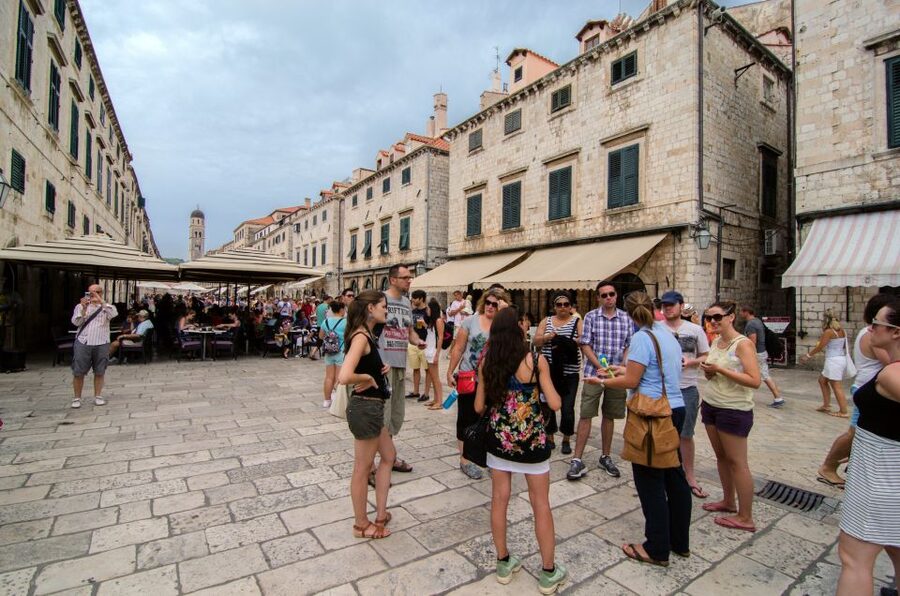
Dubrovnik feels like a museum you can walk. This 1.5-hour Old Town walk gives you a clear route through the most important landmarks without drowning you in facts. You start at Pile Gate and finish with a big-picture sense of how this walled city grew and why it looks the way it does today.
I especially like that the tour packs major stops into one tight loop, including Onofrio’s Fountain and the Franciscan Monastery cloister. You also get context that helps you spot the big artistic and political symbols as you go, including Renaissance highlights like Sponza Palace. One drawback to plan for: entrance fees are not included, so if you want to go inside specific buildings, you may pay extra.
In This Review
- Key things that make this tour worth your time
- Entering the Old Town at Pile Gate (and getting your bearings fast)
- Onofrio’s Fountain and the aqueduct that explains everything
- Franciscan Monastery: Pieta sculpture and a 14th-century cloister
- Sponza Palace: where Renaissance design becomes the city’s public face
- Orlando’s Column, the City Bell Tower, and the civic core
- The Golden Age angle: art you can actually picture
- 90 minutes on foot: how to use this tour as your Dubrovnik “first day” tool
- Price and what you should expect to pay extra
- What to bring, and how to make the walk easier
- Who this tour fits best
- Should you book this Dubrovnik Old Town walking tour?
- FAQ
- How long is the 1.5-hour Dubrovnik Old Town walking tour?
- Where is the meeting point for the tour?
- What is included in the price?
- Are hotel pick-up and drop-off included?
- Are entrance fees included?
- Is the tour guided in English?
- What should I bring with me?
- Is free cancellation available?
Key things that make this tour worth your time
- Pile Square start by Amerling Fountain makes it easy to find, even if you are new to the Old Town maze
- Onofrio’s Fountain and its aqueduct link give you a real-world reason the city works and lasts
- Franciscan Monastery focus includes the restored Pieta sculpture and a 14th-century cloister setting
- Sponza Palace as the Renaissance highlight helps you understand the shift from medieval to later periods
- Landmark checklist finish covers Orlando’s Column, the City Bell Tower, the Rector’s Palace, and St Blaise
Entering the Old Town at Pile Gate (and getting your bearings fast)
Your tour starts outside the Old Town walls at Pile Gate, in Pile Square by the Amerling Fountain, right in front of Dubravka 1836. That is a smart way to begin. Pile Gate is basically the front door to the whole historic core, so you are not guessing where to start or how to connect sights.
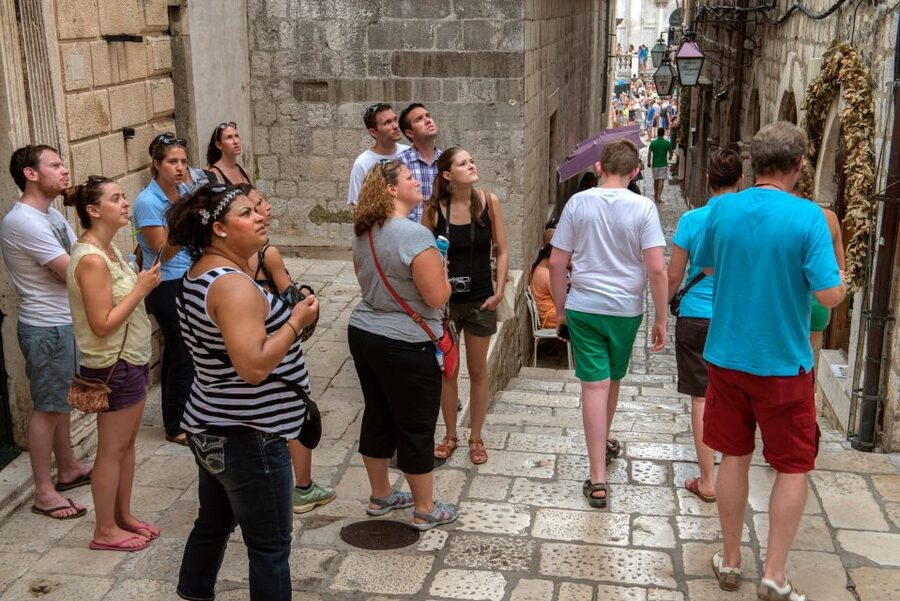
From there, the walk is designed to keep you moving through the city’s story in the order that makes sense on foot. Narrow streets can feel random, and Dubrovnik’s beauty can make you forget to look up. A good guide keeps your eyes where they should be: at doorways, sculptural details, and the grand civic buildings that tell you who held power and when.
Also, based on past tours, the guiding style matters here. Elvia, Sara, and Lydia have all been praised for being engaging and for turning the city into something you can actually understand, not just photograph. That kind of explanation tends to make a short tour feel longer, because you walk away with mental “hooks” for what you just saw.
Onofrio’s Fountain and the aqueduct that explains everything
Early on, you will see Onofrio’s Fountain, the famous circular fountain at the Pile Gate entrance area. What makes it more than a pretty stop is the connection your guide will point out: it is tied to an aqueduct system that brings water from a spring about 7.5 miles (12 kilometers) outside the town.
That detail is small but powerful. Dubrovnik’s Old Town looks timeless, but it is really a place that had to solve practical problems fast. Water supply, walls, and city planning go together. When you understand that the city’s survival depended on systems running well beyond the walls, you naturally start noticing why certain public buildings feel so important and why the city invests in stone and structure.
If you like your sightseeing with at least a little “how does this work” logic, this fountain moment is a great early payoff.
More routes through the Stradun side streets:
- Dubrovnik: Old Town Walking Tour
★ 4.8 · 5,174 reviews - Dubrovnik Discovery Old Town Walking Tour
★ 5.0 · 4,458 reviews - Dubrovnik Old Town History Walking Tour
★ 5.0 · 1,684 reviews - Dubrovnik Combo: Old Town & Ancient City Walls
★ 5.0 · 1,019 reviews
Franciscan Monastery: Pieta sculpture and a 14th-century cloister
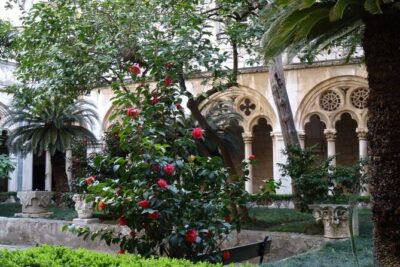
Next comes the Franciscan Monastery, one of the emotional and architectural stops on the route. The highlight here is a restored Pieta sculpture, plus a gorgeous cloister dating back to the 14th century.
A cloister is not just an elegant courtyard. It is a design statement: quiet space, stone patterning, and a layout meant to support contemplation and daily religious life. In Dubrovnik, seeing that kind of medieval space helps you slow down a bit after the street-level rush of the Old Town.
This stop also tends to be where guides do their best work explaining why Dubrovnik’s “golden” reputation did not happen by accident. You start connecting the dots between faith, civic pride, and the wealth that showed up in architecture later.
One practical note: monasteries and cloisters can be cooler than the open streets, but they are still outdoors in many ways. Bring what your tour asks for, especially sunscreen and a sun hat, because the Old Town sun can be relentless even when the stones look shaded.
Sponza Palace: where Renaissance design becomes the city’s public face
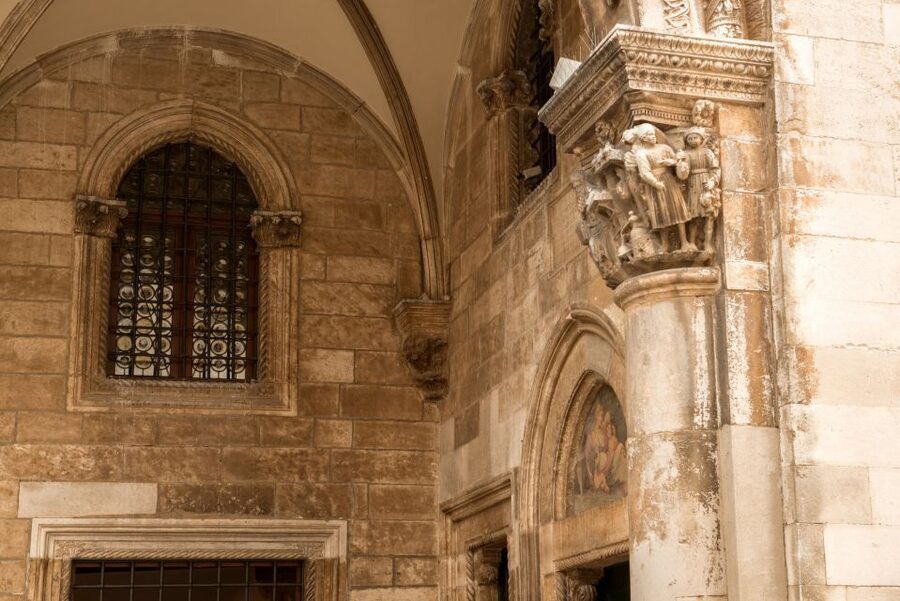
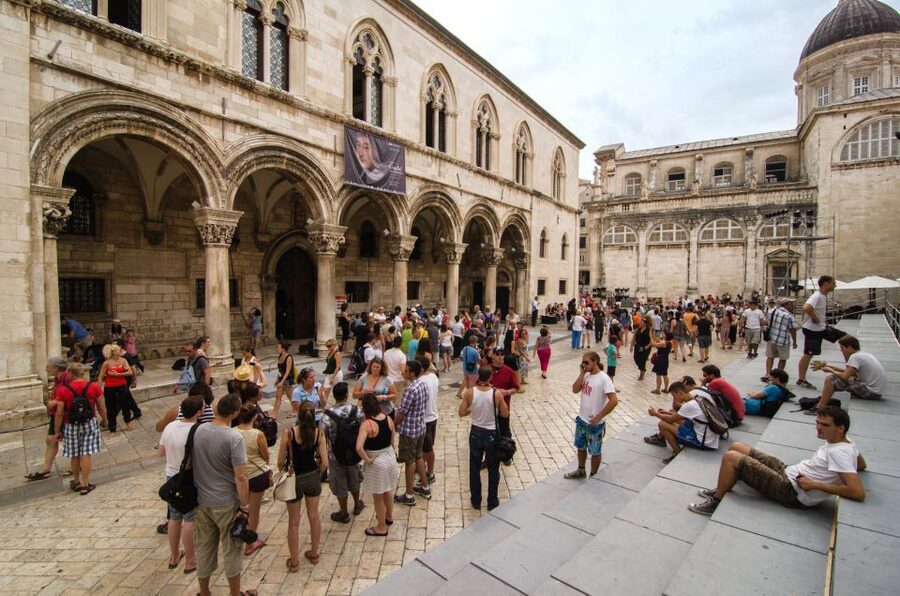
Then you reach one of the tour’s main “period” markers, Sponza Palace. It is described as Dubrovnik’s Renaissance highlight, and that is exactly what you should look for here: how the city shifts stylistically and functionally as time moves forward.
Sponza is special because it sits at the intersection of civic life and art. It is not only a pretty facade, it is part of how the city organized itself and represented stability. If you have ever wondered why some buildings feel like they were made to impress both citizens and visitors, this is the kind of stop that answers that question.
When I think of good short tours, I think of the ones that give you one “anchor building” like Sponza. Once you have that anchor in your mind, the surrounding landmarks make more sense. You start reading the Old Town the way locals likely did: as a map of power, culture, and identity.
Orlando’s Column, the City Bell Tower, and the civic core
After Sponza, the route turns into a sequence of big-name landmarks that together explain how Dubrovnik ran. You will see:
- Orlando’s Column
- The City Bell Tower
- The Rector’s Palace
- The Church of St Blaise
These are not random stops. They form a civic checklist. Columns and towers signal authority in a city where public symbols mattered. The Rector’s Palace adds the political layer, because it represents leadership and administration. The Church of St Blaise brings you back to spiritual identity and the role religion played in everyday legitimacy.
This section is also a good reminder that Dubrovnik’s Old Town is not only about medieval walls and photo spots. It is about how a city communicated its authority through stone, position, and design.
If you enjoy architecture, you will likely find yourself looking upward more than usual here. The guide’s job is to point out what you might miss on your own, especially the meanings behind the details rather than only the appearance.
The Golden Age angle: art you can actually picture
The tour description highlights masterpieces connected to Dubrovnik’s Golden Age. Even if you are not trying to memorize art history, you will benefit from having context placed right where you see the building or symbol.
That is the key value of a guided walk like this. You do not just collect sights. You learn the “why” in the exact location where the answer is visible. After Sponza, Orlando’s Column, and the civic buildings, the city stops feeling like a movie set and starts feeling like an organized, ambitious place that built culture into daily space.
In past runs, guides have spent a bit longer than the planned time, with one tour going close to two hours. That extra breathing room is often where questions land. If your guide is friendly and responsive, you get to ask what you really want to know, not only what the tour script covers.
More of the old city crossed on foot:
- Dubrovnik: Game of Thrones Walking Tour★ 5.0 · 1,732 reviews
- Dubrovnik: City Walls Early Morning or Sunset Walking Tour★ 4.8 · 1,523 reviews
- Dubrovnik: Ancient City Walls & Wars Walking Tour★ 5.0 · 1,270 reviews
- Dubrovnik: City Walls, Old Town Walking Tour & Adriatic View★ 4.9 · 982 reviews
- Dubrovnik: Game of Thrones Walking Tour★ 4.9 · 981 reviews
90 minutes on foot: how to use this tour as your Dubrovnik “first day” tool
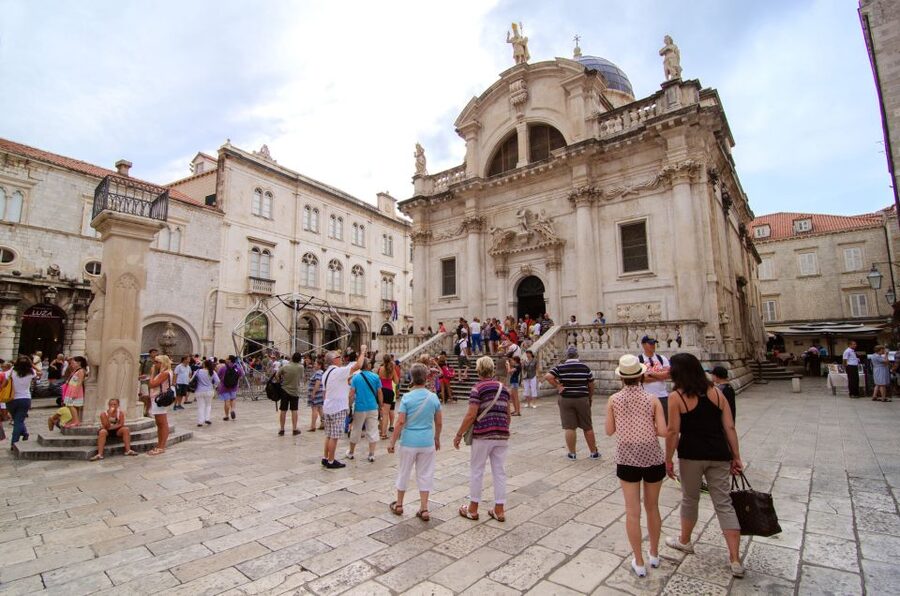
This is designed as a quick orientation, not a full-day deep immersion. With 90 minutes, you can do two smart things:
1) Learn the layout so the rest of your Old Town time feels easier
2) Get recommendations while you still have momentum
A short orientation tour is especially helpful in Dubrovnik because the streets can be confusing when you are trying to go from one landmark to another. Once you know the main civic spine and how Pile Square connects to the rest of the core, you can wander with confidence instead of feeling lost.
One more benefit: after a focused intro like this, your second walk gets better. You begin spotting symbolism and design choices that you would otherwise treat as decorative background.
Price and what you should expect to pay extra
The price is $30 per person for a live English guide for about 1.5 hours, and the included item is simply guide services. That is pretty standard for a walking tour, and the value comes from what the guide adds: route clarity, context for landmarks, and the ability to ask questions in real time.
What is not included is important:
- Hotel pick-up and drop-off
- Food and drinks
- Entrance fees
So, if you want to go inside places while you are in the area, expect extra costs depending on the specific sites. Also, while the tour gives you major visual hits, it does not automatically mean you will be doing long interior visits at every stop.
A practical way to plan: treat this as the “see the highlights and understand the city” portion, then decide later which buildings you want to return to for a longer look.
What to bring, and how to make the walk easier
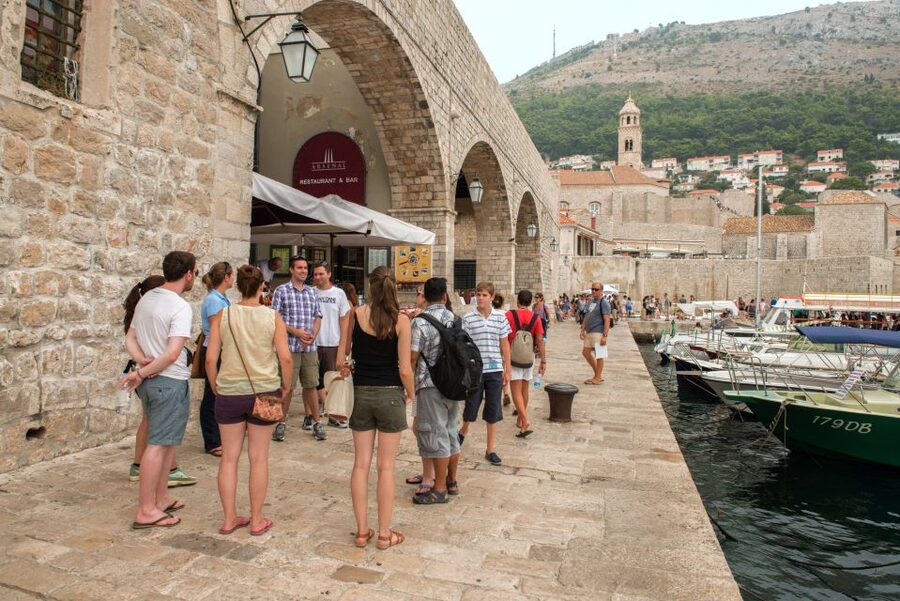
This tour specifically asks for:
- Sunglasses
- Sun hat
- Sunscreen
That is not just a generic reminder. Dubrovnik’s Old Town is often bright and exposed, and the stone streets can feel warm even when you are in the shade of buildings. If you want to enjoy the walk without constantly stopping to cool down, take the sun seriously.
Comfort also matters. Even though the duration is short, you are still walking on historic surfaces. Wear shoes you can stand in and walk in for 90 minutes without discomfort.
Who this tour fits best
I think this tour is best for you if:
- You want a structured first look at Dubrovnik’s Old Town
- You like your sightseeing explained in plain language as you walk
- You want a route that hits the major landmarks without committing to a long day
It is also a good choice for couples and solo visitors who want to beat confusion, find a logical order for the sights, and still have time afterward to explore on your own.
If you want a tour that includes lots of extra ticketed entrances or a full day of site-by-site time, you might find it short. But as a focused orientation and history-and-symbols walk, it does what it promises.
Should you book this Dubrovnik Old Town walking tour?
If you are trying to make your first hours in Dubrovnik count, I would lean yes. For $30 and about 90 minutes, you get a practical route from Pile Gate, plus a strong sequence of landmark stops that explain how the city functioned and why its art and architecture matter. The guide experience also seems to be a big part of the appeal, with Elvia, Sara, and Lydia specifically called out for engaging local storytelling.
Book it if you want the city’s main threads in one pass, then use your free time afterward to wander, photograph, and choose which spots deserve a second visit.
FAQ
How long is the 1.5-hour Dubrovnik Old Town walking tour?
The tour runs for 90 minutes.
Where is the meeting point for the tour?
Please meet your guide at 10:30h at Pile Square, outside the Old Town city walls, by the Amerling Fountain in front of Dubravka 1836.
What is included in the price?
The tour includes guide services.
Are hotel pick-up and drop-off included?
No, hotel pick-up and drop-off are not included.
Are entrance fees included?
No, entrance fees are not included.
Is the tour guided in English?
Yes, the live tour guide provides the tour in English.
What should I bring with me?
Bring sunglasses, a sun hat, and sunscreen.
Is free cancellation available?
Yes. You can cancel up to 24 hours in advance for a full refund.
New around Dubrovnik

Old Town Walks, compared.
Dubrovnik Combo: Old Town & Ancient City Walls
Read our review →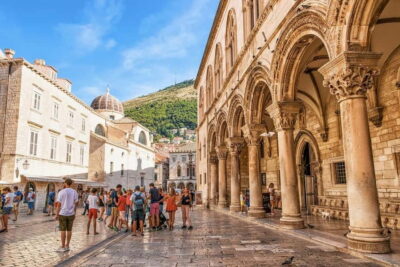
City Walls, Old Town Walking Tour & Adriatic View
Read our review →

Browse the lists this tour appears in