Reviewed · TOURS
Small Group Tour; Balkans & Central Europe – Dubrovnik to Vienna
You hike where the Alps feel close. This small-group route links medieval Dubrovnik, Mostar, Sarajevo, Belgrade, Budapest, and more, with standout days in northern Albania around Komani Lake and Valbona Valley.
I also like that the tour runs with a professional guide from start to finish, and the reviews highlight guides such as Bilbil, Mira, and Sokol for being practical with free time, not just calling out landmarks. One possible drawback: the pace is active, with long drive days plus only breakfast included most days, so plan to budget for lunches and dinners.
In This Review
- Key highlights to watch for
- From Dubrovnik to the northern Albania mountains, the trip’s real feel
- Komani Lake and Valbona Valley, your two days of real hiking
- Mostar and Blagaj: Stari Most, bazaars, and that cliffside spring
- Sarajevo walking route: ruins, markets, and the Latin Bridge story
- Belgrade and Kalemegdan: fortress views and a park break
- Sremski Karlovci, Novi Sad, and Subotica: the “baroque and wine” stretch
- Budapest, Danube views, and Buda Castle with included entry
- Győr and Bratislava: smaller stops that reward your attention
- The final handoff in Vienna, and how to finish strong
- Price and value: what you’re really paying for
- Who this tour suits best
- Should you book this tour?
- FAQ
- FAQ
- What are the start and end points of the tour?
- How long is the tour?
- How large is the group?
- What does the tour include for accommodations?
- Are meals included?
- Are entry tickets included?
- Do I get hotel pickup and drop-off?
- What fitness level is required?
- Is tipping required?
- What happens if I need to cancel?
Key highlights to watch for
- Komani Lake boat ride and mountain views during the two-day northern Albania outing
- Small group size (max 10), which makes it easier to move as a unit and get real guidance
- UNESCO sites with context, from Stari Most in Mostar to Buda Castle and Bratislava Castle
- Danube cities in a smart order, Belgrade to Novi Sad to Budapest to Győr to Bratislava
- Guides who manage free time well, with named examples in feedback like Bilbil, Mira, and Armando
From Dubrovnik to the northern Albania mountains, the trip’s real feel
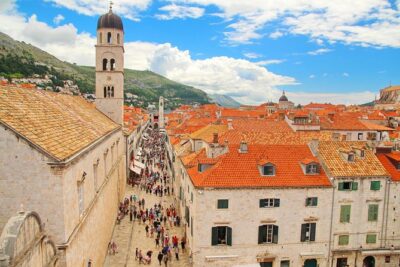
This is not a sit-behind-the-bus tour. You spend real time walking in historic towns, then you get a breather in nature with hiking days in northern Albania. If you like your travel mix to include both photo stops and purposeful walking, this route fits that style.
The group is capped at 10 people, so you usually get a calmer flow through places like Mostar’s old bazaar and the old-town streets of Sarajevo or Bratislava. You also start with a hotel pickup in Dubrovnik at 7:00 am, which helps you avoid the stress of figuring out the first logistics.
The best part for me is that the trip does not treat Albania as an afterthought. The two days around Komani Lake and Valbona Valley are positioned as the emotional and scenic payoff, and the feedback consistently calls out the scenery and the boat ride on Komani Lake as highlights.
Komani Lake and Valbona Valley, your two days of real hiking
This is the heart of the tour. You get two days hiking in and around Komani Lake and the Valbona Valley with a local guide, built around big alpine views and a real sense of place. It is not just a short walk with a view, it is an active outing that matches the moderate physical fitness level the tour asks for.
What I’d plan for: uneven ground and long stretches where you will earn the views. The tour includes meals and overnight accommodations for this hiking segment, which matters because it keeps you from constantly hunting for food after a long day on your feet.
From the feedback, the Komani Lake boat ride is a standout moment, and the Valbona Valley scenery is the kind that makes you slow down and stop thinking about the next stop. Even if you are a strong walker, you will still feel how the mountains set the tempo.
If you are the type who likes nature that still feels local, this part is where the trip earns its name. You’re not just passing through, you’re with a guide in the area and living the day-to-day rhythm for a couple days.
Choosing between boats and walls? These sit close by:
- Blue Cave Small-Group Boat Tour from Dubrovnik
★ 5.0 · 9,360 reviews - Full-Day Dubrovnik Elaphite Islands Cruise with Lunch and Drinks
★ 5.0 · 8,823 reviews - Dubrovnik: Epic Game of Thrones Tour + Lokrum & Saver Option
★ 4.9 · 5,995 reviews - Dubrovnik: Elaphiti Islands Full-Day Cruise with Lunch
★ 5.0 · 5,938 reviews
Mostar and Blagaj: Stari Most, bazaars, and that cliffside spring
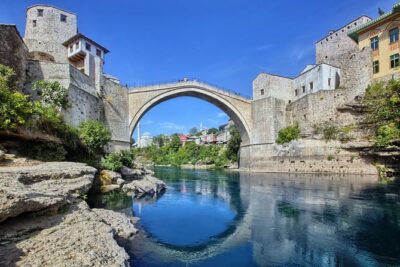
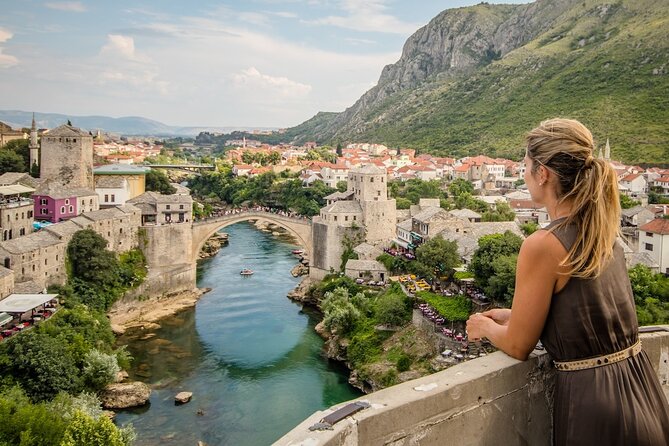
Day one crosses into Bosnia and Herzegovina and aims straight at the Mostar classics. You’ll see Stari Most, the Old Bridge, UNESCO-recognized and built in the Islamic architectural style of the 16th century. It’s a strong first image, because it’s dramatic without needing interpretation, and the tour makes it easy to connect the bridge to the city around it.
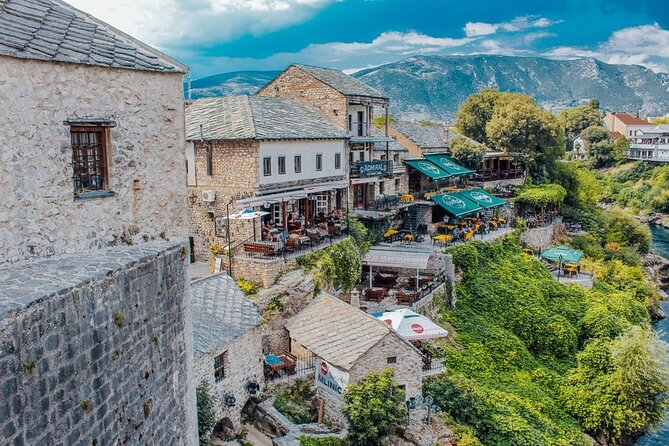
Next you wander the Old Bazaar area. This is the part where you get the layered feel of Mostar, old stone streets and Ottoman-era market energy next to newer touches. The tour also points out commemorative elements in the town, including stones with Don’t Forget written around Mostar’s historical references.
Then comes Blagaj tekija, outside Mostar, tucked under a cliff with blue water in front. The tour includes admission here, so you don’t have to think about it when you arrive. You get a sense of the Ottoman medieval vibe of the Blagaj area, and you’re looking at the spring of the river Buna, one of the most memorable natural backdrops on the route.
One practical caution: Mostar and its markets can be lively, so wear shoes you trust on cobblestones. If you hate dragging your feet after a long drive, bring a bottle of water and plan to keep your stops efficient.
Sarajevo walking route: ruins, markets, and the Latin Bridge story
Sarajevo is where this tour turns from architecture to lived history. After breakfast, you drive from Mostar and spend time walking on uneven terrain, including ruins and reminders tied to the Yugoslav War. You’ll see bullet holes and cannon marks around town, and your guide explains the story of Sarajevo’s origins and layers of rule.
What I like here is the balanced geography the tour covers. Sarajevo is presented through Ottoman and Austria-Hungarian parts of the city, with bazaars and mosques on one side and churches and synagogues on another. The tour frames it as a city with many identities, which helps you understand why people describe Sarajevo as more than one “Europe” at once.
Then you visit the Latin Bridge, tied to the WWI trigger story. The bridge’s name and the area it connects helps you picture how events played out in real space, not just in textbooks. The tour also builds in a free-time block so you can eat something local, since Sarajevo is known for hearty meat dishes and desserts.
Practical tip: Sarajevo’s walking is not hard climbing, but it is uneven. If you have any knee issues, pack trekking poles if you use them, or simply take slower steps and let your guide know.
Belgrade and Kalemegdan: fortress views and a park break
From the Serbia side, the tour stops first in Zvornik, along the Drina River. It’s a calmer intermission before arriving at bigger-city energy. You get free time for lunch and a chance to walk the charming streets, which makes the longer travel days feel less punishing.
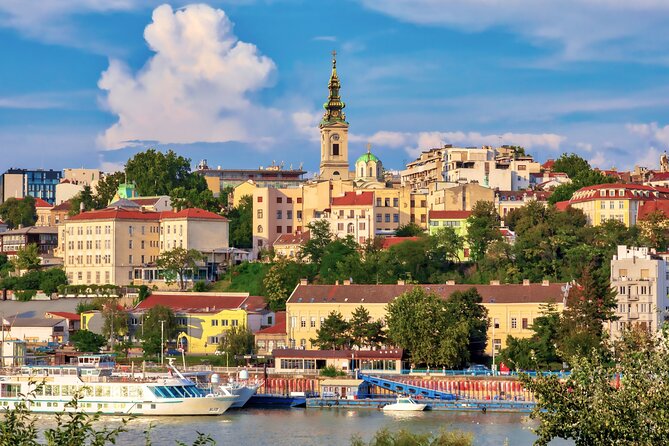
Then you land in Belgrade with two main anchors: Belgrade Fortress and Kalemegdan Park. The fortress sits where the Sava and Danube meet, so even a short visit feels like the city is opening up into a wide panorama. Your walk through the fortress area includes the Pobednik monument and the broader Upper Town views.
Outside the fortress, you pass through central Belgrade along Knez Mihailova toward Republic Square. The tour’s structure here is smart: it gives you a dramatic viewpoint, then it gives you green space and street-level context.
A small drawback to consider: Belgrade is a city you’ll want to explore beyond the schedule. If you’re the type who likes wandering without a plan, use the walking route as your base and don’t overschedule yourself at night.
Sremski Karlovci, Novi Sad, and Subotica: the “baroque and wine” stretch
After Belgrade, you shift to towns that feel more like regional capitals than major tourist hubs. Sremski Karlovci is a wine center with a Baroque core, and the tour includes time to explore and then taste wine specialties afterward. You’ll also hear the local legend tied to the Four Lions fountain in the city center, a fun detail that makes the town more than just a stop.
Next is Novi Sad, often described as a cultural capital of northern Serbia. The tour focuses on how the city sits on a former border between empires, so you can spot the mix of influences in architecture and the feel of streets. You also visit Petrovaradin Fortress, nicknamed the Gibraltar on the Danube, and you walk through pedestrian streets near Zmaj Jovina and Dunavska.
You also get an overnight in Novi Sad, which is useful. It breaks up the travel rhythm and lets you return to the city without worrying about catching the next bus immediately.
Then comes Subotica, where the architecture and multicultural mix are the big story. The tour points out how the city center is not dominated by a single cathedral but by the City Hall area, which makes it feel different from many European capitals. You visit the Cathedral of St. Teresa of Avila and the synagogue, then you get time to eat, coffee, and browse on your own.
Practical note: this leg is one of the better parts for food lovers, but the tour does not include lunch and dinner every day. Treat meals like part of your plan, not an afterthought.
Other ways the same afternoon could go from Dubrovnik:
- Dubrovnik: Old Town Walking Tour★ 4.8 · 5,174 reviews
- Dubrovnik: The Original Game of Thrones Tour & Lokrum Option★ 4.8 · 5,064 reviews
- From Dubrovnik: Montenegro Day Trip★ 4.4 · 4,807 reviews
- Dubrovnik Game of Thrones Tour & Optional Lokrum Island Visit★ 5.0 · 4,702 reviews
- Dubrovnik: Elaphite Island Cruise w/ Drinks & Optional Lunch★ 4.7 · 4,517 reviews
Budapest, Danube views, and Buda Castle with included entry
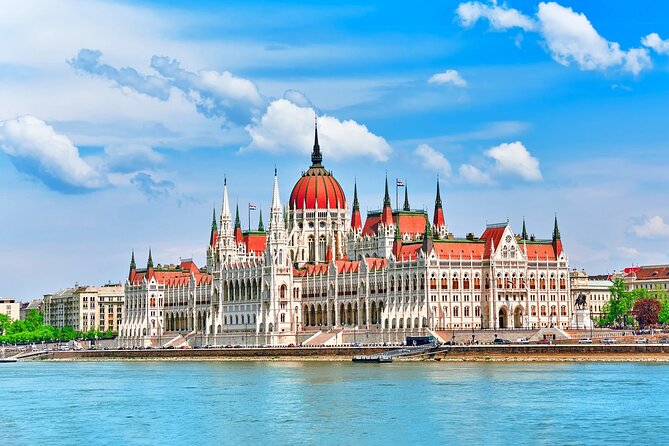
Budapest is the place where your route turns into big-city sightseeing with a calmer delivery. You pass by Saint Stephen’s Basilica, and then you stroll along the grand boulevards with stops that typically include views toward the Opera, Parliament building, Heroes’ Square, and Fisherman’s Bastion.
The tour then includes Buda Castle with admission. That’s the kind of ticketed stop that can cost time and effort if you handle it alone, so it’s a nice convenience built into the schedule. After that, the tour crosses bridges and continues with a street-level experience that ends with free evening time to explore.
From the feedback angle, this free time is where guides tend to shine. Several reviews praised guides like Bilbil for suggesting activities during downtime, which matters in Budapest because the city offers too many choices. A guided suggestion helps you avoid wasting the evening circling for a restaurant or the one viewpoint you meant to see.
What to do with the evening: pick one area and go deep. Budapest at night is easy to overconsume, in the sense that you see everything and remember nothing. Choose one neighborhood walk, then add one planned viewpoint.
Győr and Bratislava: smaller stops that reward your attention
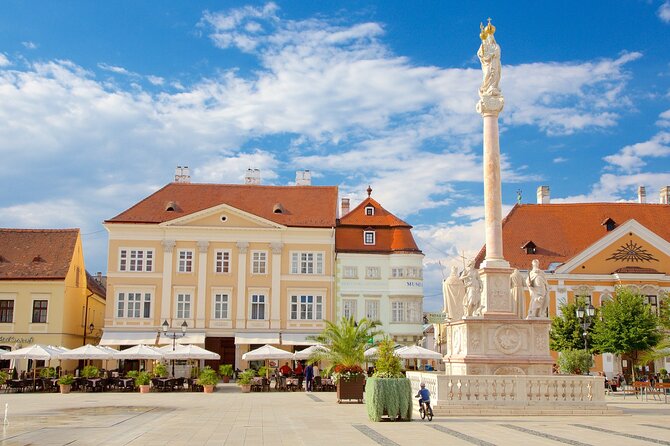
Győr keeps the trip moving while still feeling human-sized. You get time in the center where baroque architecture and colorful streets appear, and you visit Győr Town Hall with its 59-meter tower and green top. The tour also includes a visit to the Cathedral of the Virgin Mary, built in Roman style in the 11th century, and it points out the Győr synagogue with its prominent dome.
There’s also a pedestrian street stop on Baross Gábor Way, with cafes and shops. You get free time to eat Hungarian food, and the tour even flags the local blueberry beer, which is one of those “try it once” items that can turn into a funny memory.
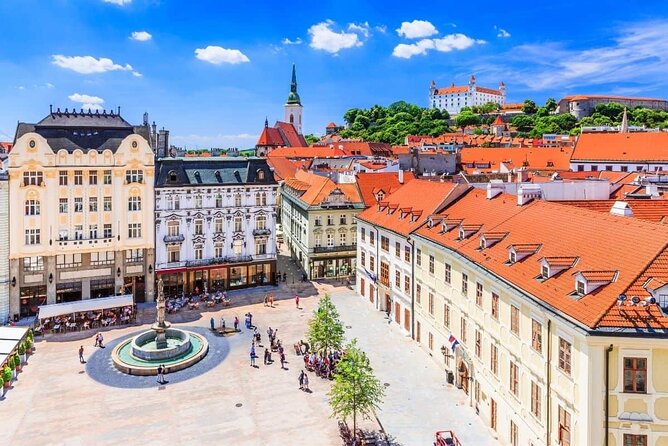
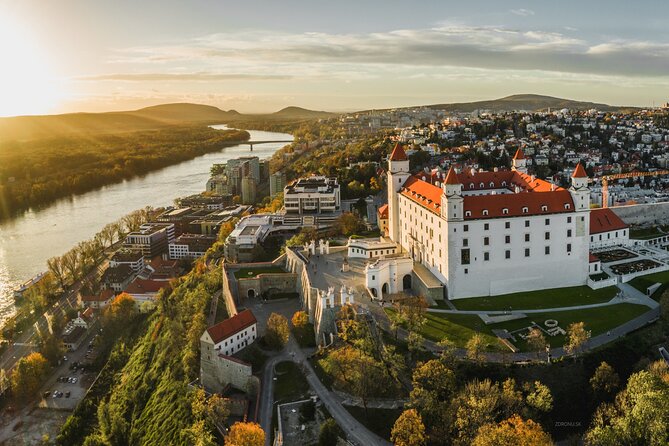
Then you head into Bratislava, where the focus is old town on foot. You visit the medieval Old Town Hall area, then Michalská brána, the only medieval gate that has been preserved. After that, you walk up to Bratislava Castle with included admission.
The castle is where you get the view payoff over the Danube and the city below. It’s a good final “big picture” moment before you head to the last day of the trip.
If you prefer museums over viewpoints, you might not get your fill here, but if you like walking old towns and taking in river views, the pace fits.
The final handoff in Vienna, and how to finish strong
On the last day, your tour leader drops you at your hotel in Vienna. It’s an easy end, and it sets you up to keep traveling on your own terms. Vienna is a city where one extra evening can change how you rate the whole trip, so I’d treat the drop-off as your chance to reset.
If you arrive with energy, you can use that final day to get your bearings, and if you arrive tired, you can simply do one long meal and one walk. Either way, you’ll likely have fresh mental images from the Danube string of cities you just toured.
This is also where you can reflect on the mix. The route starts with medieval stone and fortifications, moves through multi-layered capitals, then ends in a place known for refinement. That contrast is part of the satisfaction.
Price and value: what you’re really paying for
At $3,773.83 per person for an approximately 10-day trip, this is not a budget tour. The value depends on your travel personality.
You are paying for a lot of logistics that would otherwise take time to manage yourself: hotel pickup in Dubrovnik, drop-off in Vienna, a professional guide, and hotel stays in 3-star properties with breakfast included. You’re also getting entry tickets for the paid sites that are visited, plus insurance and road and tourist taxes that help keep the schedule smooth.
Where you might feel the cost: meals are mostly not included outside breakfast, so you should budget for lunches and dinners. If you dislike paying for food separately during a tour, you’ll feel that every day.
If, on the other hand, you want guided context in multiple countries and you like having your transportation and pacing handled, the price becomes easier to justify. The Albania hiking segment, especially if it includes the Komani Lake boat ride and the Valbona Valley scenery, is the ingredient that can make this feel like more than a checklist tour.
Who this tour suits best
This tour is a strong fit if you:
- Want a guided history and architecture route across the Balkans and Central Europe
- Like one big nature payoff day or two, not just city stops
- Prefer small group travel, max 10 people, over large buses
- Can handle uneven walking and a moderate fitness level
It may be less ideal if you:
- Want all meals included daily
- Prefer slow travel with lots of free time to roam without timing pressure
- Hate long drive days between cities
Should you book this tour?
I’d book if you want the blend: guided city walking plus a serious northern Albania mountain moment. The reviews strongly emphasize guide quality, with names like Bilbil, Mira, Sokol, Armando, and Ani showing up as consistently professional and friendly, and that matches what you want for a trip with many moving pieces.
If you are on the fence about the price, check your priorities. If you’ll actually use the guidance in places like Sarajevo and Buda Castle, and you care about the Komani Lake and Valbona Valley days, this tour looks like a good value for your time. If you mostly want independent roaming and fixed schedules are a stress, you might do better with a more flexible plan.
FAQ
FAQ
What are the start and end points of the tour?
The tour starts in Dubrovnik, Croatia with a hotel pickup at 7:00 am, and it ends with a drop-off at your hotel in Vienna, Austria.
How long is the tour?
The duration is listed as about 10 days.
How large is the group?
The tour has a maximum of 10 travelers.
What does the tour include for accommodations?
It includes accommodation and breakfast for all overnights in 3-star hotels.
Are meals included?
Breakfast is included. Lunch, dinner, drinks, and snacks are not included, though the Komani Lake and Valbona Valley hiking part notes meals and overnight accommodations as included.
Are entry tickets included?
Entry tickets are included for the sites that are visited, based on the tour’s listed inclusions.
Do I get hotel pickup and drop-off?
Yes. Pickup is offered in Dubrovnik, and drop-off is provided in Vienna.
What fitness level is required?
The tour asks for travelers with a moderate physical fitness level.
Is tipping required?
Tipping is not a must in the Balkans, but the tour recommends tipping the tour leader and driver as good-practice for service.
What happens if I need to cancel?
This experience is non-refundable and cannot be changed for any reason, so the amount paid is not refunded if you cancel or request an amendment.
New around Dubrovnik
Tours, compared.

Blue Cave Small-Group Boat Tour from Dubrovnik
Read our review →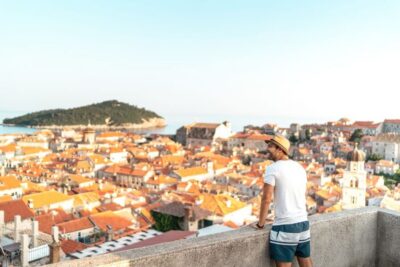
Epic Game of Thrones Tour + Lokrum & Saver Option
Read our review →
The Original Game of Thrones Tour & Lokrum Option
Read our review →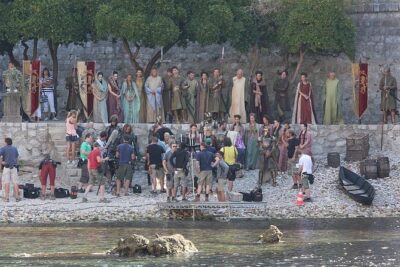
Dubrovnik Game of Thrones Tour & Optional Lokrum Island Visit
Read our review →