Reviewed · PRIVATE
Dubrovnik to Tirana; Semi – Private Tour with Tour Leader & Car
Borders, bridges, and Balkan flavors, in one run. This semi-private road trip stitches together Dubrovnik, Bosnia and Herzegovina, Montenegro, Albania, and Kosovo with UNESCO towns, Ottoman details, and a proper food day in Tirana.
I especially like the small group size (max 10), which keeps things human on a long drive, and I love how the route mixes headline sights like Stari Most with smaller, hands-on stops like Bišćevića Kuća and a working slow-food farm.
The only real drawback is the pace. Expect a lot of driving between stops, plus some walking on uneven terrain, so bring sturdy shoes and a plan for long sit-down days.
In This Review
- Key things I’d plan around
- The big idea: a coast-to-capital drive with real stops
- Dubrovnik pickup and the border shuffle (how day one really starts)
- Mostar: Stari Most and the Ottoman home you do not rush past
- Sarajevo: bullet holes, Ottoman and Austria-Hungary layers, and Turkish coffee
- Blagaj and Kotor: nature at Blagaj, then old-town puzzles in Montenegro
- Budva and Sveti Stefan: old town contrast, then a photostop before Albania
- Shkoder and the Rozafa Castle view: lakes, rivers, and a scenic payoff
- The farm day: slow food with a jobs story attached
- Prizren, Kosovo: Ottoman town texture, crafts, and a fortress view
- Gjakova bazaar, Decan monastery, and Rahovec wine country
- Kruje: Albanian resistance symbolism, then bazaars and castle paths
- Tirana finale: byrek, markets, and grape raki with your stomach empty
- Price and value: why it costs this much, and what you still pay for
- Safety and organization: what the operator seems to do right
- Who should book this Dubrovnik to Tirana tour
- Should you book it
- FAQ
- What time does the Dubrovnik pickup happen?
- Where does the tour start and where does it end?
- How many travelers are in the group?
- Is this tour offered in English?
- What type of transportation is included?
- What is included in the price besides accommodation?
- Are lunches and dinners included?
- What kind of hotel stay is included?
- Are any admission tickets included?
- Is the itinerary physically demanding?
Key things I’d plan around
- Semi-private, max 10 travelers means less waiting and more chances to ask questions without shouting over traffic.
- Early Dubrovnik pickup (7:00 am) and border shuttling sets the tone for a full day, not a slow start.
- UNESCO mix that isn’t just photos: Stari Most, Kotor’s old-town lanes, and the kind of streets you actually walk through.
- Ottoman and Ottoman-adjacent details: coffee/tea in Sarajevo, Bišćevića Kuća, mosques, bazaars, and old family architecture.
- The Tirana finale is food-forward with byrek, market time, a traditional meal, and grape raki.
- Some paid admissions are included, many sights are free, so you are not paying nonstop entry fees every day.
The big idea: a coast-to-capital drive with real stops
This is not a one-country trip. It is a seven-night, eight-day stretch that moves you across borders with a car and a professional tour leader. You start in Dubrovnik, then you work your way through Bosnia and Herzegovina and Montenegro, cross into Albania, and also spend meaningful time in Kosovo before ending in Tirana.
The value is in the structure. You are getting transportation, guided walking time at key places, and a set of included admissions and meals. That matters because the Balkans are easiest when someone handles timing, routing, and the little logistics that can turn a great day into a stressful one.
Also, you are not dealing with a huge bus crowd. With a maximum of 10 travelers, you can usually hear the guide, and the group stays flexible if roads or sites get slow.
Dubrovnik pickup and the border shuffle (how day one really starts)
Your morning begins early, 7:00 am pickup in Dubrovnik. The car picks you up from the nearest point to your hotel within Dubrovnik Town, with one important detail: cars may not enter some parts of Dubrovnik Town. Translation: have your meeting point ready and expect a short walk or taxi hop if your hotel is in a restricted zone.
From there, you are shuttled to the border area, where you meet your tour leader for the rest of the trip. This is smart planning. Instead of everyone trying to figure out border timing on their own, the day is organized so your guide can fold border-crossing into the itinerary.
If you dislike early starts, this part will test you. But if you like making the most of every day, you will appreciate the rhythm. You are not wasting the morning on logistics.
Some other walled-city days to weigh
- Mostar and Kravice Waterfalls Tour from Dubrovnik (Semi-Private)
★ 5.0 · 3,125 reviews - Dubrovnik: Blue & Green Caves Private Boat Tour with Drinks
★ 4.7 · 814 reviews - Dubrovnik Private Speedboat Tour to Elaphite Islands with Drinks
★ 5.0 · 660 reviews - Private Tour: Montenegro Day Trip from Dubrovnik
★ 4.5 · 495 reviews
Mostar: Stari Most and the Ottoman home you do not rush past
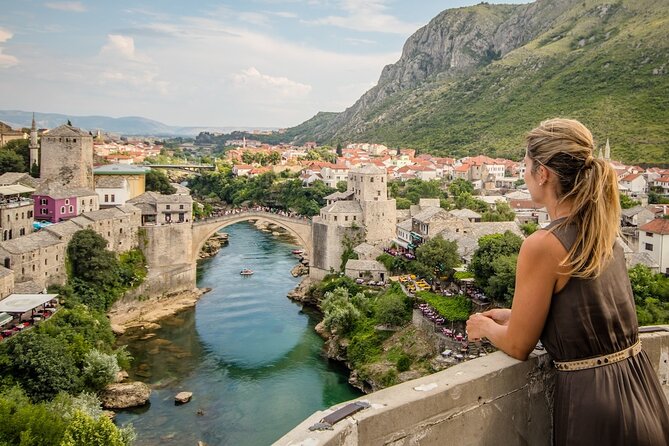
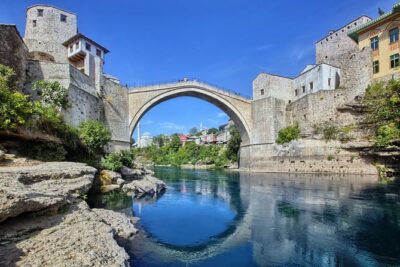
Mostar is where the trip turns from “drive day” into “walk day.” After crossing into Bosnia and Herzegovina, you head straight to the Old Bridge area, including Stari Most (Stari Mostar), a UNESCO site built in the 16th century in Islamic architectural style. It is the kind of landmark that changes the feel of a city the moment you arrive.
Then you wander the Old Bazaar, with colorful streets and plenty of everyday life. You also see stones with Don’t Forget reminders around town, which helps you understand that the city’s story is not only medieval, it is modern too.
What I like here is the balance. You get a major icon, but you also get the street-level texture: cobbled alleyways, old mosques, and the bazaar layout that makes you slow down naturally.
You also visit Bišćevića Kuća, a preserved Ottoman residential house from the 17th century. The visit is short (about 30 minutes), but it gives you a different angle than bridges and viewpoints. You see how people lived, right down to the riverside setting.
Sarajevo: bullet holes, Ottoman and Austria-Hungary layers, and Turkish coffee
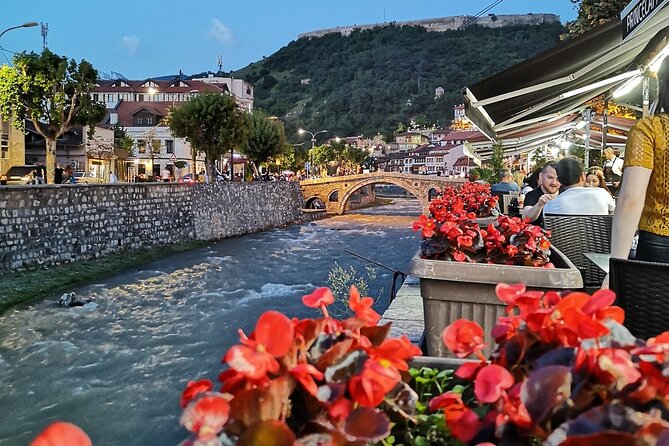
Sarajevo can feel heavy, but it is also one of the most layered cities you will visit. You drive from Mostar, then do a walking tour on uneven ground with stops that include reminders from the Yugoslav War, like bullet holes and cannon marks. That is not there for shock value. It is there so the city’s history is visible, not abstract.
You also cover Sarajevo’s medieval roots and the Ottoman and Austria-Hungary influences. You see markets, bazaars, and a mix of religious architecture, including mosques, churches, and synagogues. If you like cities where different eras sit side by side, this is the part that clicks.
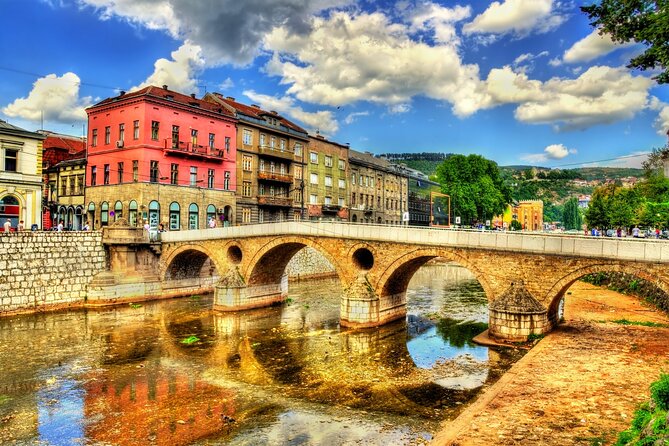
The day includes Latin Bridge. You spend time there learning the story of how World War I was triggered in this setting, and you hear why it is named for connecting the Catholic quarter with the right bank of the Miljacka River.
Then you end with a breather: a stop at Caffe Divan for one complimentary Ottoman-style coffee or tea. It is a small detail, but it matters. Sarajevo can be intense. This is your reset, with time to just sit, people-watch, and let the day land before you move on.
Blagaj and Kotor: nature at Blagaj, then old-town puzzles in Montenegro
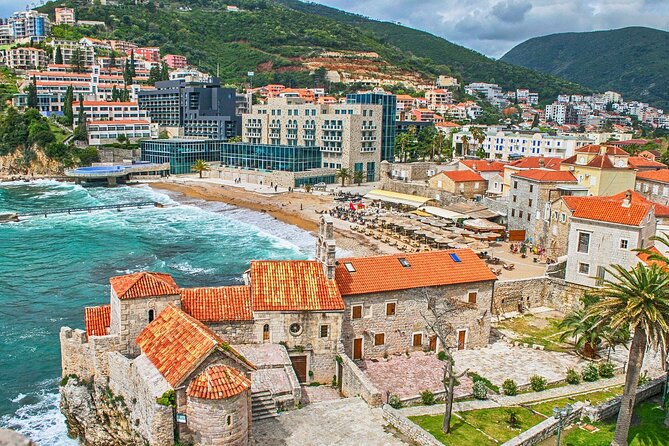
Day three starts with Blagaj, just outside Mostar. You go to this small Ottoman town built along a cliff, facing the blue waters of the Buna spring area. You are not spending a full day here, but the setting is memorable because it feels tucked away and quiet compared to big-city traffic.
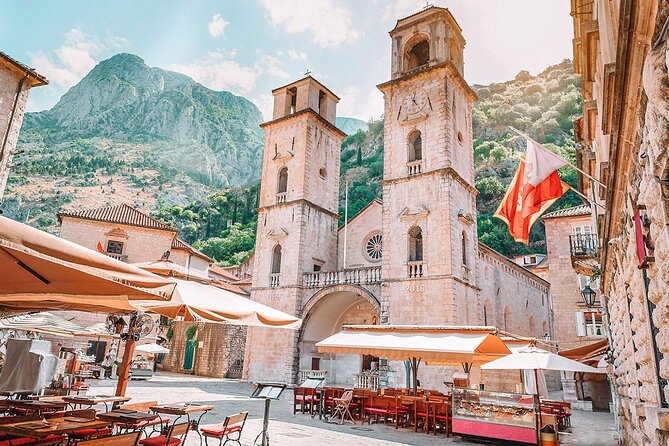
Then you continue toward Kotor in Montenegro, a UNESCO old town. The old city is a maze of narrow, cobblestone streets, and the layout feels chaotic on purpose. You learn that it was designed to confuse intruders who came to plunder the town. That idea turns the streets from “random” into “strategic,” which makes your walking more interesting.
You visit Saint Luke’s church, which is significant for locals and connected to a sense of unity. After the guided portion, you get free time to explore Kotor on your own in the afternoon. That freedom is important here because Kotor rewards wandering. You will want to pause for viewpoints and small side streets without feeling rushed.
Budva and Sveti Stefan: old town contrast, then a photostop before Albania
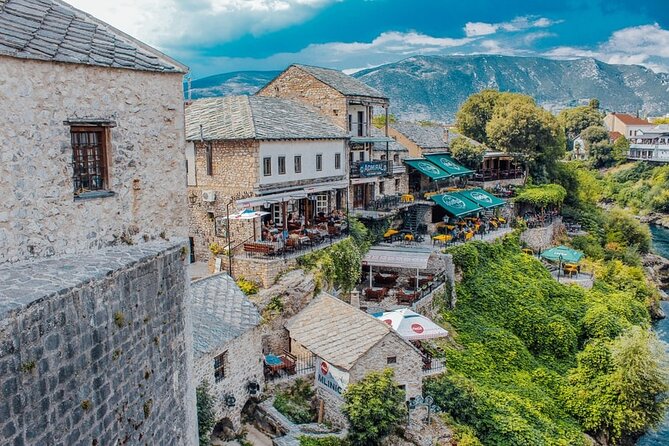
Today mixes quick looks with one main guided focus. In Budva, you see the split between New Budva (modern buildings, offices, shopping, restaurants) and Old Budva, where you concentrate on medieval character.
You visit Saint Ivan Church and also get time in the old historical center. The guided portion is short, but it gives you the key anchors so you are not wandering without a sense of where to go.
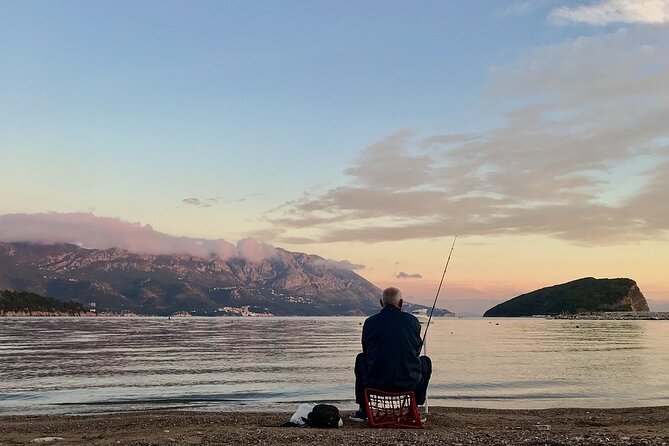
On the way to Albania, you stop near Sveti Stefan. It used to be a fishing town on a small island, but now it is an exclusive resort, and you cannot visit the island. Still, standing at the coast gives you a dramatic view that is worth a picture and a quick breath before the next border crossing.
Other ways the same afternoon could go from Dubrovnik:
- Blue Cave Small-Group Boat Tour from Dubrovnik★ 5.0 · 9,360 reviews
- Full-Day Dubrovnik Elaphite Islands Cruise with Lunch and Drinks★ 5.0 · 8,823 reviews
- Dubrovnik: Epic Game of Thrones Tour + Lokrum & Saver Option★ 4.9 · 5,995 reviews
- Dubrovnik: Elaphiti Islands Full-Day Cruise with Lunch★ 5.0 · 5,938 reviews
- Dubrovnik: Old Town Walking Tour★ 4.8 · 5,174 reviews
Shkoder and the Rozafa Castle view: lakes, rivers, and a scenic payoff
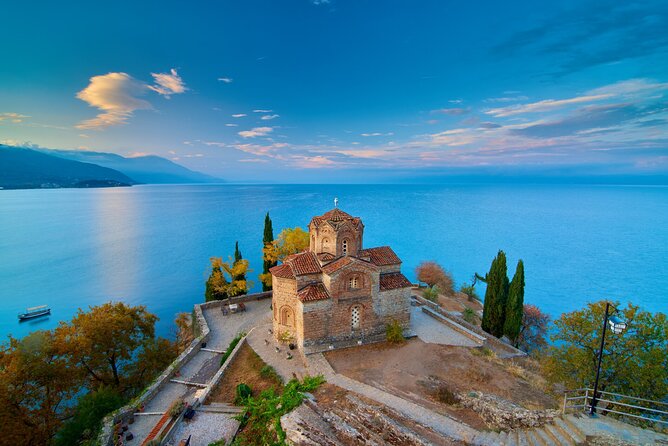
After Montenegro, you cross into Shkoder in Albania, a north-west city tied to Lake Shkodra and the area’s long habitation history. You visit Rozafa castle for its panoramic scenery and the dramatic idea of three rivers merging toward the Adriatic Sea.
This is a good “energy check” stop. Driving days can blur together. A viewpoint like this gives your brain something simple: a big frame, a sense of direction, and an immediate reason to slow down.
You also stop at a Venetian Art Mask Factory. You learn how papier-mâché masks are hand painted and decorated, with both classic Venetian carnival styles and modern designs. It is one of those practical cultural stops that feels creative instead of just historical.
The farm day: slow food with a jobs story attached
Day five has one of the most interesting non-typical stops in the whole trip. You go to Mrizi i Zanave, a slow-food agritourism farm. You take a tour, learn how the farm supported jobs for more than 400 people in the surrounding area, and hear how family-run food production connects to the regional economy.
You also see how they collect, elaborate, and preserve regional bio fresh local products. And you learn that they adapted old communist buildings to serve as storage for local products. That detail helps explain why “food stops” can be more than tastings. Here, it is about how the place works.
You get free time for traditional lunch or time to buy fresh produce. Lunch is not included in the tour price, so this is a moment where you either pay for something on your own or grab snacks you like. Either way, it is a nice break from nonstop monuments.
Prizren, Kosovo: Ottoman town texture, crafts, and a fortress view
Then you move to Prizren, described as the cultural capital of Kosovo. You spend time walking through the old town, where a river runs through the heart of the city under bridges. The city’s architecture reflects Ottoman and earlier layers, and the streets are built for a slow wander.
If you travel in August, there is a Dokufest connection, a film festival that fills the medieval city. Even if you are not there for that timing, you still get the walking vibe and the sense of the city as a cultural crossroads.
You also visit Sinan Pasha Mosque for its arabesque color and patterns. The stop is short, but it adds artistic detail to the day, not just street-level browsing.
Finally, you climb up to Kalaja Fortress. You get a hilltop panorama and then some free afternoon time. Fortresses work best when you are allowed to wander the area a bit, and this timing gives you that.
Gjakova bazaar, Decan monastery, and Rahovec wine country
Day six keeps you moving through Kosovo’s different textures.
First is Gjakova and its bazaar, described as the oldest and largest in Kosovo. It was destroyed in multiple conflicts, then rebuilt to its old state. You can stop for a meal and look through stores selling traditional handmade crafts. This is also where you can watch artisan workshops and see older techniques still being used.
Next you go to the Monastery of Decan. It is known for its white appearance, and monks still inhabit the monastery and make fresh organic food, including cheeses. The monastery became part of UNESCO in 2004 for its frescoes portraying life in the 14th century and the Palaeologan renaissance that changed Byzantine painting.
This is one of those days where the guide’s pacing matters. You want enough time to look at the frescoes and absorb the setting without rushing. You get about an hour here, which should be just enough to appreciate the main points and then move on.
After that, you drive to Rahovec Valley, known for viticulture and wine culture. There is evidence grapes were cultivated there since Illyrian times, and you learn about the altitude range that helps produce quality wines. A wine festival happens annually in September, though your visit timing will determine if you catch it.
Kruje: Albanian resistance symbolism, then bazaars and castle paths
On day seven, your main destination is Kruje, a symbol of Albanian resistance against Ottoman expansion in the 15th century. You also learn that Kruje is on rocky mountainous terrain around 560 meters above sea level. That matters because it makes the city feel dramatic and the walking feel steep, even if you are not climbing continuously.
You start in the Medieval Old Bazaar, one of the biggest and oldest in the Balkans. The wooden houses and narrow streets give you that old-town feeling quickly. This is also the place you can shop for souvenirs, from standard items to more handmade crafts like carpets and jewelry.
Then you visit Kruja Castle. It is placed strategically on a hilltop to make attacks difficult. The tour leader also takes you through some hidden paths locals used to leave the castle without being noticed during times when enemies surrounded it. Even when you are standing in ordinary stone corridors, that kind of historical context gives the space meaning.
You also get free time in Kruje for lunch and more shopping, so you can slow down if you want or keep it moving if you prefer.
Tirana finale: byrek, markets, and grape raki with your stomach empty
The trip ends in Tirana, Albania’s capital. The day starts with a local companion for a food-focused city experience, and they explicitly recommend arriving with an empty stomach. That is not subtle, and I would take it seriously.
You try byrek, an Albanian specialty made of thin layers of dough filled with cheese, meat, spinach, or other ingredients. You also visit Çam bazaar for goods ranging from clothing to kitchen equipment and you bargain with sellers for a better price.
Then you shift into local market life with time for fruits and seasonal produce. This is the kind of stop that makes a city feel real, because you are seeing what people buy and eat, not just what tourists photograph.
Next is Pazari i Ri, a lively market known for second-hand goods. You get time to browse and hunt for pre-loved items. If you like practical souvenir shopping, this is where you can find something that feels used and personal instead of mass produced.
You finish with a traditional Albanian meal at the New Bazaar, plus Albanian grape raki. This is the perfect closing move: you end the trip on a taste instead of another checkpoint.
Price and value: why it costs this much, and what you still pay for
The price is $3,433.11 per person, for an approximately eight-day semi-private trip. That is premium pricing for the Balkans, so you should judge it on what is included.
What you are getting for that money:
- Accommodation in 3-star hotels with breakfast included for the overnights (and the tour lists seven breakfasts).
- Transport by the company, plus tourist and road taxes and petrol.
- A professional tour leader, with a car and daily routing.
- Pickup in Dubrovnik and border-area handling.
- Several included admissions where listed, plus one Ottoman-style coffee or tea in Sarajevo and the Tirana food experience (including the traditional meal and grape raki).
What is not included:
- Lunches, dinners, drinks, and snacks.
- Personal spending and souvenirs.
So the “value math” depends on how you eat. If you plan to budget lunch and dinner daily, you will feel this price more accurately. If you are hoping everything is covered, you may feel shortchanged.
Also remember, the cost includes a lot of moving. You are not doing one city for a week. You are doing a cross-border route with multiple distinct regions.
Safety and organization: what the operator seems to do right
From the way the company’s team has been described, the big strengths are communication and execution. People highlight fast, helpful planning support and guides who are attentive and responsive. I also like the repeated theme that the trip felt safe and reliable, including for solo women traveling together, with support if something health-related comes up.
I cannot promise every day will be easy, but I can say this structure matters. When the route is long, strong organization keeps you from losing time and confidence.
Who should book this Dubrovnik to Tirana tour
This trip fits you if:
- You want a broad sampler of the Balkans in one go, without building your own route.
- You like guided walking for the big anchors, then free time to wander when possible.
- You are comfortable with early starts and some uneven walking.
- You care about food, bazaars, and architecture, not just scenic viewpoints.
It may not fit you if:
- You want a relaxed vacation with minimal driving.
- You dislike long days or you get very tired on uneven paths.
- You expect lunches and dinners to be included.
Should you book it
If you want the Balkans with structure, I would book this one. It has the right mix of UNESCO stops, Ottoman-style details, and a real food finale in Tirana, plus transportation and guide time handled for you. The small group size is the kind of detail that makes a difference when you are crossing multiple countries in a single week.
Just go in knowing the trade-offs: you are paying for organization and transport, not for a slow pace, and lunch and dinner are on you. If that matches your style, you will likely feel like you got your money’s worth in variety and time saved. If you hate early starts, plan to counter it with a good nighttime routine and flexible expectations.
FAQ
What time does the Dubrovnik pickup happen?
Pickup starts at 7:00 am from your hotel in Dubrovnik, and you will be picked up from the nearest point if cars cannot enter parts of Dubrovnik Town.
Where does the tour start and where does it end?
The tour starts in Dubrovnik, Croatia and ends in Tiranë, Albania.
How many travelers are in the group?
The tour has a maximum of 10 travelers.
Is this tour offered in English?
Yes, it is offered in English.
What type of transportation is included?
Transport is provided by the company, including a car with a tour leader and local shuttling to the border meeting area on day one.
What is included in the price besides accommodation?
Included items include transport, a professional tour leader, tourist taxes, road taxes, petrol, and specific admissions and experiences listed in the itinerary. You also get one Ottoman-style coffee or tea in Sarajevo (day two) and a food tour experience in Tirana (day eight).
Are lunches and dinners included?
No. Lunches, dinners, drinks, and snacks are not included.
What kind of hotel stay is included?
The trip includes 3-star hotel accommodation with breakfast for the overnights, and breakfast is listed as 7 breakfasts. Room pricing is calculated based on double, twin, triple, or quad occupancy.
Are any admission tickets included?
Some admission tickets are included as listed, such as Bišćevića Kuća, Latin Bridge, Saint Ivan Church, the Venice Art Mask Factory, Sinan Pasha Mosque, Kalaja Fortress, and Kruja Castle.
Is the itinerary physically demanding?
The tour notes that travelers should have a moderate physical fitness level, and it mentions walking on uneven terrain during the Sarajevo portion.
New around Dubrovnik
Private, compared.
Mostar and Kravice Waterfalls Tour from Dubrovnik (Semi-Private)
Read our review →
Blue & Green Caves Private Boat Tour with Drinks
Read our review →
Dubrovnik Private Speedboat Tour to Elaphite Islands with Drinks
Read our review →
Private Tour: Montenegro Day Trip from Dubrovnik
Read our review →
Tour The Game of Thrones – Private Walking Tour
Read our review →
Montenegro Private Full Day Tour from Dubrovnik
Read our review →