Reviewed · DUBROVNIK
Dubrovnik: Croatian Folklore Show
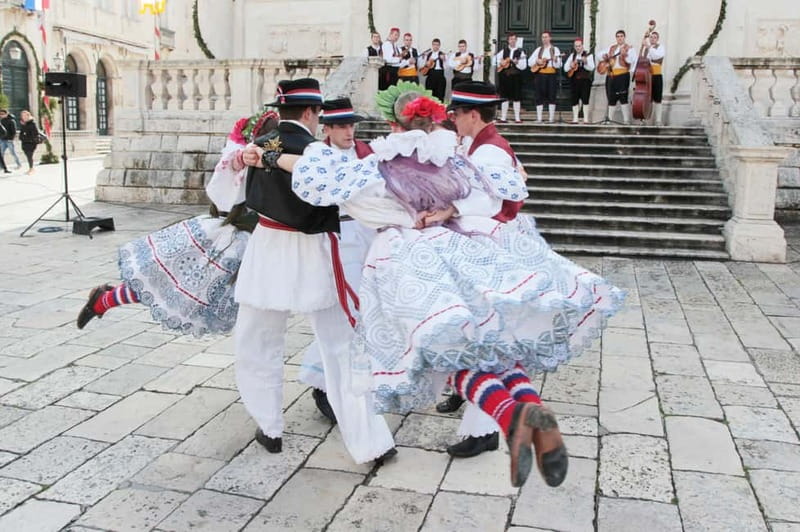
Dubrovnik turns folklore into a live, moving show. This Dubrovnik folklore show by the Linđo Folklore Ensemble brings traditional Croatian song and dance to life with over 100 performers. I especially like the mix of fast footwork, strong vocals, and eye-catching folk costumes.
I also like how the program uses different Croatian music traditions, including klapa-style singing, both capella and with orchestra support. One thing to plan for: it can get hot, and there are no refreshments on site, so come ready for a warm evening.
In This Review
- Key Takeaways Before You Go
- What This Dubrovnik Folklore Show Really Gives You
- Linđo Folklore Ensemble: The 100+ Performer Energy
- Inside the One-Hour Program: Singing, Dancing, and Real Rhythm
- Costumes and Regional Variety: Why It Feels Like More Than One Show
- What It Feels Like on the Ground: Seats, Atmosphere, and Heat
- Timing Your Evening: From Old Town Gate to Show Seat
- Price and Value: Is $29 Worth It?
- Who Should Book the Dubrovnik Folklore Show?
- Practical Tips to Make Your Night Go Smooth
- Should You Book the Linđo Dubrovnik Show?
- FAQ
- How long is the Dubrovnik Croatian Folklore show?
- How many performers are in the show?
- What kind of entertainment is included?
- Where is it relative to Old Town?
- Is there air conditioning and are refreshments available?
- When should I arrive?
- How much does it cost?
Key Takeaways Before You Go
- 100+ performers make it feel like a full stage spectacle, not a small demo.
- Croatian vocals matter here, including klapa-style song in addition to songs with music.
- A little over an hour keeps the energy up and works well even if your attention span runs short.
- Old Town is close, with a short walk from the gate area.
- Crowds and heat are real, so arrive early and bring water for before the show.
What This Dubrovnik Folklore Show Really Gives You
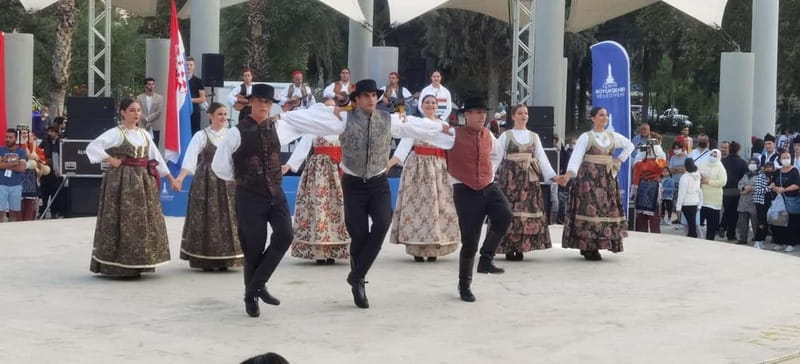
A live folklore show in Dubrovnik can be hit or miss if you only expect background entertainment. This one is built around a full performance, not just a quick dance number or a photo opportunity. You are watching an ensemble show off Croatian cultural styles through movement, singing, and costume.
The core appeal is simple. You get traditional Croatian dances, traditional songs, and a big group scale with over 100 performers under the Linđo Folklore Ensemble umbrella. That size changes the vibe. There is a sense of momentum, with dancers and musicians sharing the stage rather than taking turns in a loose way.
I also like that this is grounded in actual folk traditions. The show points you toward how songs and dances connect, from vocal performances to choreographed movement. Even if you know nothing about Croatian folk culture, you will still feel the structure, the rhythm, and the regional variety.
The one practical catch is comfort. Dubrovnik afternoons and evenings can run hot, and at least some venues for this kind of show are not air-conditioned. Plan for heat, and plan for crowds.
Linđo Folklore Ensemble: The 100+ Performer Energy
The show is performed by Folklorni ansambl Lindjo, and that name matters because it signals an established folklore ensemble rather than a one-off group. The lineup is large enough that you see dancers, and you also see musicians doing real work in the performance, not just accompanying background music.
That large cast is one of the most praised parts of the experience. People repeatedly point to the dancing and music as the main event, with praise aimed at both the dancers and the musicians. In practical terms, it means the show stays visually and sonically busy in a good way.
What I think makes this ensemble format special is the balance of roles. You are not only watching choreography. You are also hearing Croatian vocal traditions, including klapa-style singing performed a cappella, alongside pieces that are accompanied by an orchestra. That combination gives you two ways to read the performance: through movement and through melody.
It also helps the show feel like a real cultural program. Folk culture is not just steps. It is rhythm, community singing, and costume identity. With over 100 performers, the stage picture becomes part of the story.
Some other walled-city days to weigh
- Dubrovnik Panoramic Cruise on a Wooden Galleon with a Live Show
★ 5.0 · 116 reviews
Inside the One-Hour Program: Singing, Dancing, and Real Rhythm
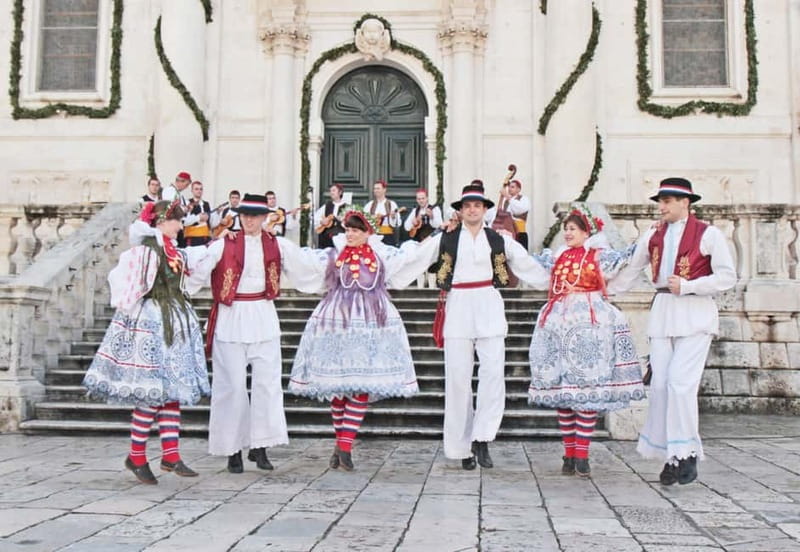
The show runs for a little over an hour, so you are not committing to a long evening that drains your energy after a day in Old Town. This length shows up in the most common positive reactions. It is a perfect stop when you have been walking all day, or when you are traveling with kids who lose interest fast.
What you can expect once the performance starts is a steady flow of singing and dancing that changes pace and style. The dance repertoire is described as diverse, with different dance dynamics and different elements. In plain language, you will see more than one kind of dance, and you will not feel like you are watching the same pattern on repeat.
A major highlight is vocal performance. The program includes traditional songs and also original compositions. You may hear capella singing in the klapa style, and you may hear the same kind of vocal culture supported by orchestral accompaniment. That matters because it gives you contrast. Some parts land close to the audience, others feel fuller and more cinematic with instruments behind the voices.
There is also a strong emphasis on choreography precision. One detail I keep in mind from the praise is how fast the dancers’ feet move and how well choreographed the lifts are. Those moments tend to be the ones that pull the whole crowd forward, even if you are not sure what region the dance is from.
Costumes and Regional Variety: Why It Feels Like More Than One Show
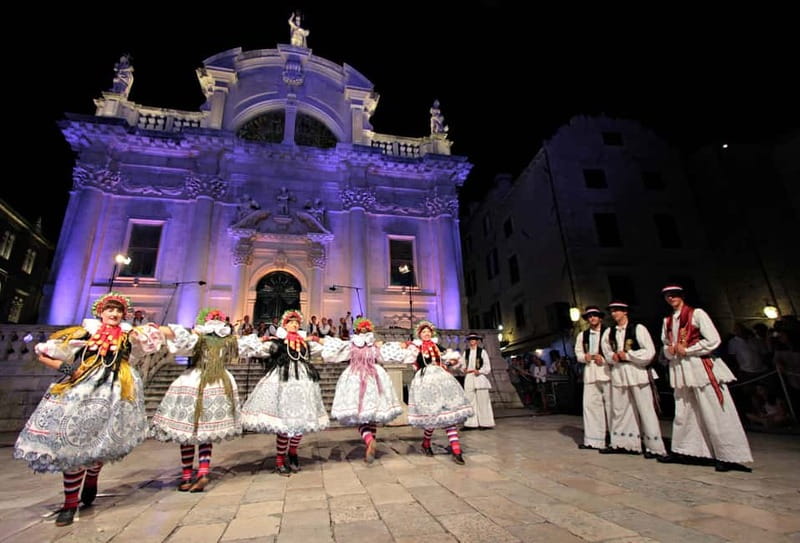
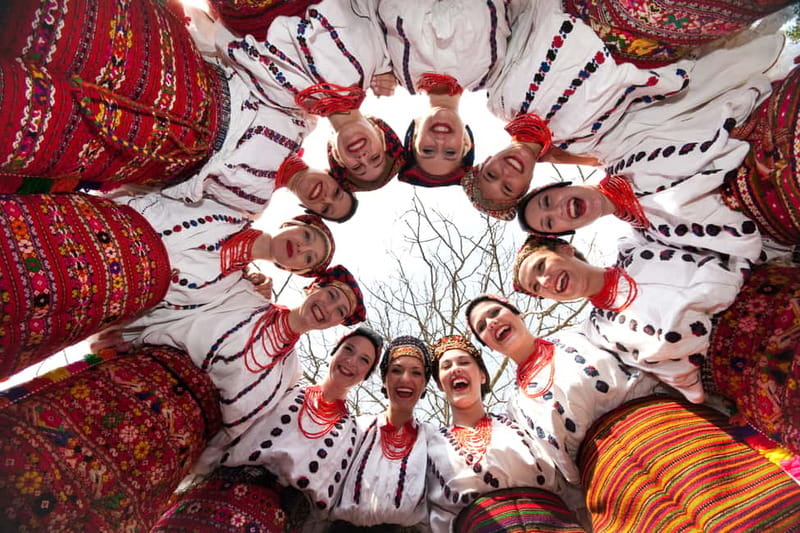
Folk costumes are not just decoration in this kind of performance. They act like visual shorthand for identity. When the show cycles through different dance dynamics, musical traditions, and costume styles, you start to understand that Croatian folk culture is not one uniform thing.
In the Linđo performance style, you get that variety through the way each segment brings a slightly different flavor. Reviewers highlight that dances and songs come from many regions of Croatia. That is exactly what you should look for while you watch. Try to treat the show like a series of mini scenes rather than one continuous dance set.
The vocal side reinforces the same idea. Traditional Dalmatian song is specifically mentioned as being made widely recognizable through the ensemble’s klapa. So even if you are in Dubrovnik, the show is not limited to what is immediately local to Dubrovnik streets. It is about representing broader Croatian folk culture, and doing it through both voices and movement.
I like this approach because it teaches without turning into a lecture. You learn through contrast. One costume style or dance rhythm leads into the next, and the overall effect is like watching different dialects of culture spoken through dance and song.
What It Feels Like on the Ground: Seats, Atmosphere, and Heat
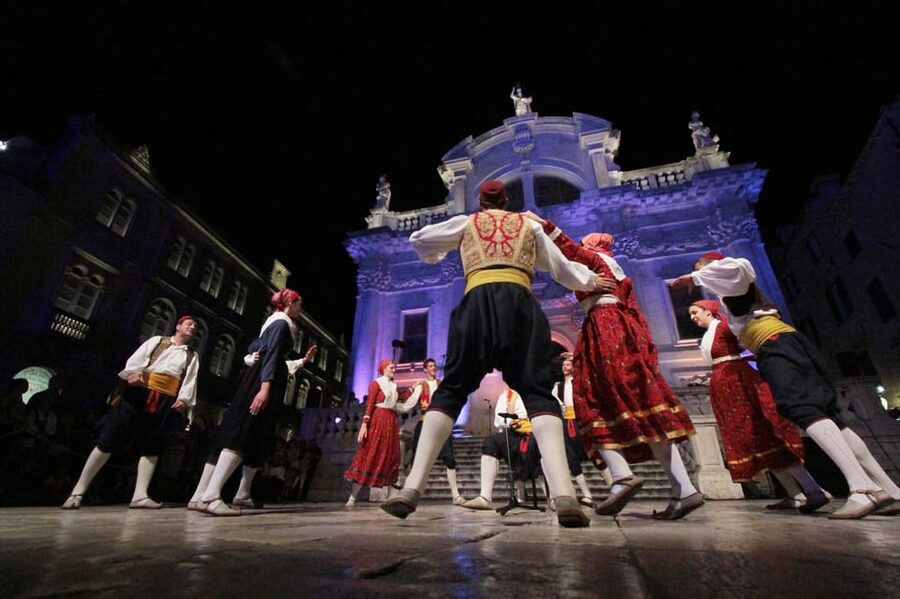
This is where you should be honest with your planning. The show gets busy, and you can find yourself waiting outside before you get in. One common suggestion is to arrive earlier than you think you need to, even if you plan to show up around 10 minutes before.
Why does that matter? Because Dubrovnik can compress your schedule. You might be finishing Old Town sightseeing, stopping for photos, and then trying to time an evening show. When the line is slow or the crowd is already gathered, a late arrival turns into stress.
Heat is another real factor. One of the most practical notes is that it can be hot and there is not air conditioning. That affects the experience in a straightforward way. If you run warm, you will feel it more during the wait and even during the show.
Also note the refreshment situation. No refreshments are available on site, so you should eat beforehand. If you need water, bring a plan for it before you settle in.
If you can snag better seating, the show can feel even more intense. Front row seating is mentioned as a big plus, and it makes sense. With a large ensemble, the perspective from closer in can make the choreographed lifts and the dancers’ footwork feel more immediate.
Timing Your Evening: From Old Town Gate to Show Seat
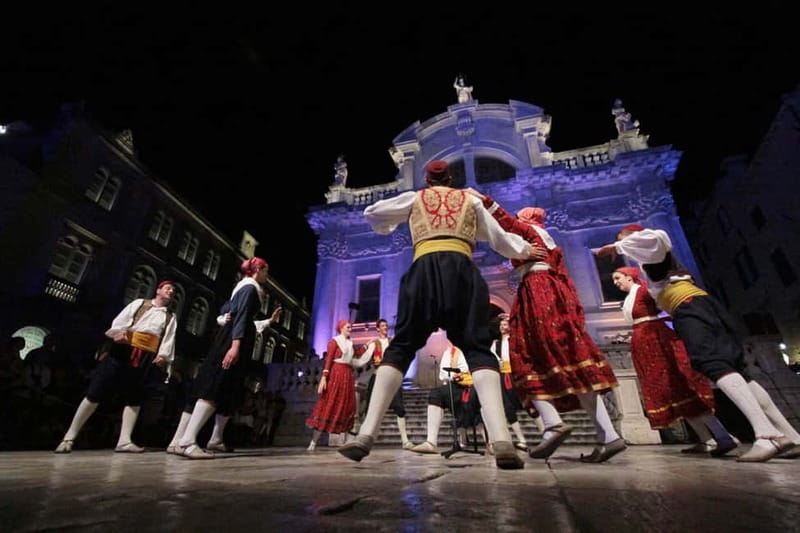
You do not have to build a complex route to get here. The show is described as a short walk from the gate of Old Town. That makes it a natural “bookend” activity for a day of walking, viewpoints, and beach time.
Here is how I’d structure your evening in a practical way:
- Start your day in Old Town, then plan to return to the gate area with enough cushion.
- Aim to arrive earlier than you would for a typical show, because the place can get busy.
- Eat before you go in, because there are no refreshments once you’re there.
This show works especially well as a last stop. People describe it as an easy way to round off a fantastic holiday in Dubrovnik, and the tone fits. It is joyful on one hand, and moving on another. That combination makes it a good reset after sightseeing fatigue.
Other ways the same afternoon could go from Dubrovnik:
- Blue Cave Small-Group Boat Tour from Dubrovnik★ 5.0 · 9,360 reviews
- Full-Day Dubrovnik Elaphite Islands Cruise with Lunch and Drinks★ 5.0 · 8,823 reviews
- Dubrovnik: Epic Game of Thrones Tour + Lokrum & Saver Option★ 4.9 · 5,995 reviews
- Dubrovnik: Elaphiti Islands Full-Day Cruise with Lunch★ 5.0 · 5,938 reviews
- Dubrovnik: Old Town Walking Tour★ 4.8 · 5,174 reviews
Price and Value: Is $29 Worth It?
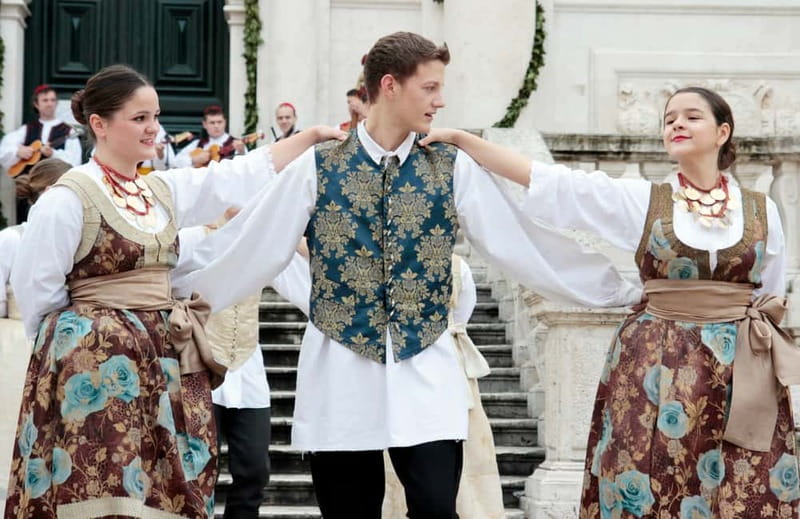
At $29 per person, this is not priced like a luxury private performance. But it also does not look like a basic entry-price event either. The value comes from two things you can actually see while you are there.
First, you get scale. Over 100 performers is a big deal. You are paying for a full production built around a large ensemble, not a short set with a small group.
Second, you get both dance and music, including vocal performance traditions like klapa singing. That combination matters because it gives the show depth. If it were only dance, it could feel repetitive. If it were only music, it could feel static. Here you get both, and you get them together in a single about-one-hour session.
So for most budgets, I think $29 lands in the “fair value” zone. It is a compact cultural evening that fits into a travel schedule, and it does not require you to line up for hours or add an all-night commitment.
Who Should Book the Dubrovnik Folklore Show?
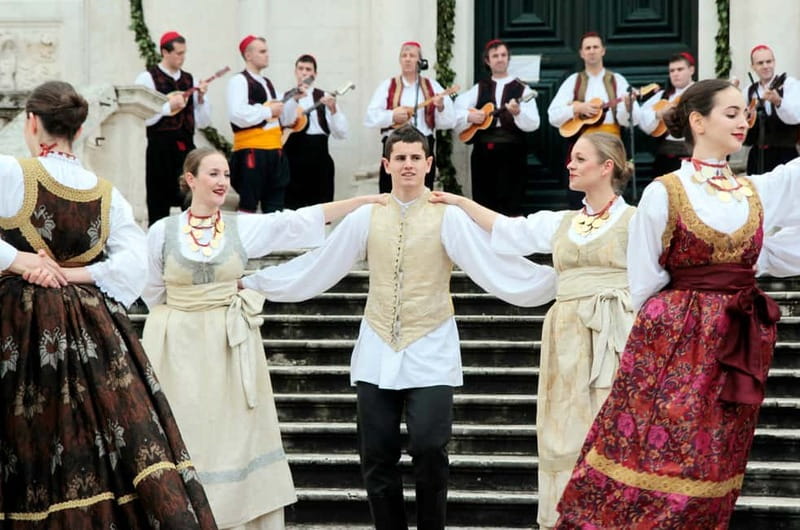
This is a good fit for people who want real culture on stage, without needing a background reading list. You do not need to understand every region to appreciate energy, costumes, and the way the singing and choreography work as a unit.
It is also a strong choice for families. One of the best repeated points is that it is the right length even for kids with short attention spans. Since the show lasts a little over an hour, you avoid the all-day trap where everyone gets cranky.
You should also consider it if you care about vocal traditions. The inclusion of klapa-style singing, and the way it can be capella or accompanied by orchestra, is a meaningful part of what makes the show feel authentic rather than purely theatrical.
It might be less comfortable for you if heat is your top enemy. If you dislike hot rooms and waiting outdoors, plan around that, or choose a time of day that helps you cope.
Practical Tips to Make Your Night Go Smooth
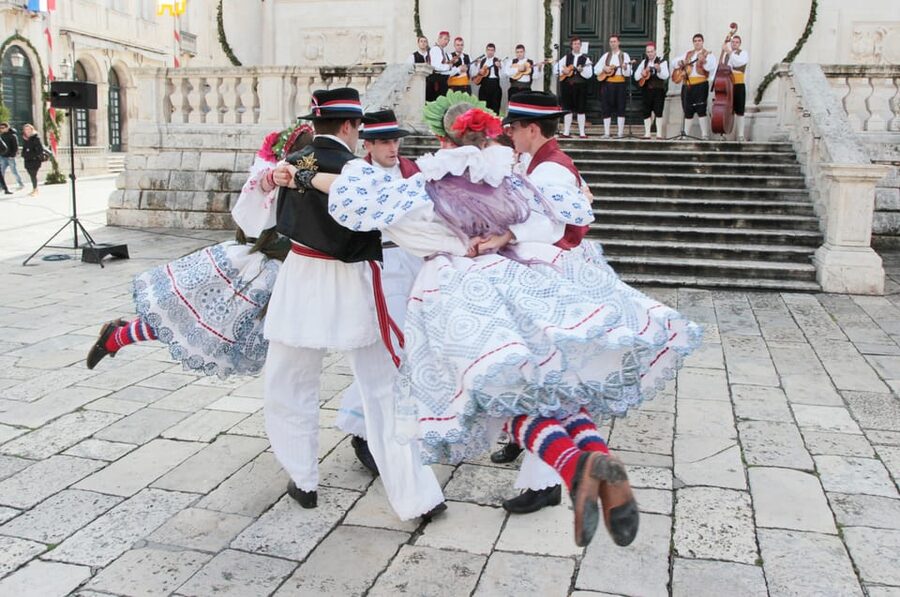
You can keep this simple, but a few details matter a lot for comfort and enjoyment.
- Arrive early. The show area gets busy, and waiting outside is common.
- Eat beforehand. No refreshments are available on site.
- Dress for heat. If there is no air conditioning at your viewing venue, light clothing can make the difference.
- If you have the option, prioritize seating. Front row seating is mentioned as a standout experience.
- Keep the show in mind as an Old Town capstone. It is a short walk from the gate, so you can fit it into the end of your sightseeing day.
These aren’t fancy tricks. They are just how you protect the experience from the two common complaints: crowds and temperature.
Should You Book the Linđo Dubrovnik Show?
I’d book it if you want a focused evening of Croatian song and dance with a large ensemble. The strongest reasons are also the most consistent: the dancing is impressive, the musicians add real punch, and the show length is practical at a little over an hour. Add in the costume work and the variety across regions, and you have a performance that feels like more than one style in one night.
I would hesitate only if you are extremely heat sensitive or you hate lines. The show is described as hot without air conditioning, and you may wait outside when it gets busy. If that’s you, plan better, arrive early, and eat first.
If you want a straightforward, high-energy cultural experience in Dubrovnik, this is one of those shows that makes your evening feel purposeful instead of incidental.
FAQ
How long is the Dubrovnik Croatian Folklore show?
The performance is just over an hour, so it is short enough to work well after a full day in Old Town.
How many performers are in the show?
You can expect over 100 performers from the Linđo Folklore Ensemble.
What kind of entertainment is included?
The show includes traditional Croatian dances and traditional Croatian songs, with vocal performances that can be capella and also with orchestral accompaniment.
Where is it relative to Old Town?
It is described as a short walk from the gate of Old Town in Dubrovnik.
Is there air conditioning and are refreshments available?
One note is that it can be very hot and there is no air conditioner. Also, no refreshments are available, so it is smart to eat beforehand.
When should I arrive?
Because it gets busy, arrive earlier than the recommended 10 minutes before the show.
How much does it cost?
The price is $29 per person.